Blood Panels

Last Updated
Jan 2, 2026
For years, both in my medical practice and on my own health journey, I've noticed a frustrating pattern: we tend to wait for something to break before we try to fix it. We wait for symptoms, for a diagnosis, for a reason to finally pay attention to our health. This is reactive "sick care," not true health care.
But what if you could see what might be coming? A specialized blood test for longevity offers that invaluable glimpse into your health's future. I've found it's less of a report card and more of a personal roadmap, showing you where you're headed so you can make course corrections before you run into trouble.
It's Time to Move Beyond Reactive Health Care
My frustration with this "rearview mirror" approach to medicine is what drove me to explore a different path. We were constantly managing problems after they had already taken hold. To truly optimize for a long, healthy life, you have to look toward the horizon.
This guide is about making that shift—from chasing symptoms to actively building a foundation of wellness, using your own biological data to guide the way.
My personal goal isn't just to add years to my life, but to add quality life to those years. Proactive health monitoring is what makes this possible. It turns a sea of complex data into simple, actionable steps that can dramatically improve your healthspan.
At the heart of this forward-looking approach is the concept of biological age. Forget how many candles were on your last birthday cake; that’s your chronological age. Your biological age tells you how well you're aging on the inside, at a cellular level. In my experience, it’s a much more honest and useful measure of your true vitality.
Think of this guide as a step toward understanding your body's unique instruction manual. It's about giving you the clarity to make smart, targeted changes based on what your biology is telling you it needs.
Decoding Your Key Longevity Biomarkers
Getting a comprehensive blood panel for longevity can feel a bit intimidating at first glance. I remember looking at my own detailed reports and feeling overwhelmed. All those numbers and acronyms can feel like a foreign language, but it's really just a story about your current health. The trick is knowing how to read it.
To make it simpler, I find it helpful to group the most important markers into a few core categories.
Key Biomarkers: The "Need to Know" List
Let's start with two of the heavy hitters that I always pay close attention to: ApoB and hs-CRP.
Think of ApoB (Apolipoprotein B) as the actual particle that carries "bad" cholesterol around your bloodstream. It's a more accurate predictor of cardiovascular risk than standard LDL cholesterol because it directly measures the number of these potentially artery-clogging particles. Too many of them, and you've got a recipe for traffic jams in your arteries.
Then there's hs-CRP (high-sensitivity C-reactive protein), which is a general marker of inflammation. Persistently high levels act like a silent, system-wide alarm bell, hinting that your body is dealing with chronic stress that can accelerate aging. You can learn more about this by reading our guide on what inflammatory markers are in blood work.
Taking charge of these numbers is how you shift from a reactive to a proactive mindset. It’s about managing your biological age, not just watching the calendar years tick by.
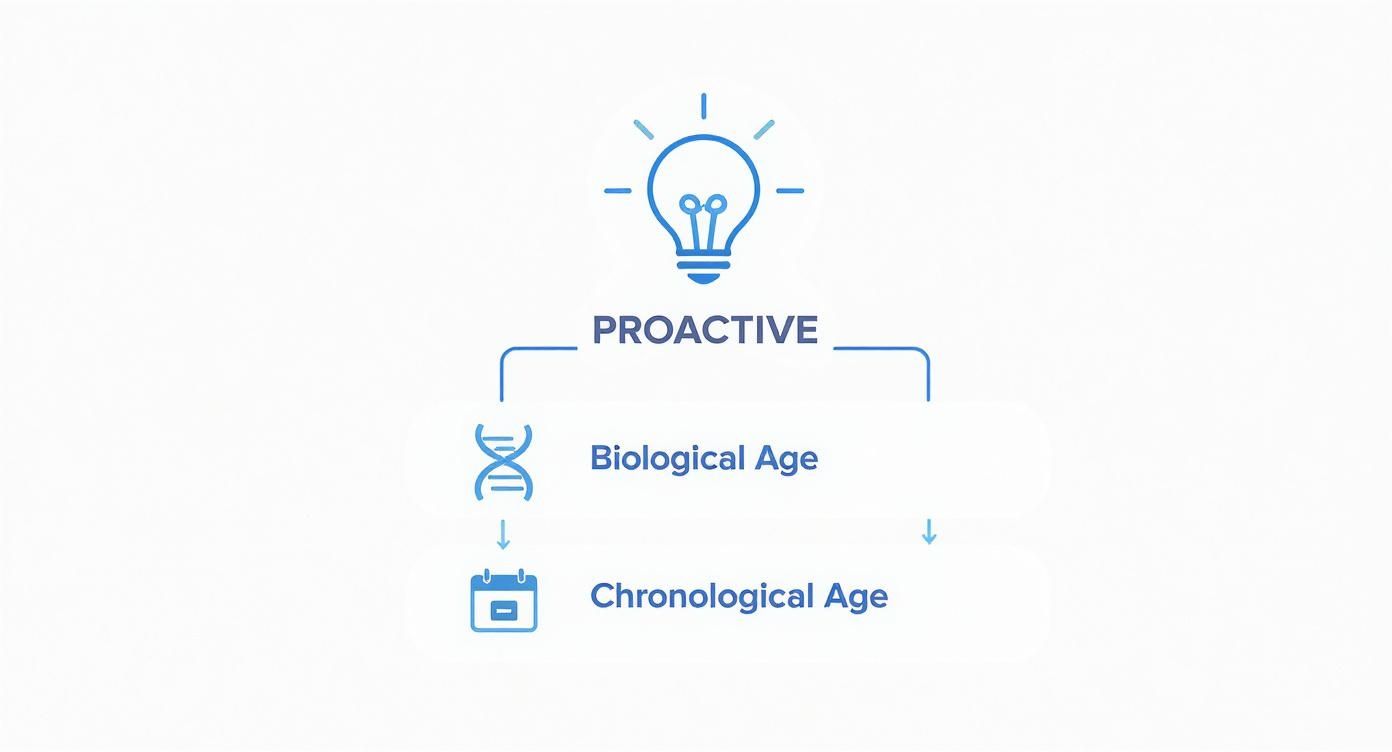
This proactive approach means your healthspan—the years you spend healthy and vibrant—can better match your lifespan.
The Power of Knowing Your Numbers
The data backing this up is powerful. One large-scale study revealed that individuals with lower levels of risk-associated biomarkers had a significantly lower risk of dying from any cause. This really drives home how vital these tests are for catching and managing health risks before they become serious problems.
Of course, the accuracy of these insights depends entirely on the quality of the lab work. This is where high standards and essential laboratory equipment, including water purification systems, make all the difference in getting reliable results.
By truly understanding what markers like ApoB and hs-CRP are telling you, you can move from abstract data points to a concrete, actionable health plan.
Here's a quick-reference guide to the key blood biomarkers for longevity, what they measure, and why they matter for your long-term health.
Essential Longevity Biomarkers and Their Functions
Biomarker Category | Key Biomarker | What It Measures | Importance for Longevity |
|---|---|---|---|
Cardiovascular Health | ApoB | The number of atherogenic (plaque-forming) particles. | A direct measure of cardiovascular disease risk; more predictive than LDL-C alone. |
Inflammation | hs-CRP | Low-grade, chronic inflammation throughout the body. | Chronic inflammation is a root cause of most age-related diseases. |
Metabolic Health | HbA1c | Average blood glucose levels over the past 2-3 months. | Indicates long-term glucose control and risk for diabetes and metabolic dysfunction. |
Hormonal Balance | DHEA-S | A precursor hormone that declines with age. | Associated with vitality, muscle mass, and immune function. |
Nutrient Status | Vitamin D | The level of vitamin D, crucial for bone and immune health. | Widespread deficiency is linked to numerous health issues. |
This table is just a starting point. By tracking these markers, you get a clear picture of where you stand and, more importantly, where you can improve.
Looking Deeper with Organ-Specific Aging Tests
Knowing your overall biological age is a huge leap forward, but the real cutting edge of longevity science is getting much more granular. I think of it like a mechanic checking out a classic car. The paint job might look immaculate, but under the hood, the engine could be showing its age far more than the transmission. In the same way, the most advanced blood tests for longevity can now estimate the biological age of your individual organs.
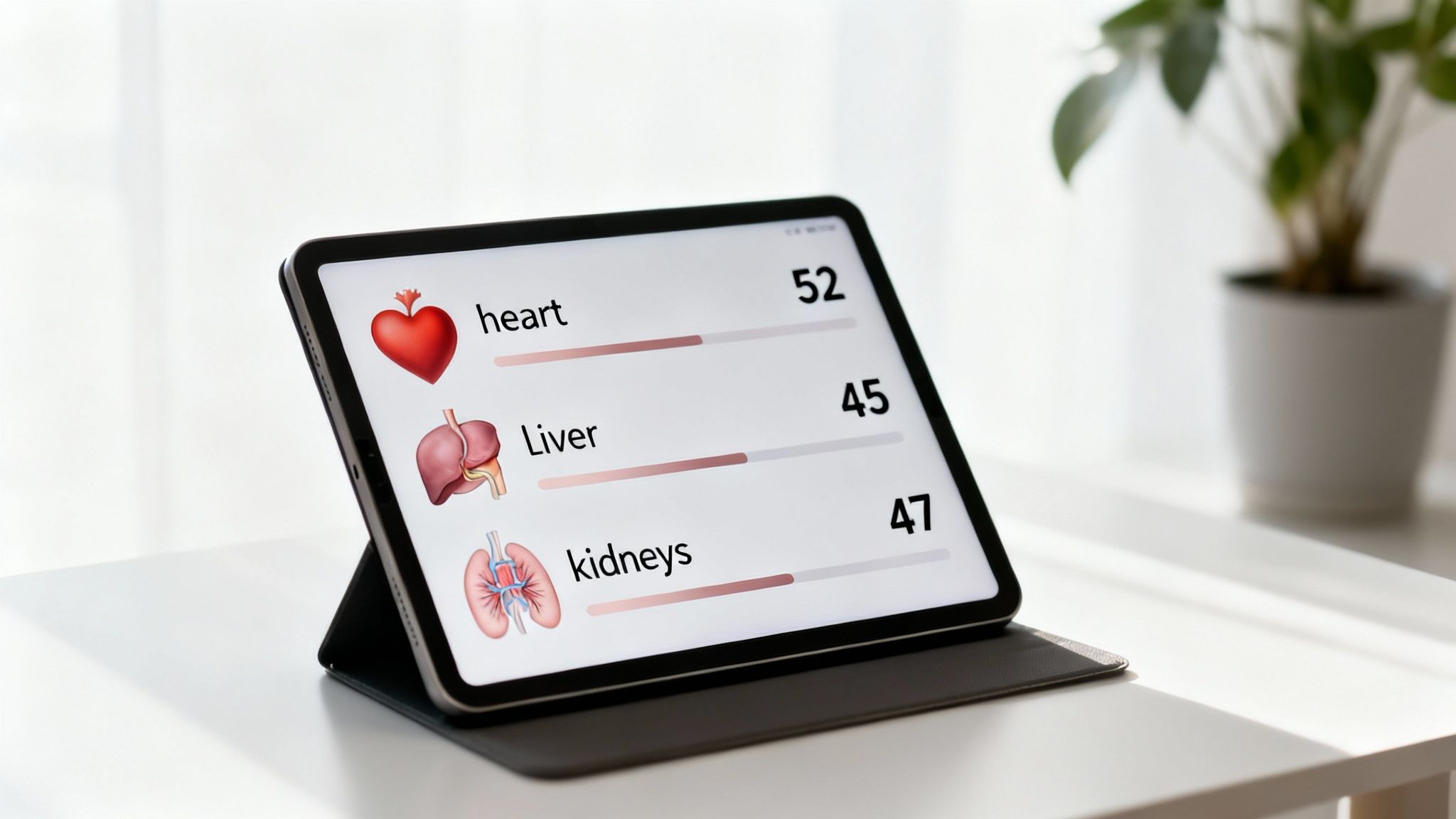
This incredible insight comes from analyzing thousands of proteins circulating in your plasma. Research has shown that this method can accurately pinpoint the age of organs like your heart, liver, and kidneys. For instance, one landmark study found that people with "older" organs had a significantly higher risk of death during the study's follow-up period. Discover more about how a simple blood test can forecast future health risks.
Turning Organ-Level Data into Action
This level of detail completely changes the game for preventive health. It lets us move away from generic wellness advice and toward a highly precise, personalized strategy.
Knowing my kidneys are aging faster than my liver would allow me to make targeted interventions—specific dietary changes or supplements—long before any symptoms appear. This is the essence of proactive health management.
Instead of a one-size-fits-all approach, you can focus on supporting the specific systems that need it most. This kind of detailed data often builds on the foundation laid by routine tests, like those in a comprehensive metabolic panel, which you can learn more about in our guide. Armed with this knowledge, you and your doctor can finally build a plan that’s truly tailored to your body's unique needs for long-term vitality.
How to Read Your Longevity Blood Test Results
Getting your lab report back is one thing; knowing what to do with it is something else entirely. When you’re looking at a blood test for longevity, you have to read it differently than a standard check-up panel. We're not just trying to spot disease; we're aiming for peak health.
This means you can’t just rely on the "standard" ranges printed on your report. Those ranges are a statistical average of the general population—and let's be honest, the general population isn't exactly a picture of optimal health. An optimal range is much tighter, representing the levels associated with the lowest possible risk of disease down the road.
Standard vs. Optimal: A Real-World Example
Let's take fasting glucose as an example. Your lab report might say anything under 100 mg/dL is "normal." But from a longevity perspective, that's not the whole story. Many experts in this field, myself included, advise that consistently keeping that number between 75-90 mg/dL is a much better place to be for long-term metabolic health.
A "normal" result that's creeping toward the high end of the standard range isn't an all-clear. I see it as an early warning flare—a chance to make changes before a small issue becomes a real problem.
This mindset is key. It's about being proactive, not just reactive. For a more detailed breakdown, we’ve put together a complete guide on how to read blood work results for beginners.
Turning Your Data into an Action Plan
Information is only powerful when you act on it. A detailed blood test for longevity is like getting the owner's manual for your body—now it's time to build a strategy for a longer, healthier life. From my own experience, this isn’t about dramatic, overnight overhauls. It's about making small, smart changes that add up in a big way over time.

The first step is always to dial in your foundational lifestyle habits. The real goal here is to translate your biomarker data into a practical, day-to-day approach that boosts your healthspan.
From Biomarkers to Behaviors
Your results give you the "why" behind any new habits you build. Instead of vaguely trying to "eat healthier," you can make specific changes that are directly tied to your body's needs.
High hs-CRP (Inflammation)? This is a clear signal to bring in more anti-inflammatory foods. Think Omega-3-rich salmon, walnuts, and flaxseeds.
Elevated ApoB (Cardiovascular Risk)? Your plan might focus on swapping out sources of saturated fat, like butter and red meat, for heart-friendlier monounsaturated fats found in olive oil and avocados.
I see my lab results not as a final grade, but as a starting point. They're the clues my doctor and I need to build a wellness plan that actually works, turning abstract numbers into concrete, daily actions.
Common Questions About Longevity Blood Tests
Now that we’ve walked through the key biomarkers, you're probably thinking about the practical side of all this. It's one thing to know what to test, but quite another to figure out the how and when. These are the questions that come up all the time, so let's tackle them head-on.
How Often Should I Get Tested?
For most healthy adults, I find a comprehensive blood panel once a year is a fantastic starting point. This gives you a solid baseline and, more importantly, lets you see how your biomarkers are trending over time. A single test is just a snapshot; the real story is in the patterns that emerge.
Of course, if your initial results flag something that needs work—maybe your inflammation is high or your glucose control isn't where it should be—your doctor might suggest retesting every 3 to 6 months. This shorter interval is incredibly useful because it gives you direct feedback on whether your new lifestyle changes are actually moving the needle.
Consistency is everything. Your biomarker trends over several tests will always tell you more than a single data point. It’s like watching a movie instead of looking at a single photograph; you get the full narrative of your health.
Are Longevity Blood Tests Covered By Insurance?
This is the big question, and honestly, the answer is a bit of a mixed bag. Standard tests, like a basic lipid panel or a glucose test, are usually covered as part of routine preventive care.
But when you get into the more advanced longevity markers we've been discussing—like ApoB, hs-CRP, or Lp(a)—coverage gets tricky. Insurance might not pay for them unless they're ordered to diagnose or manage a specific, existing medical condition.
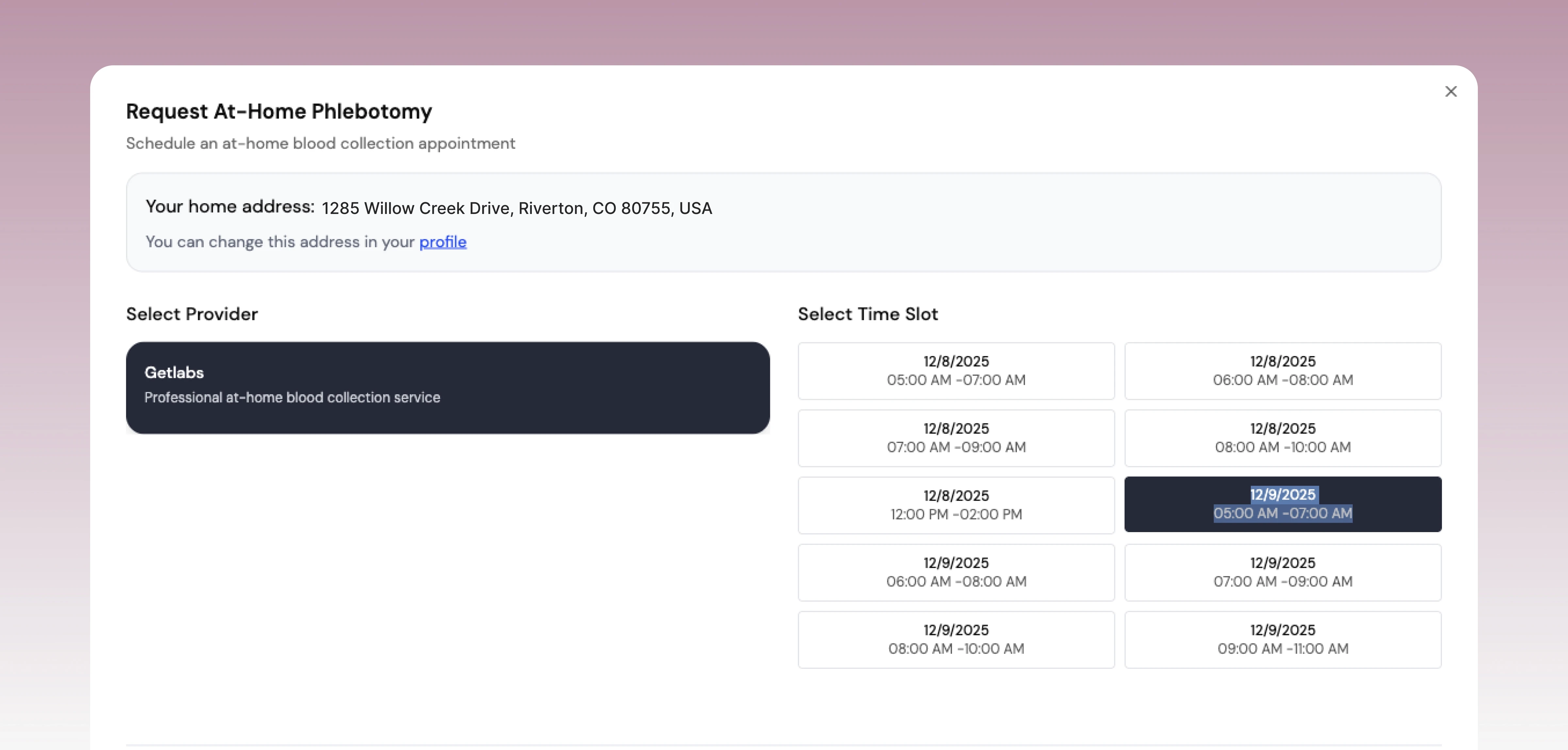
Because of this, many people, myself included, end up using direct-to-consumer testing services to get the complete picture. The best advice I can give is to talk to both your doctor and your insurance provider to see what’s covered before you commit.
What Is The Difference Between Biological And Chronological Age?
This question gets right to the heart of why we do this. It’s a crucial distinction.
Chronological Age: This is simply the number of candles on your birthday cake. It’s how many years you’ve been on the planet.
Biological Age: This is the one that really matters to me. It's a measure of how well your body is aging on a cellular and functional level. It reflects your true health.
Your biological age is a product of your genetics, lifestyle, and environment. You can have two 60-year-olds with wildly different biological ages—one might have the internal health of a 45-year-old, while the other is aging more like a 75-year-old. The entire goal of longevity blood testing is to measure and then lower your biological age, giving you a real-time look at your vitality.
At Outlive Biology, we take these powerful data points and turn them into a clear, actionable health plan. We integrate your blood work with data from your wearables to provide a complete picture of your health, reviewed by clinicians who create a personalized strategy just for you. Take the guesswork out of longevity and start your data-driven health journey with us.
Live better for longer.
Research-backed tools, tactics, and techniques to maximize your health, delivered to your inbox every Monday.
Because real transformation starts with trust
and trust starts with clarity.
Founding Member Discount
Includes Devices + Labs
Cancel Anytime Before Activation