Blood Panels

Last Updated
Jan 2, 2026
A heavy metal test is a diagnostic tool designed to measure the levels of certain metals in your body. It’s not just for identifying acute, high-dose poisoning; more often, it's used to uncover chronic, low-level exposure that can build up from our environment over years.
This kind of test gives you a clear snapshot of your body's "toxic burden," helping you connect the dots between potential exposures and your overall health.
What Is a Heavy Metal Test and Why Does It Matter?
Think of a heavy metal test like a specialized inspection for your body. You might have a home inspector check for hidden issues like lead paint or mold, and in the same way, this test looks for harmful metals that can quietly accumulate and interfere with how your body is supposed to function.
The main concern for most of us isn't a single, massive exposure. It’s the slow, steady drip of chronic, low-level exposure from things we encounter every day—the food we eat, the water we drink, the air we breathe, and even some consumer products.
A Modern Tool for Proactive Health
The idea of testing for environmental toxins is a cornerstone of modern, proactive health. For a wider perspective, it's useful to look at resources on **understanding when and why you need environmental testing** for things like mold. The same principle—know what you're up against—applies directly to heavy metals.
This shift in awareness is showing up in market trends, too. As science draws clearer lines between chronic disease and metal exposure, more people are seeking out this kind of testing.
At the end of the day, a heavy metal test isn't about diagnosing a rare, exotic disease. It's about gathering one more critical piece of data to build a complete picture of your health. By identifying your body’s specific toxic load, you and your doctor can make smarter decisions to lower your exposure, support your natural detoxification systems, and build a solid foundation for long-term health.
What a Heavy Metal Test Can Uncover
When you get a heavy metal test, it's not some vague, high-level scan. It’s a precise analysis that hunts for specific elements known to disrupt the body’s finely-tuned systems. Think of it less like a general search and more like a detailed inventory, revealing exactly which metals are in our system and at what concentration. This data is the critical first step in connecting the dots between your health and potential exposures from your diet, water, or environment.
The test panel generally splits its focus between two key groups of metals. First, you have the well-known toxic metals—elements that provide zero benefit to the body and can cause damage even at low levels. Then you have the essential minerals, which are vital for life but can become harmful if they build up to excessive amounts.
Toxic Metals The Usual Suspects
This is the category most people think of when they hear "heavy metal poisoning." These are the notorious troublemakers that can sneak into our bodies from sources we encounter every day and quietly accumulate over years.
A comprehensive test will screen for a long list of toxic elements, but four tend to show up most frequently due to how common they are in our modern world.
Lead (Pb): A ghost of our industrial past, lead still lingers in old paint, aging water pipes, and certain industrial environments.
Mercury (Hg): The biggest source for most people is seafood, particularly large predatory fish like tuna and swordfish. Dental amalgams and industrial pollution are other common routes of exposure.
Arsenic (As): Often found in contaminated groundwater (a big issue for well water), rice, and some seafood.
Cadmium (Cd): The primary sources of exposure are cigarette smoke—both firsthand and secondhand—and various industrial workplaces.
This infographic does a great job of showing the main ways these metals find their way into our bodies: through the food we eat, the water we drink, and the air we breathe.
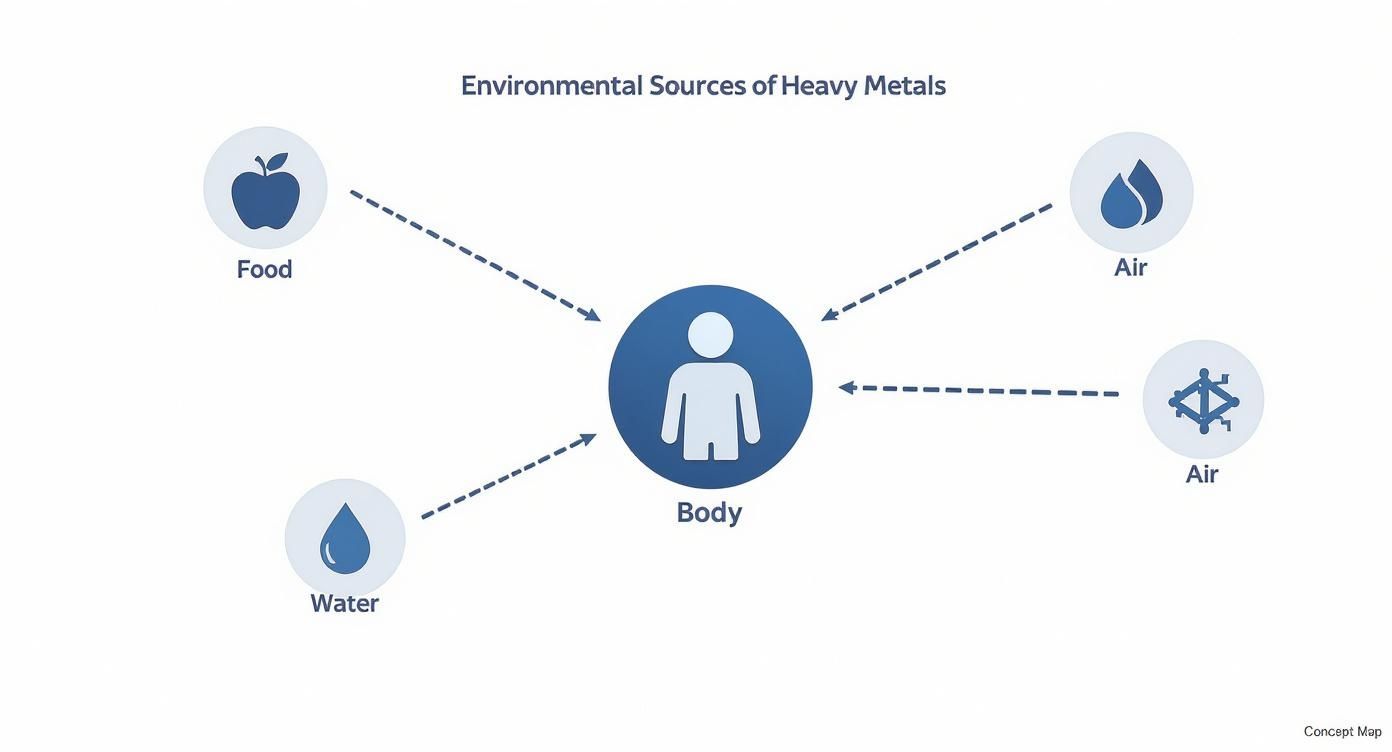
It’s a powerful reminder that our total exposure isn't usually from one big event, but from a slow, steady accumulation from our environment over time.
Essential Minerals When Good Turns Bad
It’s just as important to recognize that a heavy metal test isn't only looking for "bad guys." It also measures essential minerals that your body absolutely needs for everything from a strong immune system to healthy nerve function. The problem is, the balance is incredibly delicate.
Some of the most common essential minerals monitored in these tests include:
Zinc (Zn): A cornerstone of immune function and wound healing.
Copper (Cu): Plays a central role in energy production and building connective tissue.
Selenium (Se): A powerful antioxidant that helps protect your cells from damage.
Manganese (Mn): Crucial for bone formation and a healthy metabolism.
To make this distinction clearer, the table below provides a quick reference guide comparing these two groups of metals.
Toxic vs Essential Metals A Quick Reference Guide
Metal | Type | Common Sources | Potential Health Risks of Excess |
|---|---|---|---|
Lead | Toxic | Old paint, contaminated water, industrial emissions | Neurotoxicity, developmental delays, kidney damage |
Mercury | Toxic | Large fish, dental fillings, industrial pollution | Neurological disorders, memory issues, kidney damage |
Arsenic | Toxic | Contaminated water, rice, some pesticides | Skin problems, neurological issues, increased cancer risk |
Copper | Essential | Shellfish, nuts, seeds, organ meats, tap water | Liver damage, abdominal pain, nausea |
Zinc | Essential | Meat, shellfish, supplements, fortified cereals | Nausea, copper deficiency, weakened immune response |
By evaluating both the overt toxins and the essential minerals, a heavy metal test delivers a truly comprehensive picture of your body's metallic burden. It uncovers not just what shouldn’t be there, but also what might be there in dangerous amounts.
How to Choose the Right Testing Method

Not all heavy metal tests tell the same story. Picking the right one is absolutely critical because each offers a completely different window into your body’s toxic burden. It’s not about finding the one "best" test—it’s about choosing the right one to answer your specific health questions.
Think of it like this: blood, urine, and hair tests are like different kinds of cameras. One gives you a quick snapshot of this very moment, while another gives you a time-lapse video showing patterns over several months. You need to match the tool to the job to get clear, actionable information.
Your doctor will likely consider one of three primary methods: blood, urine, or hair analysis. Let’s break down what each one reveals.
Blood Testing: The Immediate Snapshot
A blood test is the gold standard for spotting very recent or ongoing exposure to heavy metals. Because blood is constantly circulating and being filtered, it gives us a real-time look at what’s actively floating around in your system right now.
This makes it incredibly valuable for diagnosing acute toxicity—for instance, if you were just exposed to a high level of lead or mercury. If a sudden exposure event is suspected, a heavy metal test using blood is usually the most direct and reliable way to get an answer.
But that strength is also its biggest weakness. Blood has a very short memory. Metals are either cleared out quickly by the kidneys and liver or get stashed away in tissues like bone, organs, and hair. This means a blood test can easily miss a chronic, low-level exposure that happened weeks or even months ago.
Urine Testing: What Your Body Is Excreting
A urine test shows you the heavy metals your body is actively trying to get rid of. This makes it an excellent way to gauge how well your detoxification systems are working and to get a sense of the total body burden for specific metals like arsenic and cadmium, which are primarily cleared through the kidneys.
Urine tests typically come in two flavors:
Spot Test: A single sample that provides a snapshot of what you’re excreting at one point in time.
24-Hour Collection: You collect every drop of urine over a full 24-hour period. This gives a much more comprehensive average of what your body is pushing out.
Hair Analysis: A Long-Term Historical Record
If a blood test is a snapshot, hair analysis is the time-lapse video. As your hair grows, it traps trace elements from your bloodstream, creating a chronological record of your exposure over the last several months.
This makes a hair heavy metal test uniquely suited for uncovering chronic, long-term exposure that other tests might overlook. It can reveal historical patterns, helping you and your doctor pinpoint consistent environmental or dietary sources of contamination.
On the flip side, it’s not the right tool for diagnosing acute poisoning. Its accuracy can also be affected by external factors like certain shampoos, hair dyes, or even environmental dust.
Fortunately, the technology behind all these methods has come a long way. The use of advanced lab techniques like inductively coupled plasma mass spectrometry (ICP-MS) means we can now detect even minuscule amounts of these metals with incredible precision. If you're interested in the technology, you can explore the latest trends in the heavy metal testing market. This level of accuracy is what gives us confidence in the data we use to make important health decisions.
Preparing for Your Test and Making Sense of Results

Once you and your doctor have settled on the right heavy metal test, what comes next is just as important: preparing for the test and then making sense of the numbers. Proper prep is the bedrock of an accurate result, while understanding what those numbers mean requires looking far beyond a single value on a report. We're turning raw data into a clear story about your health.
Getting ready for your test is usually simple, but the details really matter. Your provider will give you a specific set of instructions, but a few general rules of thumb apply to most testing methods. Following them helps remove any "noise" that could otherwise skew your results.
Pre-Test Preparation Checklist
To get a true snapshot of what’s going on inside your body, a little bit of planning goes a long way. These small adjustments can prevent a misleading outcome that might cause unnecessary worry or lead to the wrong next steps.
Skip the Seafood: This is probably the single most common piece of advice. You'll almost certainly be asked to avoid all fish and shellfish for 48–72 hours before your test. Why? It prevents a temporary, harmless spike in mercury from your dinner from looking like a chronic problem on your lab report.
Talk About Supplements: Be sure to tell your doctor about every single supplement you're taking. Certain minerals, especially zinc and selenium, can interfere with test accuracy. Even some herbal formulas can throw off the results.
Disclose All Medications: Be completely transparent about prescriptions and any over-the-counter drugs. It’s also important to mention any recent medical imaging that used contrast dyes (like from an MRI), as these agents can sometimes interfere with heavy metal analysis.
Follow Fasting Rules: This isn't always required, but some panels do require you to fast. Your doctor will make it clear if you need to hold off on food or drink.
Think of these steps as creating a clean slate. It allows the test to measure your body's long-term burden, not just what you ate for lunch yesterday.
How to Interpret Your Results
Getting your lab report can feel like the moment of truth. But it's crucial to remember that the numbers are just one piece of a much bigger puzzle. It's human nature to zero in on a value flagged as "high," but that number has very little meaning without context.
This is precisely why working with a skilled healthcare professional is non-negotiable. They are your translator, turning the black-and-white data from the lab into actionable insights about your health. They’ll look at your results alongside other vital health markers. For a deeper dive into how different lab tests fit together, our guide on the **comprehensive metabolic panel** provides excellent context on building a complete health picture.
Your doctor will analyze your report by asking the right questions. Do your symptoms actually match the metals that came back elevated? Can we pinpoint any obvious sources of exposure in your environment or diet? At the end of the day, your heavy metal test results aren't an endpoint; they're the start of a more focused conversation about your health, putting you in the driver's seat with an expert guide.
What Happens After a High Test Result
Getting a heavy metal test result that shows high levels can be unsettling, but it’s best to see it as the first step toward taking control. This isn't a final verdict on your health; it's a critical piece of information that gives you and your doctor a clear path forward. The follow-up isn't a one-size-fits-all prescription but a careful, measured response designed just for you.
The immediate priority is always to pinpoint and eliminate the source of exposure. This could be something as straightforward as tweaking your diet, or it might involve a bigger project like addressing environmental issues at home or work. For example, if your results point to contaminated water, installing advanced filtration can make a world of difference. Exploring options like whole-house reverse osmosis systems can be a powerful way to cut off ongoing exposure at the tap.
From Lifestyle Changes to Medical Interventions
If the elevation is on the milder side, your doctor will likely start with conservative strategies. The goal here is to support your body's own natural detoxification processes through targeted diet and lifestyle adjustments.
Dietary Adjustments: This might mean cutting back on certain types of fish known to be high in mercury or sourcing rice from regions with lower arsenic levels.
Nutritional Support: Your provider could suggest supplementing with specific nutrients, like selenium or zinc, which can help your body manage the effects of certain toxic metals.
Environmental Cleanup: This is about actively removing the source—anything from replacing old plumbing to investing in high-quality air and water filters.
These changes are so effective because they get right to the root of the problem. This is more important than ever, as heavy metal contamination in our food supply has become a major public health concern. In fact, testing for the food and beverage industry accounted for over 54.5% of the entire heavy metal testing market in 2023, largely because consumers are demanding safer products.
Understanding Chelation Therapy
When toxicity levels are significantly high, your doctor may bring up a more intensive medical treatment called chelation therapy. This process uses specific agents that act like magnets for heavy metals, binding to them in your bloodstream and tissues.
Once locked onto a metal ion, the chelating agent forms a stable compound that your body can then get rid of, usually through urine. Doctors use different agents like EDTA, DMSA, and DMPS, depending on which metals are the problem.
Trying to self-administer chelation agents or falling for unverified "detox" products is incredibly dangerous and can lead to severe health complications. A successful plan for dealing with a high test result always starts with a strong partnership between you and your doctor, making sure every step is safe, deliberate, and effective.
Proactive Monitoring for Long-Term Health
Thinking of a heavy metal test as a one-and-done event is like only checking the weather forecast on New Year's Day. Just like the weather, our exposure to environmental toxins is always changing. It's not a single incident. When you start to see testing as part of a long-term health strategy, it stops being a reactive chore and becomes a powerful tool for longevity.
This approach lets you establish your own personal baseline, giving you a clear picture of your body's toxic burden over time. Regular testing creates a feedback loop. It tells you if the changes you're making—like switching up your diet or finally installing that water filter—are actually lowering your levels. You get to make informed decisions instead of just guessing.
Staying Ahead of Chronic Risks
We know that chronic, low-level exposure to heavy metals is a quiet contributor to a whole host of long-term health problems, including systemic inflammation. Grasping this connection is a non-negotiable part of any serious health plan. For a deeper dive, our guide explains what inflammatory markers in blood work mean and why you should be tracking them.
Scheduling a heavy metal test periodically helps you catch potential issues long before they snowball into something serious.
This shifts your entire mindset. You move from simply reacting to a "high" result to actively managing your exposure throughout your life. It becomes just another crucial dataset in your overall wellness strategy, right alongside tracking your hormones, lipids, and metabolic health.
In a truly data-driven approach to health, periodic heavy metal testing gives you an insight you can't get anywhere else. It empowers you to measure the real-world impact of your choices, dial in your environment, and build a more resilient foundation for a longer, healthier life.
A Few Common Questions About Heavy Metal Testing
When you're considering a heavy metal test, a lot of questions can come to mind. Let's walk through some of the most common ones I hear from people.
How Often Should I Really Get Tested?
There's no single answer here—it all comes down to your personal situation. If you're generally healthy, live in a low-risk area, and just want a baseline for your wellness plan, checking in every 2-3 years is probably plenty.
On the other hand, if you work in an industry with known exposure risks (like construction or manufacturing) or your first test shows some elevated levels, your doctor will likely want to keep a closer eye on things. In that case, re-testing every 6-12 months makes a lot more sense to track your levels and see if interventions are working.
Will My Insurance Pay for This?
This is the big question for many, and unfortunately, the answer is "it depends." If your doctor suspects heavy metal toxicity based on clear symptoms or a known exposure event (like a lead pipe bursting in your home), the test is considered medically necessary and is often covered.
However, if you're ordering a test purely for preventative health or general curiosity without specific symptoms, insurance companies usually view it as elective. That means you'll likely be paying out of pocket. It's always best to call your insurance provider beforehand so there are no surprises.
Can I Just "Detox" These Metals on My Own?
It's a tempting idea, and your body does have amazing built-in detoxification systems (hello, liver and kidneys!). A healthy diet and lifestyle absolutely support these systems. But when we're talking about a clinically significant toxic burden, that support alone just isn't enough to move the needle.
Attempting to aggressively detox without a doctor's supervision can be risky, so please, always work with a professional if your levels are high.
At Outlive Biology, we believe you can't manage what you don't measure. That’s why we integrate tests for environmental toxins and heavy metals into a broader analysis of your health. By tracking your unique biometrics over time, we help you replace guesswork with real data, allowing you to see the true impact of your efforts on your long-term health and longevity. Learn more about our approach.
Live better for longer.
Research-backed tools, tactics, and techniques to maximize your health, delivered to your inbox every Monday.
Because real transformation starts with trust
and trust starts with clarity.
Founding Member Discount
Includes Devices + Labs
Cancel Anytime Before Activation