
Blood Panels

Last Updated
Jan 2, 2026
From my own health journey and in my professional experience, I've learned that balancing cortisol levels isn't about a complete life overhaul. It's about making small, consistent, and strategic changes to your daily life. I'm talking about things like mindful morning light exposure, gentle movement, nourishing your body with whole foods, and creating solid sleep habits.
Remember, the goal isn't to eliminate cortisol. It's to gently guide it back into its natural, healthy rhythm, and the following strategies are based on well-established health principles and my personal path to finding that balance.
What Is Cortisol and Why Does It Get Out of Whack?
I've been there myself—that feeling of being constantly 'on,' totally wired but utterly exhausted at the same time. It’s a classic sign that the body's stress response system is working overtime. This isn't a personal failing; it's often a case of a crucial hormone, cortisol, being stuck in the 'on' position due to the demands of modern life.
Cortisol is our primary stress hormone, produced by the adrenal glands. It's essential for managing energy and helping us react to genuine threats. The problem arises when chronic stressors—work deadlines, traffic, constant notifications—keep that system activated far too long, disrupting its natural cycle.
Your Body's Natural Cortisol Rhythm
Think of cortisol as your body's built-in alarm clock. Its levels are meant to be highest in the morning, providing the energy to start your day. Then, they should gradually decrease, reaching their lowest point at night to allow for restful sleep.
Chronic stress completely throws this delicate rhythm out of sync. When that happens, you're often left dealing with persistent fatigue, brain fog, and that frustrating, stubborn weight gain, especially around the middle. It's a pattern I see time and again, and one I've had to navigate myself.
The Problem with All-Day, Every-Day Stress
When stress becomes a constant companion, cortisol levels can get stuck on high. This has real, measurable impacts on your health. Cortisol is a major player in regulating your metabolism, immune function, and inflammation levels.
In fact, the World Health Organization has linked chronic stress directly to a higher risk for major noncommunicable diseases. You can review the research on the connection between cortisol and chronic disease here.
This constant state of alert also triggers system-wide inflammation, which is why it’s so important to understand what inflammatory markers in blood work reveal about your overall health. By getting a handle on your stress response, you're taking one of the most powerful steps toward long-term well-being.
Signs of Cortisol Imbalance Day vs Night
It can be tricky to pinpoint whether your cortisol is off-balance because the symptoms can feel so different depending on the time of day. You might feel revved up and anxious when you should be calm, and utterly drained when you need energy.
This table breaks down some common signs you might experience, helping you connect the dots.
Symptom Area | Common Daytime Signs (High Cortisol) | Common Nighttime Signs (Dysregulated Rhythm) |
|---|---|---|
Energy & Mood | Feeling "wired but tired," anxious, irritable, easily overwhelmed | A "second wind" of energy around 10 PM, racing thoughts before bed, waking up between 2-4 AM |
Cognitive Function | Brain fog, difficulty concentrating, poor memory | Difficulty shutting off your brain to fall asleep |
Physical Symptoms | Cravings for sugar and salt, stubborn belly fat, frequent illness | Trouble falling or staying asleep, feeling unrefreshed upon waking |
Metabolism | High blood sugar, increased blood pressure | Night sweats, digestive issues that worsen at night |
Recognizing these patterns is the first step. If these symptoms resonate with your personal experience, it’s a strong signal that it's time to focus on restoring your natural cortisol rhythm.
Crafting a Hormone-Friendly Morning Routine
How you start your day sends a powerful signal to your entire hormonal system. I used to be the person who hit a jarring alarm and immediately reached for coffee—a habit I later learned was like pouring fuel on an already-smoldering stress fire. Swapping that chaos for a gentle, hormone-friendly morning routine was an absolute game-changer for me.
Think about it this way: a simple trigger can set off a whole cascade of stress hormones.
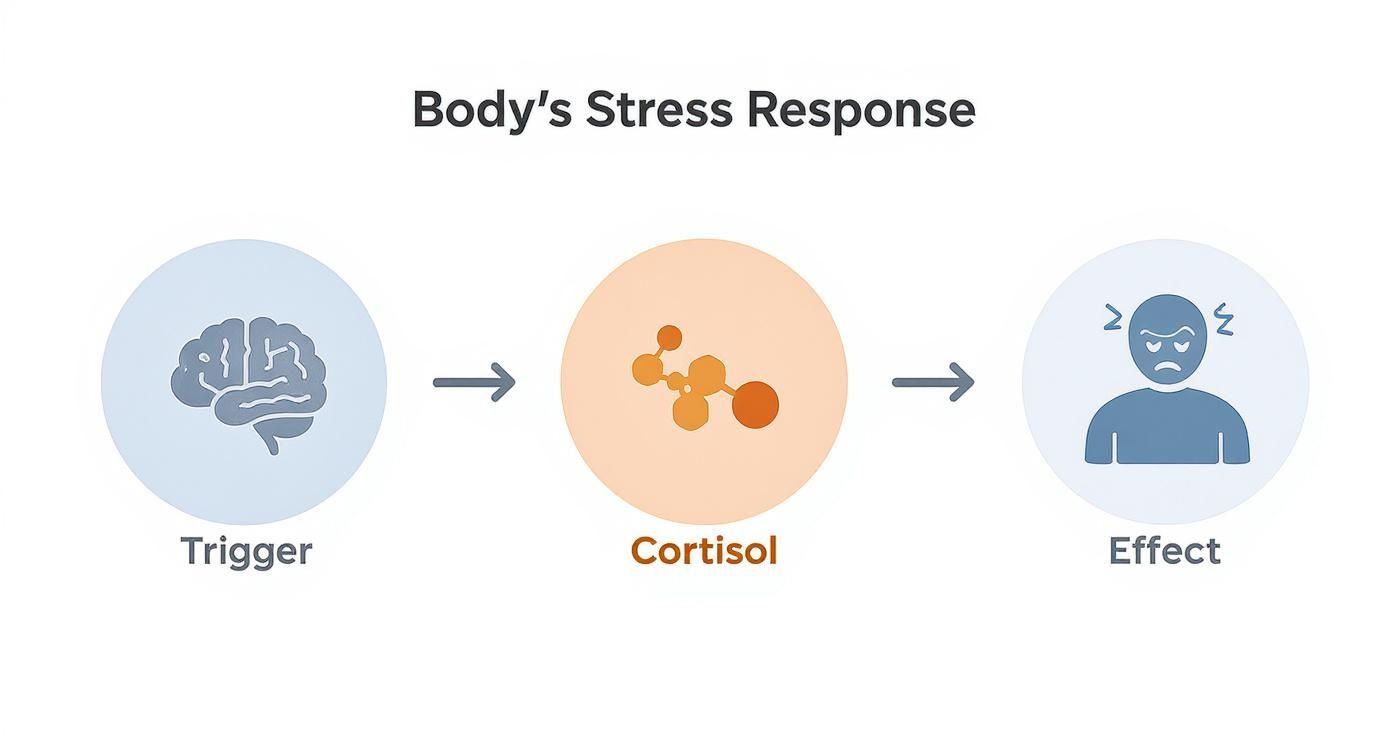
This visual really drives home how a perceived stressor tells the brain to pump out cortisol. When that cycle gets stuck on repeat, it leads directly to that awful "wired but tired" feeling. A calmer morning is your first, best chance to intercept this process.
Gentle Starts for All-Day Balance
Instead of launching into a high-stress start, try weaving these simple habits into your morning. These aren't rigid rules, just gentle nudges for your nervous system.
Prioritize Morning Sunlight: The goal is to get outside for 5-10 minutes within the first 30 minutes of waking. This blast of natural light helps anchor your circadian rhythm and encourages that healthy cortisol spike we want in the morning.
Delay Your Coffee: This one can be tough, but I always wait at least 90 minutes before having my first cup. This gives your body’s natural cortisol peak a chance to do its job, so the caffeine doesn't send you into an unnecessary spike.
Stretch by Your Bed: You don't need a full yoga class. A simple 5-minute stretching routine is enough to release physical tension. The key is to focus on deep, slow breathing as you move.
Eat a Protein-Forward Breakfast: A meal packed with protein and healthy fats—think scrambled eggs with avocado or a Greek yogurt bowl with nuts—is your best friend. It stabilizes your blood sugar, preventing energy crashes that can signal your body to release more cortisol.
Designing a Wind-Down Ritual for Deeper Sleep
Ever get that frustrating "second wind" right when you're supposed to be tired? I certainly have. Your body is exhausted, but your mind is buzzing. More often than not, high evening cortisol is the culprit.
One of the most effective ways to counteract this is to create a deliberate wind-down ritual. This is about actively signaling to your body and brain that the day is done and it's time to shift into rest-and-repair mode.

A predictable routine becomes a powerful cue for your body to start producing melatonin and dial down cortisol, making it much easier to fall asleep and stay asleep. The goal is simple: reduce stimulation and embrace calm.
Create Your Digital Sunset
In our modern world, the blue light from our screens is a major saboteur of our natural sleep-wake cycle. It tricks your brain into thinking it's still midday, which keeps cortisol elevated and suppresses melatonin.
My non-negotiable rule is a ‘digital sunset’—all screens are off at least 60-90 minutes before I plan to be asleep. This single boundary gives my mind a crucial chance to detach from the constant stream of stimulation.
This screen-free window is when I intentionally focus on activities that soothe my nervous system.
My Favorite Wind-Down Activities
The best ritual is one you’ll actually stick with, so feel free to experiment. But if you need some inspiration, here are a few evidence-backed ideas that have worked wonders for me:
Sip Calming Tea: Exploring the best teas for bedtime like chamomile or lavender can make a real difference.
Perform a "Brain Dump": I keep a notebook by my bed to offload any nagging thoughts or to-do list items. Getting it on paper prevents those thoughts from racing through my mind later.
Gentle Stretching or Reading: Just a few minutes of light stretching can release physical tension. Alternatively, reading a physical book (not on a screen!) helps your mind gracefully detach from the day's stressors.
Using Nutrition and Movement to Tame Stress
What you eat and how you move are two powerful levers for managing stress hormones. I used to think the only way to "burn off" stress was through grueling, high-intensity workouts. I was wrong. I learned that when your body is already over-stressed, piling on more physical stress just makes things worse.
My diet was another huge piece of the puzzle. Shifting my focus to foods that nourished my body instead of stressing it out was a cornerstone of my strategy for getting my cortisol back in balance.

Mindful Movement for a Calm Nervous System
High-intensity exercise is a form of physical stress. That's not inherently bad—it's how we build resilience. But if you’re already chronically stressed, a punishing workout can be the straw that breaks the camel's back.
The key is to start listening to your body's signals. On days when I feel overwhelmed, I now choose activities that soothe my nervous system instead of revving it up.
Gentle Yoga or Stretching: The magic here is pairing movement with deep, conscious breathing, which activates your parasympathetic "rest-and-digest" state.
Walking in Nature: Getting outside has a profound effect. Research has repeatedly shown that spending time in green spaces significantly lowers stress markers.
Light Cycling: Keep the pace moderate. The goal is gentle movement, not a race. You want to feel better after you move, not more drained.
Nutrient-Dense Foods to Support Your Adrenals
The food on your plate can either fuel the fire of stress or help put it out. A diet loaded with processed foods, refined carbs, and sugar sends blood sugar on a rollercoaster, which your body perceives as a threat, triggering a cortisol release.
For a deeper look at this connection, our guide on how to balance blood sugar levels naturally is a great resource.
We also know from research that psychological stress alone can cause cortisol to surge. By focusing on whole foods—think healthy fats, quality protein, and fiber— you provide your body with the building blocks it needs to build resilience. You can read the full study on how stress impacts cortisol here.
Targeted Supplements to Support Your Adrenals
While lifestyle changes are the foundation of balancing cortisol, a few carefully chosen supplements can provide much-needed backup. I can't stress this enough: this isn't about finding a magic pill. Instead, think of it as giving your body the specific raw materials it needs to handle stress more effectively.
This is where evidence-backed compounds can shine. Adaptogens like Ashwagandha, for example, have a solid track record of helping the body modulate its stress response. Then there's Magnesium, a mineral famous for its calming effect on the nervous system—a true ally when cortisol is high.
Key Nutrients for Cortisol Balance
Certain vitamins and nutrients also play a surprisingly direct role in keeping cortisol in check. Functional medicine experts, like Sara Gottfried, MD, often highlight omega-3 fatty acids, vitamin C, and vitamin B5 as essential for adrenal health.
There's good science to back this up. One 2010 clinical study found that participants taking 2,400 mg of fish oil daily for six weeks saw a significant drop in their morning cortisol levels. You can dig into the cortisol-lowering effects of these nutrients for a deeper dive.
A Quick Word of Caution: Please talk to your doctor before starting any new supplement. They can help you figure out what’s right for your unique situation, ensuring you're choosing safe and effective options at the right dose.
It's also a smart move to test, not guess. Before you start supplementing, you might want to confirm if you have any deficiencies. Our guide to blood tests for vitamins and minerals is a great place to start.
Common Questions About Balancing Cortisol
As you start working on your cortisol, a few questions are bound to pop up. Feeling confident and informed is a huge part of making these changes stick, so let’s clear up a few of the most common things I get asked.
How Long Does It Take to Balance Cortisol?
Honestly, there's no magic number here—it’s different for everyone. Some people start to feel a shift within a few weeks of consistent effort. For others, it might be a slower process, taking several months to feel a significant change.
Don't get discouraged if progress isn't a straight line. The goal is consistency over perfection. Focus on building small, sustainable habits. Celebrate the small wins, whether it's waking up feeling more rested or noticing your energy doesn't crash in the afternoon anymore.
Can I Still Drink Coffee?
Yes, you can! But it's wise to be strategic about when you drink it. I always advise waiting at least 90 minutes after waking up before that first cup.
This simple trick gives your body’s natural morning cortisol surge time to peak and begin to fall. That way, the caffeine gives you a gentle lift instead of a jolt that sends your system into overdrive. For most people, one well-timed cup in the morning is the sweet spot.
When Should I See a Doctor?
These natural strategies are powerful, but they don't replace professional medical advice. If you're struggling with severe symptoms—like profound fatigue, significant unexplained weight changes, or intense mood swings—it is essential to see a doctor.
A healthcare professional can run the right tests to get a proper diagnosis and rule out any other underlying issues. For a deeper dive into techniques and answers to other common questions, you can find more great information on how to reduce cortisol levels naturally.
At Outlive Biology, we replace guesswork with data. Our platform integrates your wearable tech and blood labs to create a clear picture of your hormonal health, providing clinician-guided protocols to help you feel your best. Take control of your biology and join our closed beta today.
Live better for longer.
Research-backed tools, tactics, and techniques to maximize your health, delivered to your inbox every Monday.

Because real transformation starts with trust
and trust starts with clarity.
Founding Member Discount
Includes Devices + Labs
Cancel Anytime Before Activation