Sleep optimization

Last Updated
Jan 2, 2026
If you're reading this, you're likely aware that achieving better sleep isn't about finding one secret hack. From my own experience, I've learned it's about reconnecting with our body's natural rhythms through intentional choices about our environment, daily routines, and even how we eat and use technology. This guide is based on established health information and my personal journey toward more restorative nights.
The Quest for Genuinely Restful Sleep
Most of us are just getting by on mediocre sleep, and we feel the effects every day. This is a shared struggle, and I've certainly been there myself—staring at the ceiling at 2 AM, only to feel like I’m moving through mud the next day.
This guide is the culmination of that personal experience and a deep dive into the science of what truly moves the needle on sleep quality. It’s not about perfection; it’s about making small, consistent shifts that allow your body to do what it’s designed to do: rest and repair.
We're going to skip the complicated, unrealistic protocols and focus on practical, evidence-based changes that you can actually stick with.
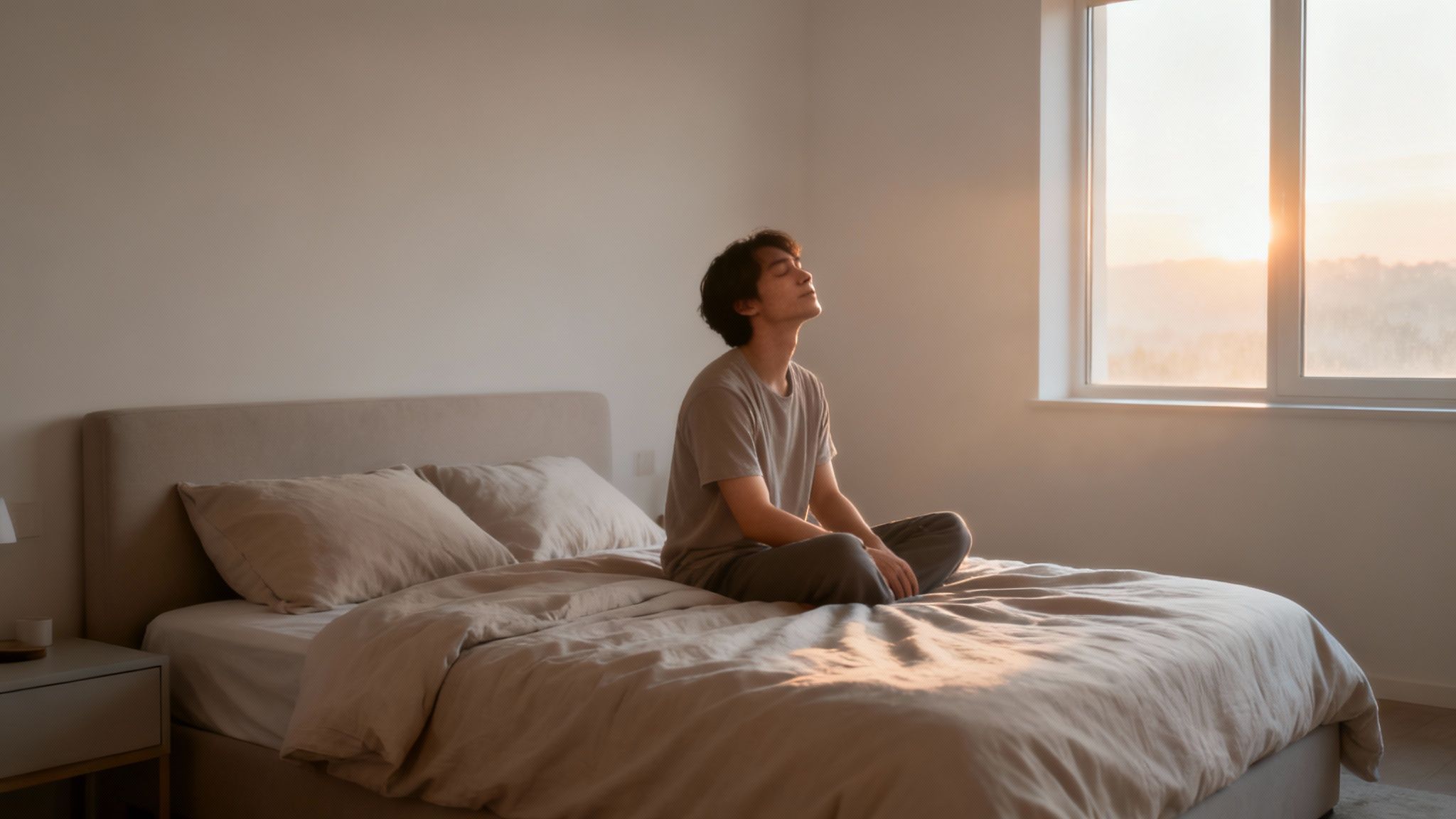
Why Does Great Sleep Feel So Out of Reach?
This epidemic of exhaustion isn't just in our heads. Recent data shows that, on a global scale, many people are losing a significant amount of restorative sleep each week.
In the US, the problem is just as prevalent. Health studies show that a significant percentage of American adults don't get the recommended amount of sleep on a regular basis, and many report difficulty staying asleep. What’s concerning is that despite knowing the negative impacts, a notable portion of people accept their poor sleep instead of trying to address it.
This guide is my attempt to push back on that trend with simple, powerful steps grounded in health science.
The real goal isn't just logging more hours in bed. It's about making those hours count. Quality over quantity is what leaves you feeling genuinely refreshed and ready to take on the day.
A Fresh Take on Natural Sleep Improvement
We're going to move past generic advice and dig into strategies that create a real, biological response in your body. It's all about understanding how your daily choices directly impact your nightly recovery.
Here’s a quick overview of what this guide will cover. I think of these as the four essential pillars for rebuilding your sleep from the ground up, based on principles of human biology and health.
The Four Pillars of Natural Sleep Improvement
This table summarizes the core strategies for naturally enhancing sleep quality that we'll explore in detail throughout this guide.
Pillar | Core Principle | Key Actions |
|---|---|---|
Environment | Your bedroom should signal safety and rest to your brain. | Creating total darkness, managing temperature, and eliminating noise and electronic disruptions. |
Circadian Rhythm | Your body has an internal 24-hour clock that needs clear signals. | Getting morning sunlight, timing meals correctly, and scheduling movement strategically. |
Mind & Stress | A calm mind is a prerequisite for deep sleep. | Developing a wind-down routine, managing evening stress, and using relaxation techniques. |
Biochemistry | Hormones, blood sugar, and nutrients directly affect sleep quality. | Optimizing nutrition for sleep, avoiding sleep-disrupting substances, and using targeted supplements. |
By focusing on these four key areas, you're not just treating the symptoms of poor sleep—you're addressing the root causes. For more ideas on building healthy habits, you can find a ton of proven tips for improving sleep quality naturally.
Optimizing Your Bedroom for Deep Rest
Your bedroom should be a sanctuary for sleep. I learned this the hard way. For years, my bedroom served multiple purposes, and my sleep paid the price until I realized just how non-negotiable creating powerful environmental cues was for my health.
These small changes signal to your brain and body that it's time to power down. This makes the transition into deep, uninterrupted rest much smoother. It’s about more than just turning off the lights; it's about curating an environment entirely dedicated to recovery.
The Power of Total Darkness
Even a tiny amount of light can disrupt your sleep architecture. The glow from a streetlamp, a digital clock, or a charging indicator can interfere with melatonin production—the key hormone that governs your sleep-wake cycle. When I first committed to creating a dark environment, I was shocked at how much ambient light was creeping into my room.
My solution was to invest in high-quality blackout curtains. This was a game-changer. For any remaining pinpricks of light from electronics, I used simple black electrical tape to cover them. The goal is to make your room so dark you can't see your hand in front of your face, a practice supported by sleep science.
Finding Your Ideal Sleep Temperature
Ever wake up in the middle of the night feeling too hot? That's because your body's core temperature needs to drop slightly to initiate and maintain sleep. Keeping your bedroom cool is one of the most effective ways to support this natural process.
Scientific literature suggests the sweet spot for most people is between 60-67°F (15-19°C). It might feel a little chilly at first, but this cool air helps your body reach the deeper, more restorative stages of sleep. I use a smart thermostat to automatically lower the temperature an hour before my scheduled bedtime, which acts as another powerful signal for my body to start winding down.
A cool, dark, and quiet room isn't a luxury—it's a biological necessity. By controlling these three elements, you are giving your brain the clearest possible signal that it is time for restorative sleep.
Mastering the Soundscape of Your Room
Noise is an obvious sleep disruptor. Even sounds that don't fully wake you can pull you out of deep sleep and into a lighter stage, chipping away at your overnight recovery. My apartment is on a busy street, so getting sound management right became critical for me.
Here are a few strategies that work wonders:
White Noise Machines: These create a constant, soothing sound that masks sudden noises. The steady hum of a fan or a dedicated machine can effectively drown out disruptive sounds.
High-Quality Earplugs: Don't underestimate the power of good earplugs. Modern foam or silicone options can block out a significant amount of noise and are comfortable enough to wear all night.
Soundproofing: For more persistent noise issues, consider simple solutions like weatherstripping around your door or adding heavy drapery to windows to dampen external sounds.
This focus on the sleep environment is gaining traction. For example, a recent report on travel and sleep trends from the National Sleep Foundation highlights a growing consumer demand for sleep-enhancing amenities like blackout curtains, showing a broader recognition of these principles.
Your Bed Is Your Foundation
Finally, the surface you sleep on is incredibly important. An old, unsupportive mattress can lead to aches, pains, and constant tossing and turning. I spent years sleeping on a mattress that was all wrong for my body, and I'd wake up feeling stiff and anything but rested.
Choosing the right mattress and bedding is a personal journey, but focusing on support and breathability is key. The foundation of a truly restorative sleep environment often begins with your bed; you can gain expert insights on how to choose a mattress for better sleep. Creating this comfortable, supportive, and distraction-free sanctuary is a fundamental step toward reclaiming your nights.
Building Consistent Daily and Nightly Routines
Our bodies thrive on rhythm. We're wired with an internal 24-hour clock—our circadian rhythm—that governs everything from our energy and mood to when we feel sleepy. The single most effective way to stabilize this internal clock is by creating consistent bookends for your day: a powerful morning routine and a calming evening wind-down.
From personal experience, my sleep turned a corner when I stopped treating my days and nights as separate. I started seeing them as a continuous loop, where what I did in the morning directly set the stage for how well I slept that night. This isn't about a rigid schedule, but about building a flexible framework of habits that send clear, consistent signals to your brain and body.
Crafting a Calming Evening Wind-Down
The hour or two before you want to be asleep is sacred. The goal is to gently shift your mind and body from the busyness of the day to a state of quiet and calm. For me, the game-changer was implementing a "digital sunset" at least an hour before bed.
That means putting the phone, tablet, and laptop away for the night. The blue light from our screens is a well-known sleep disruptor because it suppresses the production of our sleep hormone, melatonin. I swapped scrolling through social media for reading a physical book under a dim, warm lamp. The difference in how quickly I felt naturally tired was staggering.
A warm bath or shower can also be incredibly effective. The process raises your core body temperature, and the rapid cool-down that follows is a powerful, natural trigger that tells your body it's time for sleep.
Here are a few other simple but powerful rituals to add to your wind-down:
Brain Dump: Keep a notebook by your bed. Spend five minutes jotting down anything on your mind—worries, ideas, the next day's to-do list. Getting it out of your head and onto paper can prevent rumination.
Gentle Stretching: Think slow, restorative movements that release physical tension held from the day.
Herbal Tea: A warm cup of non-caffeinated tea like chamomile or valerian root can be a wonderful signal that the day is ending. Just be sure to finish it about an hour before bed to avoid a middle-of-the-night bathroom trip.
The key here isn't what you do as much as the consistency of doing it. By repeating the same sequence of calming actions every night, you're training your brain to associate these activities with sleep, making the transition to rest far more automatic.
To support your routine, your bedroom environment needs to be on your side. Think of it as creating the perfect sleep cave: dark, cool, and quiet.
Designing a Powerful Morning Routine
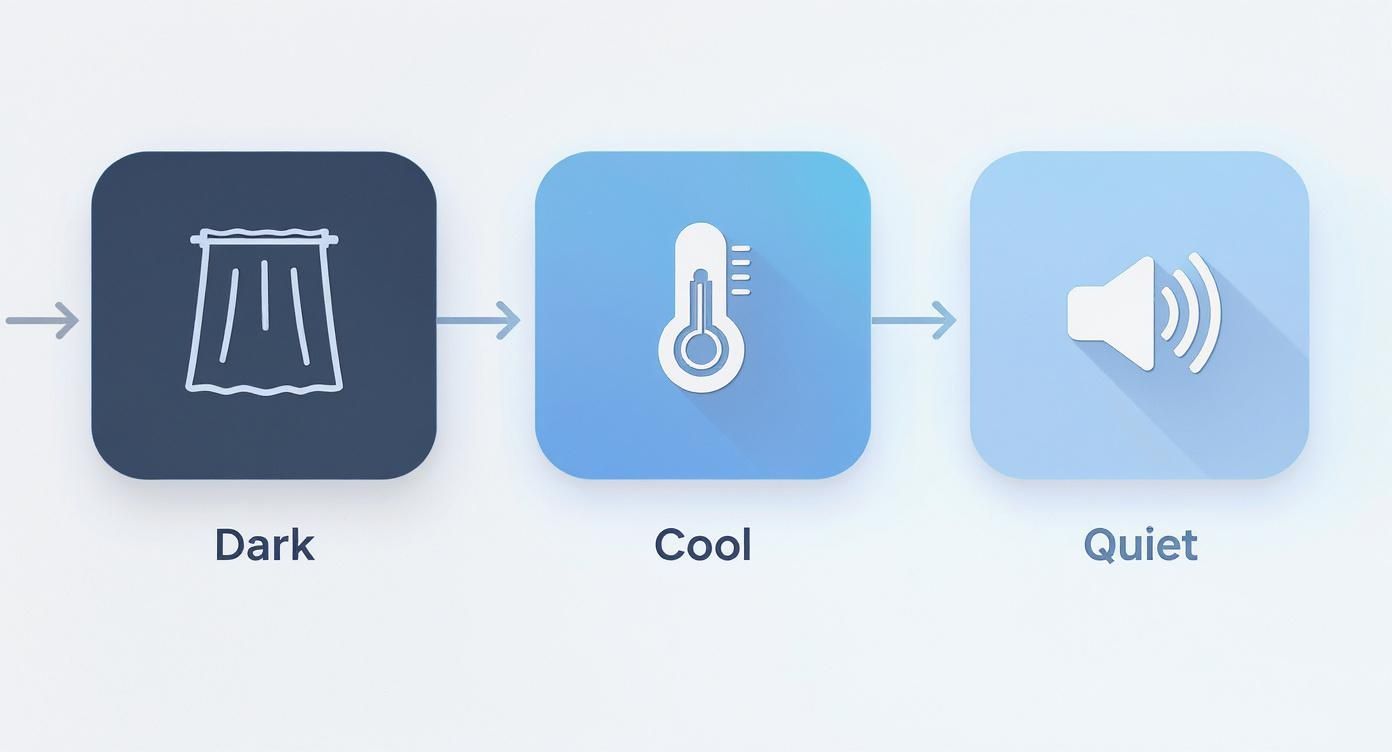
It might sound counterintuitive, but what you do in the first 30 minutes of your day has a massive impact on your sleep later that night. A solid morning routine should send the clearest possible signal to your body that the day has officially started.
The most critical piece of this puzzle is early morning sunlight exposure.
Getting just 10-15 minutes of direct sunlight in your eyes shortly after waking is one of the most potent biological signals for setting your circadian clock. It suppresses melatonin production and essentially starts a timer for its release again about 16 hours later—right around your desired bedtime.
This is a non-negotiable for me now. I’ll take my first glass of water and stand outside or sit by a wide-open window. Even on cloudy days, the light is powerful enough. This one habit has made feeling sleepy at night feel natural instead of forced.
Beyond sunlight, consider these two simple steps:
Hydrate Immediately: You wake up dehydrated. A big glass of water right away helps rehydrate your system, fires up your metabolism, and can reduce morning grogginess.
Move Gently: This isn't about an intense workout. Just a few minutes of light stretching or a quick walk gets your blood flowing and helps shake off any lingering sleep inertia.
By building these simple, repeatable routines, you stop just hoping for good sleep. You start actively engineering the biological conditions for it, day in and day out.
Turning Wearable Data Into Actionable Insights
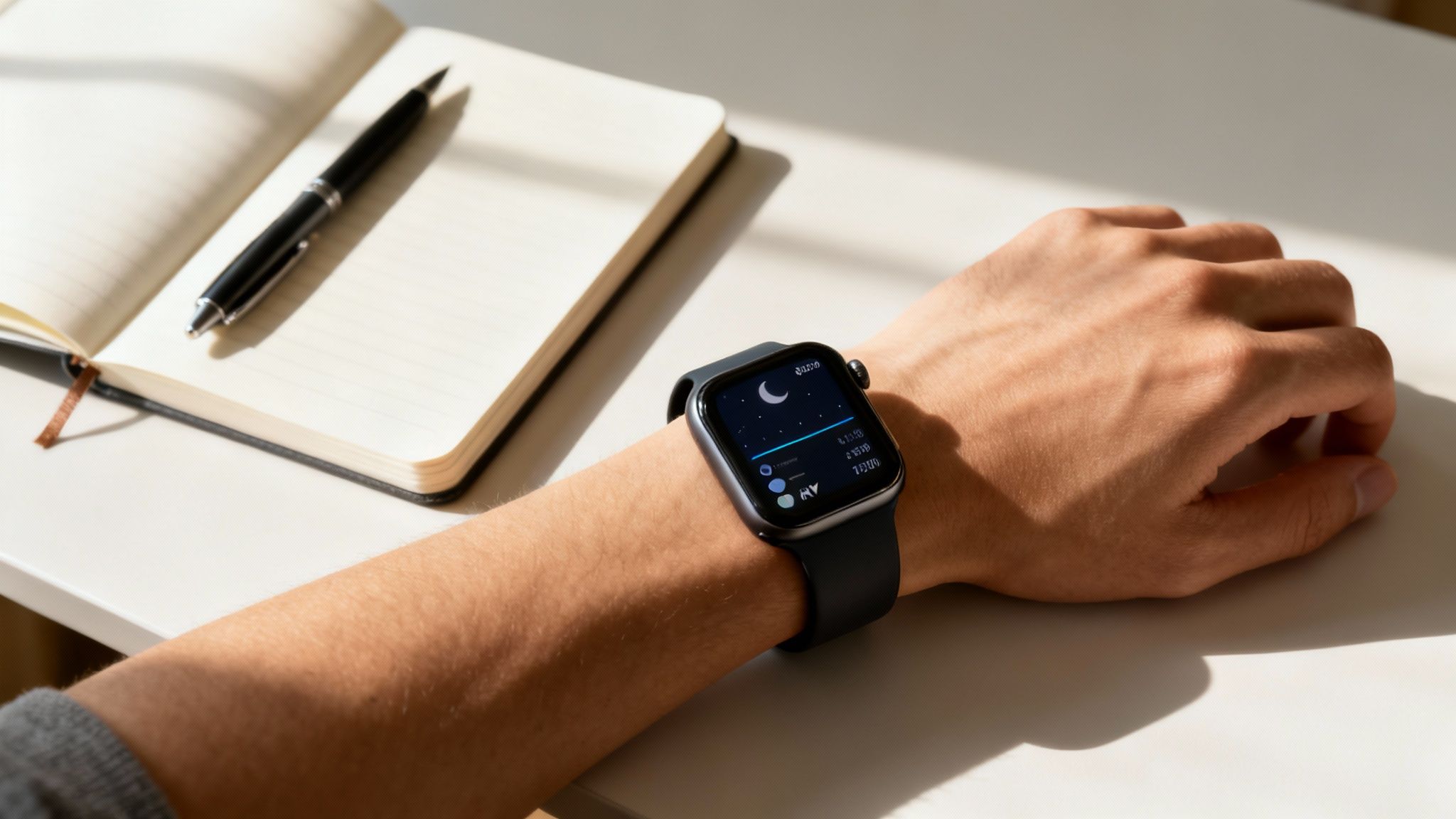
If you have an Oura ring, Whoop strap, or another smartwatch, you’re sitting on a goldmine of information about your sleep. I know firsthand that the charts and numbers can feel overwhelming at first, but this data is one of the most powerful tools for connecting my daily actions to my nightly recovery.
It moves you from guessing what works to knowing what works for your unique biology. The goal isn't just to track numbers for the sake of it—it’s about becoming a detective for your own health.
Decoding Your Key Sleep Metrics
Let's demystify the most important data points your wearable tracks. Instead of getting lost in every single metric, I recommend focusing on the big three that tell the most compelling story about your nightly restoration.
Understanding what your wearable is telling you is the first step. Here’s a quick guide to the metrics that matter most.
Key Wearable Metrics and What They Mean | ||
|---|---|---|
Metric | What It Measures | How to Improve It Naturally |
Deep Sleep (N3) | The physical repair stage. Your body releases growth hormone, repairs tissue, and strengthens your immune system. | Get early morning sun exposure, avoid heavy meals 2-3 hours before bed, and try a warm shower before sleep. |
REM Sleep | The mental repair stage. Crucial for memory consolidation, emotional processing, and learning. | Avoid alcohol and caffeine in the afternoon/evening, manage stress with meditation or journaling, and stick to a consistent sleep schedule. |
Heart Rate Variability (HRV) | A direct window into your nervous system's recovery state. A higher HRV signals you're well-rested and resilient to stress. | Practice breathwork, get consistent, moderate exercise (but not too close to bedtime), and stay well-hydrated. |
These metrics are all interconnected. A stressful day can lower your HRV, which in turn can reduce the amount of deep and REM sleep you get. By focusing on these core numbers, you get a clear view of how well your body is recovering.
From Data Points to Daily Actions
The real magic happens when you connect a bad night’s data to the previous day’s events. I use this feedback loop constantly. If I see a sudden dip in my HRV or a poor sleep score, I immediately review my day.
Did I eat a heavy meal too close to bedtime? That often tanks my deep sleep. Did I have a stressful work call late in the afternoon? My HRV will almost certainly reflect that. What about that glass of wine with dinner? My REM sleep will be noticeably shorter.
Your wearable doesn’t judge you; it just gives you honest feedback. Use a low score not as a failure but as a clue. It’s an invitation to ask, "What was different yesterday, and what can I adjust today?"
This investigative approach empowers you to see exactly how to improve sleep quality naturally. For instance, you might notice your HRV is consistently higher on days you take a 20-minute walk after lunch. That’s actionable data telling you what your body needs. You can dive deeper into these kinds of personal health signals by exploring a comprehensive guide to understanding your body's biometrics.
Connecting Wearables to Deeper Health Markers
While wearables are fantastic, they are just one piece of the puzzle. They show you the effects, but sometimes you need to understand the underlying causes. This is where lab markers can provide a more complete picture.
For example, chronically high cortisol in the evening can sabotage sleep—you’ll see it reflected in low HRV and fragmented sleep stages. Similarly, unstable blood glucose levels can cause you to jolt awake in the middle of the night.
This broader view is becoming more critical. One major report on global sleep trends and insights from Sleep Cycle, analyzing over 105 million nights of sleep, found that average sleep quality has slipped recently, but also that natural factors like consistent routines can make a huge difference.
By combining what your wearable tells you with occasional lab work, you can have much more informed and productive conversations with your doctor, moving beyond symptoms to address root biochemical imbalances.
Fueling Your Body for Better Sleep
How we fuel ourselves during the day creates a direct and powerful ripple effect into the night. It's not just about what you eat, but when you eat, how you move, and the way you manage stress. From my own journey, I’ve learned that these daily inputs are non-negotiable for achieving deep, restorative rest.
This isn't about restrictive dieting or grueling workouts. It's about making mindful, strategic choices that support your body's natural rhythms.
Your Pre-Bed Nutrition Window
One of the most common sleep saboteurs is a late, heavy meal. When you eat a big dinner or a sugary snack too close to bedtime, your body has to work overtime to digest it, which can raise your core body temperature and heart rate when both should be dropping.
The biggest culprit here is blood sugar instability. A spike in glucose from a late-night treat is often followed by a crash a few hours later, which can trigger the release of stress hormones like cortisol and adrenaline. That hormonal surge is often what jolts people awake between 2 and 4 AM.
Aim to finish your last substantial meal at least three hours before you plan to go to sleep. This gives your digestive system time to do its job and lets your blood sugar stabilize, setting the stage for uninterrupted rest.
If you find this challenging, focusing on your daytime habits can make a huge difference. You can explore a personal guide on how to balance blood sugar levels naturally to build a more solid foundation.
Sleep-Supportive Foods and Nutrients
While timing is crucial, what you eat matters, too. Certain foods are naturally rich in compounds that promote relaxation. I've found that weaving some of these into my diet, particularly in the evening, makes a noticeable difference.
A few of my personal go-tos include:
Tart Cherries: These are a natural food source of melatonin. A small glass of tart cherry juice or a handful of dried cherries in the evening can support your body's own production.
Almonds and Walnuts: Both are excellent sources of magnesium, a mineral that plays a vital role in calming the nervous system and can help lower nighttime cortisol.
Kiwi: This fruit is packed with serotonin, a precursor to melatonin. Some studies have shown that eating kiwi before bed may help you fall asleep faster and stay asleep longer.
These aren't magic bullets, but consistently including sleep-friendly foods can give your body the raw materials it needs for a good night.
The Right Way to Exercise for Sleep
Daily physical activity is fantastic for sleep quality. It helps reduce stress, regulate your circadian rhythm, and build up "sleep pressure." However, the timing of your workout is key.
Morning or early afternoon workouts are generally your best bet. They can elevate your mood and energy during the day and have been shown to increase the amount of deep sleep you get at night. I find that a morning workout helps me feel more alert all day, and I then naturally feel sleepy when evening rolls around.
Intense exercise too close to bedtime can be counterproductive for some people, as it can spike cortisol and body temperature. If evening is your only time to exercise, opt for something more restorative like yoga, gentle stretching, or a leisurely walk.
Actively Shifting From Stress to Rest
Finally, you need to actively guide your body out of the "fight or flight" sympathetic nervous system state and into the "rest and digest" parasympathetic state. This is where simple stress-reduction techniques are invaluable.
One of the most effective tools I use is box breathing. It's incredibly simple:
Inhale slowly through your nose for a count of four.
Hold your breath for a count of four.
Exhale slowly through your mouth for a count of four.
Hold your breath for a count of four.
Repeat this cycle for 5-10 minutes.
This simple practice calms the nervous system and lowers cortisol, sending a powerful signal to your body that it's safe to relax. Another wonderful practice is taking a short, slow walk in nature after dinner. The combination of gentle movement and a natural setting is a perfect recipe for unwinding.
Knowing When to Seek Professional Guidance
While the natural strategies we’ve covered are game-changers for most people, it's critical to recognize when something deeper might be at play. I learned this on my own health journey: seeking professional help isn't a failure—it's a smart step. Sometimes, an underlying medical issue is the real roadblock to restorative rest.
There’s a world of difference between a few bad nights and feeling chronically exhausted for months. Learning to spot that difference is key.
Red Flags That Warrant a Doctor's Visit
If you’ve consistently applied these strategies for several weeks and still aren't seeing improvements, it’s probably time to talk to a doctor. Certain symptoms require a proper medical evaluation.
Here are some clear signs it's time to make that appointment:
Persistent Insomnia: You struggle to fall asleep or stay asleep more than three nights a week for three weeks or more.
Severe Daytime Fatigue: You feel a bone-deep weariness that interferes with your daily life, even after a full night's sleep.
Loud, Consistent Snoring: If your partner reports that you snore loudly every night, especially with gasping, choking, or pauses in your breathing, it could indicate sleep apnea.
Uncontrollable Urges to Move: An overwhelming, creepy-crawly feeling in your legs when you try to rest at night might be Restless Legs Syndrome (RLS).
Sleep apnea, in particular, is a serious and underdiagnosed condition. If this sounds familiar, reading up on sleep apnea facts and statistics can help you have a more informed conversation with your doctor.
Persistent sleep problems are not something to ignore. Deep, restorative sleep is a biological non-negotiable, and chronic issues warrant the same medical attention as any other major health concern.
A Smart Approach to Supplements
It's easy to get drawn to supplements promising a quick fix. While some can be helpful, they are not a replacement for good habits or a solution for an undiagnosed medical condition.
One of the most well-researched options is magnesium, specifically the magnesium glycinate form. It’s known for calming the nervous system and helping the body relax for sleep. I’ve found it to be a helpful part of my own wind-down routine.
However, supplements are not a one-size-fits-all solution. Always talk to your healthcare provider before starting any new supplement. They can help you determine the right form and dosage and ensure it won’t interfere with any medications or health conditions.
At Outlive Biology, we turn personal data into clinical outcomes. Instead of guessing, we use continuous monitoring from your wearables and comprehensive lab results to create a plan—including behavioral protocols, coaching, and when appropriate, clinician-prescribed therapies—that is uniquely yours. Stop the guesswork and start your journey to optimized health. Explore the Outlive Biology membership.
Live better for longer.
Research-backed tools, tactics, and techniques to maximize your health, delivered to your inbox every Monday.
Because real transformation starts with trust
and trust starts with clarity.
Founding Member Discount
Includes Devices + Labs
Cancel Anytime Before Activation