Statistics

Last Updated
Jan 2, 2026
As a health professional deeply invested in human performance, I've spent countless hours analyzing the data behind athletic achievement. When you start comparing sports statistics between men and women, it's clear it's not a simple apples-to-apples game. There are fundamental physiological differences, of course—things like muscle mass and hormones—that create different performance benchmarks. But from my personal and professional experience, that’s only part of the story.
To get the full picture, you have to look at participation rates, viewership numbers, and crucial health data like injury rates. This is where social and economic factors enter the conversation, and where the data gets truly fascinating.
Understanding the Context Behind the Numbers
From a personal and professional standpoint, digging into sports stats means going beyond the raw data. It’s about appreciating the sheer dedication behind every single athletic achievement, regardless of the athlete. The real narrative isn't just about who's faster or stronger; it's about understanding the complex physiological, social, and commercial systems that shape the results we see.
This guide moves past simplistic comparisons to explore the why behind the data. We'll break down performance metrics, look at participation trends, and tackle critical health topics like injury rates. My goal is to provide a balanced, evidence-based view so you can gain a much deeper appreciation for all athletes.
The Three Pillars of a Fair Comparison
A meaningful analysis of male vs. female sports statistics must stand on three key pillars:
Physiology and Performance: How do biological realities like muscle mass and hormonal profiles directly impact athletic potential and create different performance ceilings?
Participation and Commerce: What can we learn from the trends in viewership, funding, and media coverage about how the entire sports landscape is shifting?
Health and Longevity: How do injury risks and recovery demands differ, and what are the implications for an athlete's long-term health and career?
Comparison Factor | Key Consideration for Male Athletes | Key Consideration for Female Athletes |
|---|---|---|
Physiology | Higher average muscle mass & testosterone levels impact power/speed. | Hormonal cycles can influence energy, recovery, and injury risk. |
Injury Profile | Higher incidence of contact-related injuries in certain sports. | Greater risk for non-contact injuries like ACL tears. |
Media Coverage | Historically dominant media presence and higher commercial value. | Rapidly growing viewership and increasing commercial investment. |
If you want to get a better sense of how modern sports data is actually collected and crunched, it's worth exploring advanced sports data sources like Opta. Understanding the source helps us interpret the numbers we see with much greater clarity.
Comparing Performance Metrics and Physiology
When you look at sports where the metrics are straightforward—like track and field or swimming—the physiological differences between male and female athletes become immediately apparent. This isn't about pitting one against the other; it’s about understanding the biological underpinnings that shape athletic potential. Factors like average muscle mass, VO2 max, and distinct hormonal profiles naturally create different performance ceilings.
In my professional work analyzing performance data, I've learned that just staring at raw numbers is a surefire way to miss the bigger picture. A far more useful lens is what I call "relative performance." This approach helps us appreciate the sheer talent and dedication behind an achievement by viewing it within the context of an athlete's specific physiological framework. It's how we can properly respect the work it takes to be elite.
Understanding the Key Drivers
Hormones are a huge piece of this puzzle. For instance, the significantly higher average testosterone levels in males are a primary reason they can develop more muscle mass and raw strength. Getting a handle on these hormonal differences is crucial, and you can get a clearer picture by understanding how testosterone functions in the body.
This infographic does a great job of breaking down the three core pillars of sports analysis: physiology, society, and commerce.
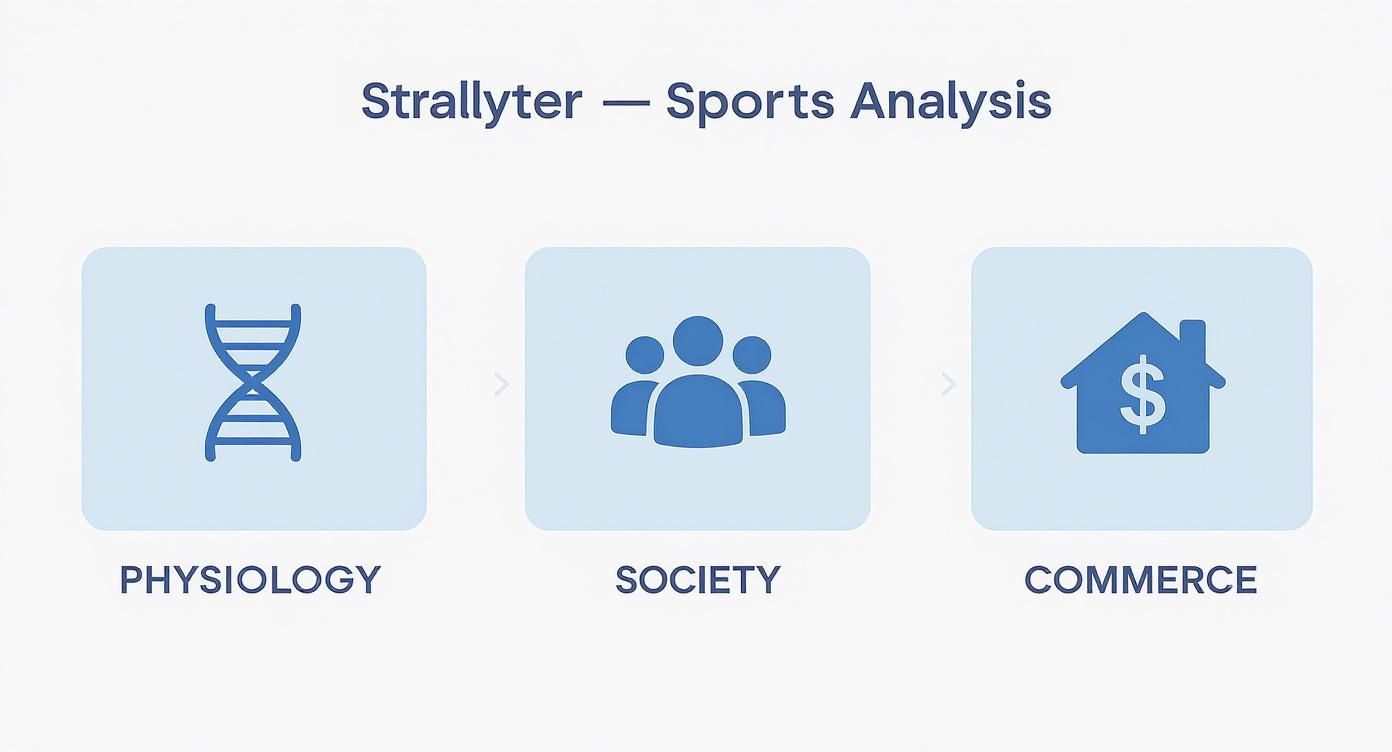
As the visual makes clear, a truly complete analysis has to look beyond biology. Societal norms and economic drivers are deeply intertwined with performance outcomes. Acknowledging how these distinct areas influence each other is the only way to build a foundation for a fair and truly comprehensive comparison.
To put this into perspective, let's look at a few elite-level benchmarks side-by-side.
Comparative Analysis of Elite Performance Metrics
Metric/Event | Male Athlete Benchmark | Female Athlete Benchmark | Key Physiological Contributor |
|---|---|---|---|
100m Sprint | 9.58s (Usain Bolt) | 10.49s (Florence Griffith-Joyner) | Muscle Mass & Power Output |
Marathon | 2:00:35 (Kelvin Kiptum) | 2:11:53 (Tigst Assefa) | VO2 Max & Hemoglobin Levels |
Weightlifting (Snatch) | 225 kg (Lasha Talakhadze) | 155 kg (Li Wenwen) | Absolute Strength & Body Mass |
High Jump | 2.45 m (Javier Sotomayor) | 2.09 m (Stefka Kostadinova) | Power-to-Weight Ratio |
This table isn't an exhaustive list, but it highlights how underlying physiological traits directly translate to world-class performance. Each record is an incredible feat of human potential, shaped by the biological realities of the athletes who set them.
The Shifting Dynamics of Participation and Viewership
Beyond raw performance data, the most significant story unfolding in sports is the explosive growth of women's athletics. From a public health perspective, seeing participation rise is fantastic. But what’s truly reshaping the sports world are the commercial and cultural shockwaves. What was once a niche market is rapidly becoming a dominant force, pulling in huge audiences and generating serious revenue.

This incredible momentum is being driven by a perfect storm of better media coverage, smart investment, and a real shift in social attitudes. For instance, the rapid commercial growth in women's sports is outpacing men's sports in several key markets. The 2024 NCAA women's basketball final pulled in a staggering 18.9 million viewers, surpassing the men's final audience of 14.8 million. That kind of engagement builds a powerful new commercial ecosystem.
Highlighting Key Growth Areas
This isn't just happening in one sport; it’s a global trend. We're seeing impressive gains across the board:
Broadcast Viewership: Major tournaments are shattering viewership records.
Commercial Investment: Brands are signing much larger sponsorship deals.
Grassroots Participation: More young girls are getting into sports than ever before.
This shift is more than numbers on a spreadsheet. It reflects a fundamental change in how we value sports, signaling the undeniable market power of female athletics.
The Audience for Women's Sports is Exploding
It’s not just participation numbers that are climbing. The very face of sports fandom is changing. The audience for women's sports is bigger and more diverse than ever, creating a powerful global community. This is a massive shift visible across every digital platform and broadcast channel, signaling a new age for how we follow sports.
The numbers don't lie. Women now make up a huge, and growing, part of the fanbase for all sports. Globally, women account for 47% of the fans for women's sports and 42% for men's sports. What’s more, interest in women's athletics has now captured 50% of the general population worldwide.
Huge events like the Olympics, which recently achieved equal representation for male and female athletes, are fanning the flames. You can dig deeper into this incredible expansion by checking out research on the future potential of women's sports.
This isn't just a trend; it's a market correction. The audience has been ready for high-level women's sports. Finally, media and investment are starting to catch up.
Understanding Injury Rates and Recovery Needs
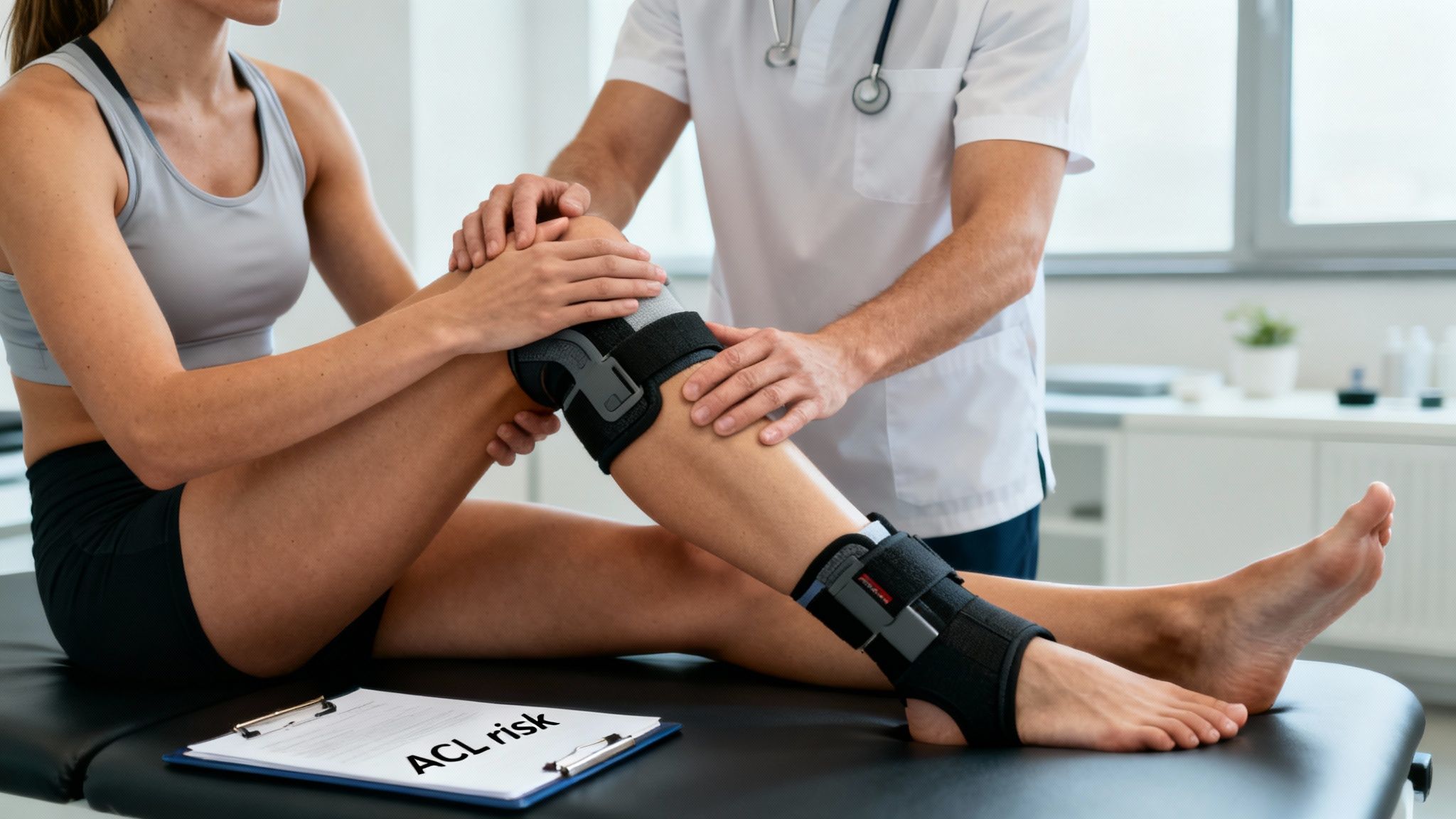
When it comes to an athlete's long-term health, few things are more important than understanding injury risk. The data reveals distinct patterns between men and women that can help us build smarter, safer training programs.
While men tend to experience higher rates of contact injuries, a lot of research has focused on the prevalence of non-contact injuries in women. A torn ACL, for example, is a devastating injury. Yet, female athletes can be up to six times more likely to suffer one than their male counterparts in the same sport. This disparity is rooted in a complex mix of anatomy, hormones, and biomechanics.
Why Are Female Athletes at Higher Risk?
Several key factors contribute to this elevated injury profile:
Anatomical Differences: Women generally have a wider hip-to-knee angle (the Q-angle), which can put more stress on the knee joint.
Hormonal Fluctuations: Estrogen levels change throughout the menstrual cycle, and these shifts can affect ligament laxity, making ligaments more vulnerable at specific times.
Movement Patterns: Studies show that female athletes sometimes land from jumps with less knee flexion, a pattern that increases the ground reaction forces absorbed by the joint.
Knowing these gender-specific risks isn't about setting limits; it's about empowerment. This knowledge allows us to create targeted prevention strategies, like neuromuscular training to build stability.
Monitoring how your body responds to training is just as important for managing recovery and heading off injuries. One effective way is by tracking key biological signals. For anyone wanting to dig deeper, you can learn more about what inflammatory markers are in blood work and see how they correlate with physical stress. By personalizing training and recovery based on this data, we give every athlete a better shot at staying healthy.
Putting the Data to Work: Smarter Athletic Development
This is where we turn statistics into a real-world strategy. For coaches and athletes, it means moving past one-size-fits-all templates that ignore fundamental physiological differences. It's about using gender-specific data to set goals that are both ambitious and realistic, boosting performance while protecting long-term health.
From a personal health standpoint, this approach is a game-changer. A female athlete can gain an advantage by understanding how her menstrual cycle affects energy, strength, and injury susceptibility. Timing intense training or scheduling extra recovery based on these hormonal fluctuations is a smart strategy. This also extends to nutrition, where understanding things like creatine usage tailored for women can make a real difference.
The ultimate goal is to use data not to create boundaries, but to build a more informed, individualized pathway to peak performance and health for every athlete.
This comes down to listening to your body’s unique signals. Generic advice only gets you so far. When you start consistently tracking your own health data, you'll uncover patterns that generalized plans miss. For anyone ready to take that next step, getting a handle on your personal biometrics is the foundation of a truly customized plan.
Common Questions, Answered
Let's address some frequent questions about the stats in men's and women's sports. The answers are driven by data.
Why Do We See Performance Differences in Some Sports?
It comes down to physiological averages. On average, men tend to have higher muscle mass, greater bone density, and a larger oxygen-carrying capacity. These biological factors create different performance benchmarks, especially in sports demanding raw power or endurance. It's crucial to remember we're talking about averages, not individual ceilings.
Is the Pay Gap in Sports Actually Closing?
Yes, but progress is uneven. We're seeing the gap narrow as viewership and revenue for women's sports climb. Some sports, like tennis, have led the way by offering equal prize money at major tournaments. The bigger challenge lies in team sports, where salaries are tied to league revenue. The trend is positive, though—as commercial interest grows, so does compensation.
How Should Training Be Adjusted Based on Gender?
All training should be personalized. That said, there are common considerations. For example, female athletes often have a higher risk of ACL injuries, so incorporating specific exercises for knee stability is a smart move. It's also becoming standard practice to account for the menstrual cycle's influence on energy and recovery. The best strategy is always to work with a knowledgeable professional who can tailor a plan to your unique body.
At Outlive Biology, we turn personal biometrics into clinical outcomes. Instead of guessing, we use your continuous health data from wearables and lab tests to create a precise plan for your sleep, energy, and longevity, guided by clinicians. Learn how to replace guesswork with data-driven health.
Live better for longer.
Research-backed tools, tactics, and techniques to maximize your health, delivered to your inbox every Monday.

Because real transformation starts with trust
and trust starts with clarity.
Founding Member Discount
Includes Devices + Labs
Cancel Anytime Before Activation