Blood Panels

Last Updated
Jan 2, 2026
For a long time, the cholesterol story has been a simple one: "good" vs. "bad." But that's like judging a car's performance just by looking at the fuel gauge. A much more revealing metric for cardiovascular risk is the size of your LDL particles. Whether they're big and fluffy or small and dense tells us a lot more about your heart health than the total cholesterol number ever could.
Beyond Good and Bad Cholesterol
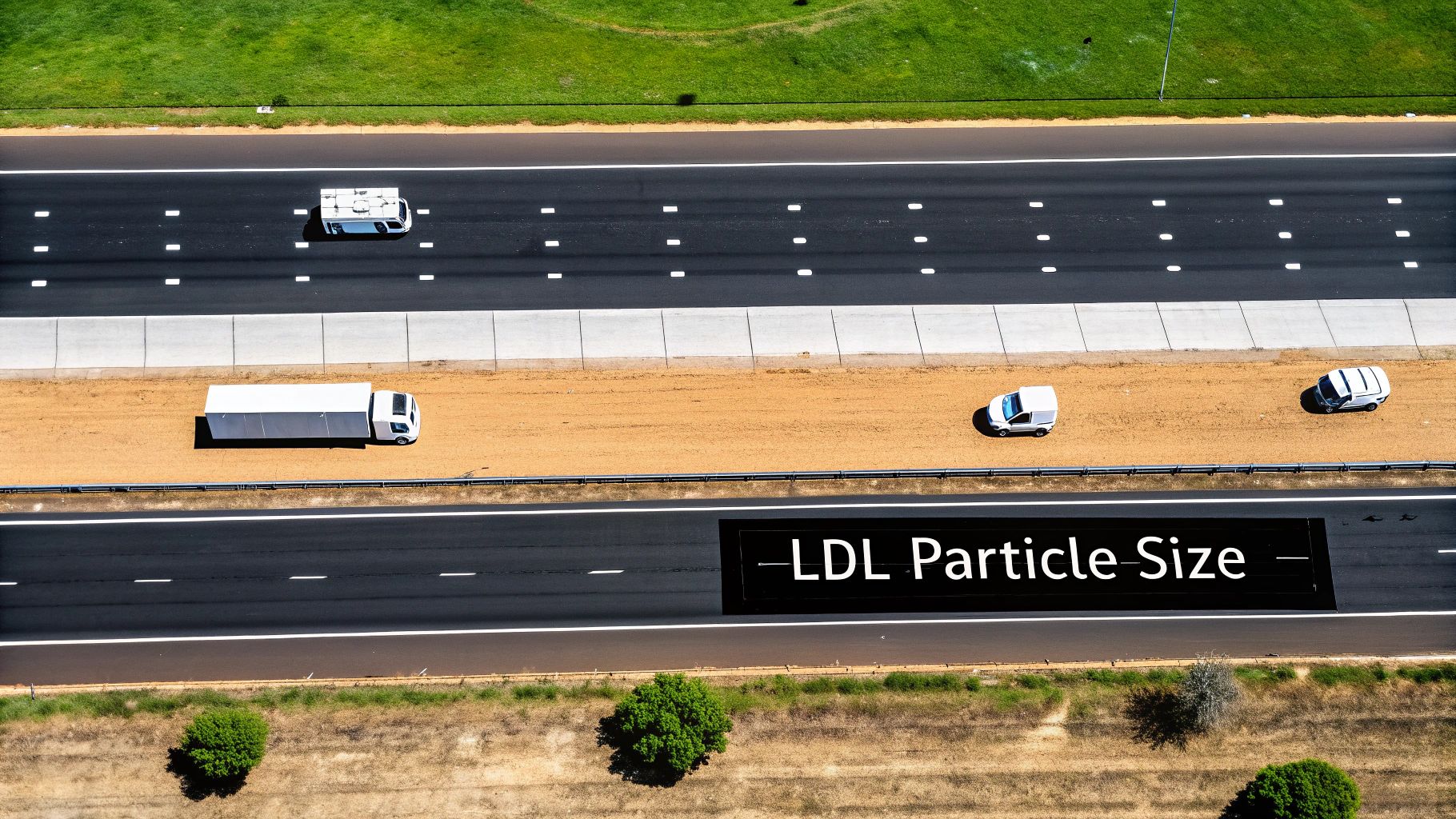
Think of your bloodstream as a highway. A standard cholesterol test (LDL-C) measures the total weight of the cargo on that highway. It’s a useful number, but it doesn’t tell you anything about the trucks carrying the cargo—how many there are, what size they are, or how likely they are to cause a pile-up. This is where understanding LDL particle size really changes the game.
Advanced lipid testing goes further, counting the number and measuring the size of these "trucks." What we find is that not all LDL particles are created equal. They generally fall into two main camps:
Large, buoyant LDL (Pattern A): Picture these as big, slow-moving semis. They tend to cruise through your arteries without much fuss, making them far less likely to cause traffic jams (plaque) or damage the road (your arterial walls).
Small, dense LDL (Pattern B): These are the exact opposite—think of them as small, aggressive sports cars weaving through traffic. They can easily squeeze through the delicate lining of your arteries, get stuck, and kick off the inflammatory process that leads to dangerous plaque buildup.
Why Size Is More Important Than You Think
Relying only on your total LDL-C number can be dangerously misleading. It's entirely possible to have a "normal" LDL-C level while simultaneously having a very high number of those hazardous small particles, putting you at significant risk without you ever knowing it. This is precisely the kind of hidden threat that advanced lipid testing is designed to uncover.
This isn't just a theory; the health implications are very real. Study after study has shown that people with a majority of small, dense LDL particles (Pattern B) have a 2–3 times higher risk of developing coronary artery disease. Digging deeper, we see that these particles are independently linked to a 50–70% increased risk of heart attack, which makes them a critical biomarker for anyone serious about longevity. For those interested, you can read more about the research on particle size and heart disease risk.
By shifting our focus from the total cargo (LDL-C) to the actual vehicles carrying it (LDL-P and size), we get a much clearer, more accurate picture of our cardiovascular health. This precision allows for highly targeted lifestyle interventions. More importantly, it helps you connect the dots between your daily choices and the quality of your lipoproteins. For proactive health management, tracking these advanced biometrics is truly fundamental.
How Small LDL Particles Damage Arteries
When we talk about the dangers of a high LDL particle count, the story is more nuanced than just a single number. The real trouble starts with the type of LDL particles you have. Small, dense LDL particles are the true villains in this story, acting very differently in the bloodstream than their larger, fluffier cousins.
Their threat boils down to three key problems: their size, how long they hang around, and their nasty habit of sparking inflammation.
A Matter of Size: Slipping Through the Cracks
First, their small size is a major liability. Your arteries are lined with a delicate, single-cell-thick protective layer called the endothelium. Think of it as a finely woven net designed to keep large, potentially harmful things out of the artery wall itself.
Large, buoyant LDL particles are like beach balls—they're just too big to get through the gaps in this endothelial net. They simply bounce off and continue on their way.
Small, dense LDL particles, on the other hand, are like tiny marbles. They are small enough to slip right through the gaps in that protective barrier, gaining access to the sensitive space just beneath it. This is the first critical step in the journey toward arterial plaque.
A Longer Lifespan Means More Opportunity for Trouble
Once these smaller particles are circulating, time is not on your side. Small, dense LDL particles tend to linger in your bloodstream for a much longer time than the larger ones. This extended “hang time” is where things get even more dangerous.
The longer they’re exposed to the bloodstream environment, the more likely they are to become damaged through a process called oxidation—think of it as a biological form of rusting. An oxidized LDL particle is no longer just a simple fat transporter; it becomes a toxic, inflammatory irritant that your immune system flags as a threat.
Kicking Off the Inflammatory Cascade
The final piece of the puzzle is how your body responds to these intruders. As soon as small, oxidized LDL particles breach the artery wall, the immune system launches a full-blown inflammatory attack to get rid of them.
Unfortunately, this well-intentioned immune response often backfires, causing more harm than good. The chronic inflammation it creates damages the artery wall even more, which in turn attracts more immune cells and traps even more LDL particles.
It's a vicious cycle. This leads to the slow, steady buildup of plaque that narrows and hardens the arteries—a process we call atherosclerosis. Over time, this dramatically increases the risk of a heart attack or stroke. This is precisely why understanding the mechanics of particle size LDL is so fundamental to protecting your cardiovascular health.
Measuring What Truly Matters for Your Heart
For decades, the standard lipid panel has been the go-to for checking heart health. It gives us a number called LDL cholesterol, or LDL-C. Think of it like a distant aerial photo of a highway—it shows you there’s traffic, but it can't tell you how many actual cars are on the road.
To really understand your cardiovascular risk, we need to get down to street level and count the vehicles. That's where advanced testing comes in, giving us a far more accurate picture of what's actually happening in your arteries.
From a Rough Estimate to a Precise Count
Instead of just measuring the cholesterol inside the LDL particles, advanced tests count the particles themselves. This is a critical distinction. The two most reliable ways to do this are:
LDL Particle Number (LDL-P): This is a direct headcount of every LDL particle in your blood, typically measured with a test called an NMR LipoProfile. It's a powerful predictor of heart disease, much more so than the standard LDL-C.
Apolipoprotein B (ApoB): Think of ApoB as the license plate on every potentially harmful lipoprotein. Each LDL particle has exactly one ApoB molecule, so measuring ApoB gives us a highly accurate count of these plaque-causing particles.
This is especially true for the smaller, denser LDL particles. They're the ones that can most easily slip through the cracks in our arterial lining and kick off the inflammatory process that leads to plaque.
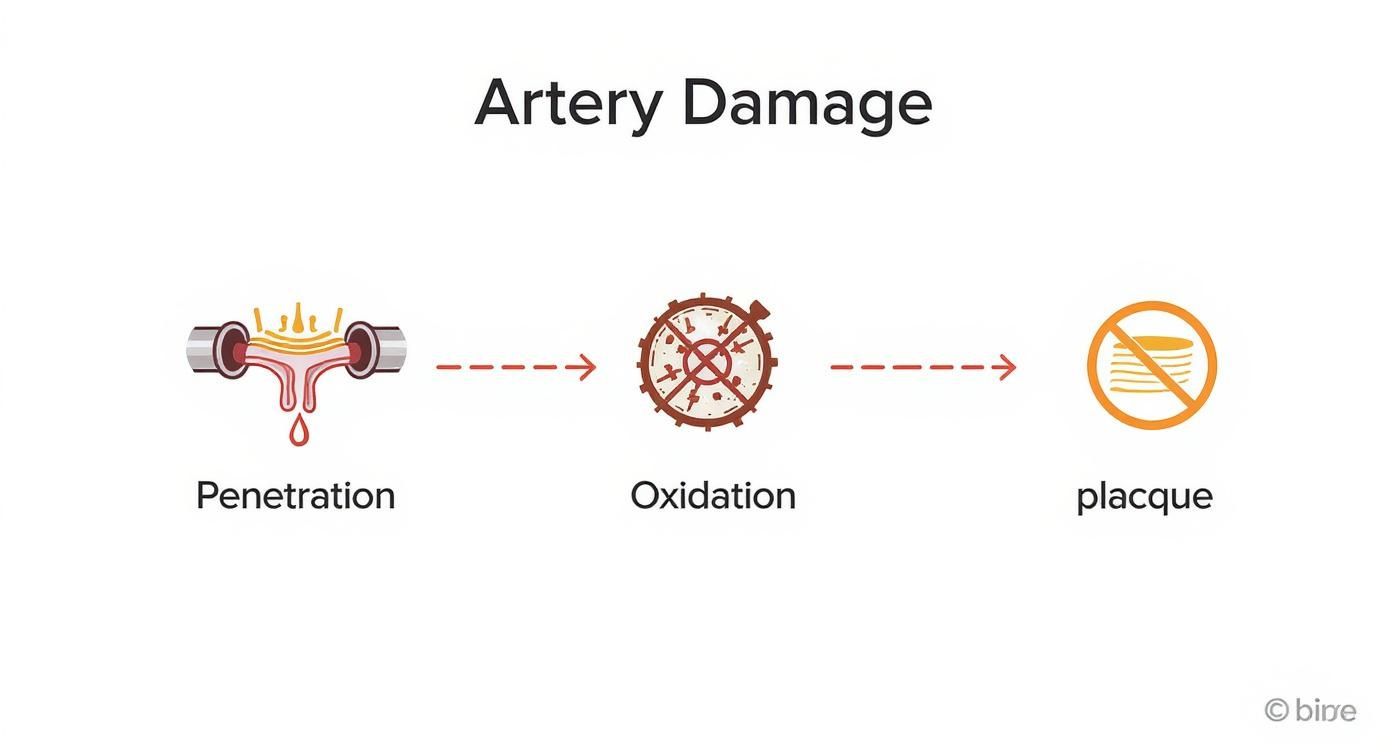
As you can see, the journey to plaque begins when these small LDL particles get into places they don't belong, a risk that skyrockets when your particle count is high.
Why Your Standard Cholesterol Test Can Be Deceiving
So, what’s the problem with the old LDL-C measurement? It’s an estimate of the cholesterol content, and that can be dangerously misleading.
Imagine two people, both with an identical LDL-C of 100 mg/dL, a number that might get a nod of approval from their doctor.
Person A has a low number of large, fluffy LDL particles. Each one is packed with a lot of cholesterol, but there aren't many of them. Their actual risk is relatively low.
Person B has a huge number of small, dense LDL particles. Each carries just a tiny bit of cholesterol, but there are tons of them swarming the bloodstream. Their risk is sky-high.
This mismatch is called discordance, and it's where standard lipid panels completely miss the mark. They see both individuals as "healthy," failing to spot the hidden danger in Person B's profile.
Let's break down the key differences in what these tests tell us.
Metric | Standard Lipid Panel (LDL-C) | Advanced Panel (LDL-P / ApoB) |
|---|---|---|
What it Measures | The estimated amount of cholesterol carried by LDL particles. | The actual number of LDL particles in the blood. |
Analogy | The total cargo in a fleet of delivery trucks. | The total number of trucks on the road. |
Accuracy | Can be misleading; doesn't account for particle size or density. | A direct, highly accurate measure of atherogenic particle burden. |
Risk Prediction | A moderate predictor of cardiovascular risk. | A much stronger and more reliable predictor of risk. |
Measuring LDL-P or ApoB is essential because it gives you the true story. It quantifies the number of "bullets" aimed at your artery walls, not just the "gunpowder" they contain.
The idea that particle size LDL matters isn't new; it first came to light in the late 1980s when scientists began to differentiate between large, buoyant particles (Pattern A) and the more dangerous small, dense ones (Pattern B). If you're curious about the science, you can find more on the history of LDL measurement on Wikipedia. By upgrading to advanced testing, you can move past outdated estimates and get the clarity you need to take control of your long-term health.
Making Sense of Your Advanced Lipid Report
Getting an advanced lipid report back can feel overwhelming. Suddenly, you’re looking at a bunch of new terms like LDL-P, ApoB, and particle patterns that weren't on your old cholesterol tests. But don't worry—this information is what gives you a truly accurate picture of your cardiovascular risk, far beyond what a standard test can show.
Let's start by decoding one of the most important concepts on the report: your LDL particle pattern. This tells you which type of LDL particle is most common in your bloodstream.
Pattern A is what you want to see. This means your LDL particles are predominantly large and fluffy, like big beach balls. They tend to bounce off artery walls and are much less likely to cause trouble.
Pattern B is the high-risk pattern. This indicates that your circulation is filled with small, dense LDL particles—think tiny, hard-hitting golf balls. This pattern is tightly linked to insulin resistance and a much greater risk of plaque buildup.
Understanding Discordance: The Hidden Risk
Now for the most crucial insight an advanced panel provides: spotting discordance. This is a dangerous situation where your standard LDL cholesterol (LDL-C) looks great on paper, but your actual number of LDL particles (LDL-P) or ApoB is sky-high.
Let's imagine a real-world scenario. Your doctor tells you your LDL-C is 95 mg/dL, and you both feel great about it. But then your advanced report reveals an LDL-P of 1,600 nmol/L—a number that screams high risk.
What’s happening here? It means you have a huge army of those small, dense LDL particles, but each one is carrying very little cholesterol. The standard test, which only measures the weight of the cholesterol inside, completely misses the danger. It gives you a false sense of security while your arteries are being bombarded by a high number of atherogenic particles. This is precisely why counting the particles is non-negotiable for true prevention.
Research from the famous Multi-Ethnic Study of Atherosclerosis (MESA) backs this up completely. The study showed that people whose LDL particles were smaller than 25.5 nanometers (Pattern B) had a 2–3 times higher risk of developing coronary artery disease. Unsurprisingly, this pattern was most common in individuals with metabolic syndrome and insulin resistance. You can dig into the MESA findings here to see the data for yourself.
What Are Good Target Ranges?
So, what numbers should you be aiming for? While your doctor will help personalize your goals, here are some widely accepted targets for these key markers:
Marker | Optimal Range | High Risk |
|---|---|---|
ApoB | < 80 mg/dL | > 120 mg/dL |
LDL-P | < 1000 nmol/L | > 1600 nmol/L |
These aren't just abstract numbers; they are clear, actionable goals. Once you know where you stand, you can make targeted changes to your lifestyle and, if needed, work with your medical team on clinical strategies.
The real power comes from looking at these results in context. When you interpret your particle data alongside other key information, like what you’d find in a comprehensive metabolic panel explained here), you finally get a complete, 360-degree view of your metabolic health.
How to Improve Your LDL Particle Quality
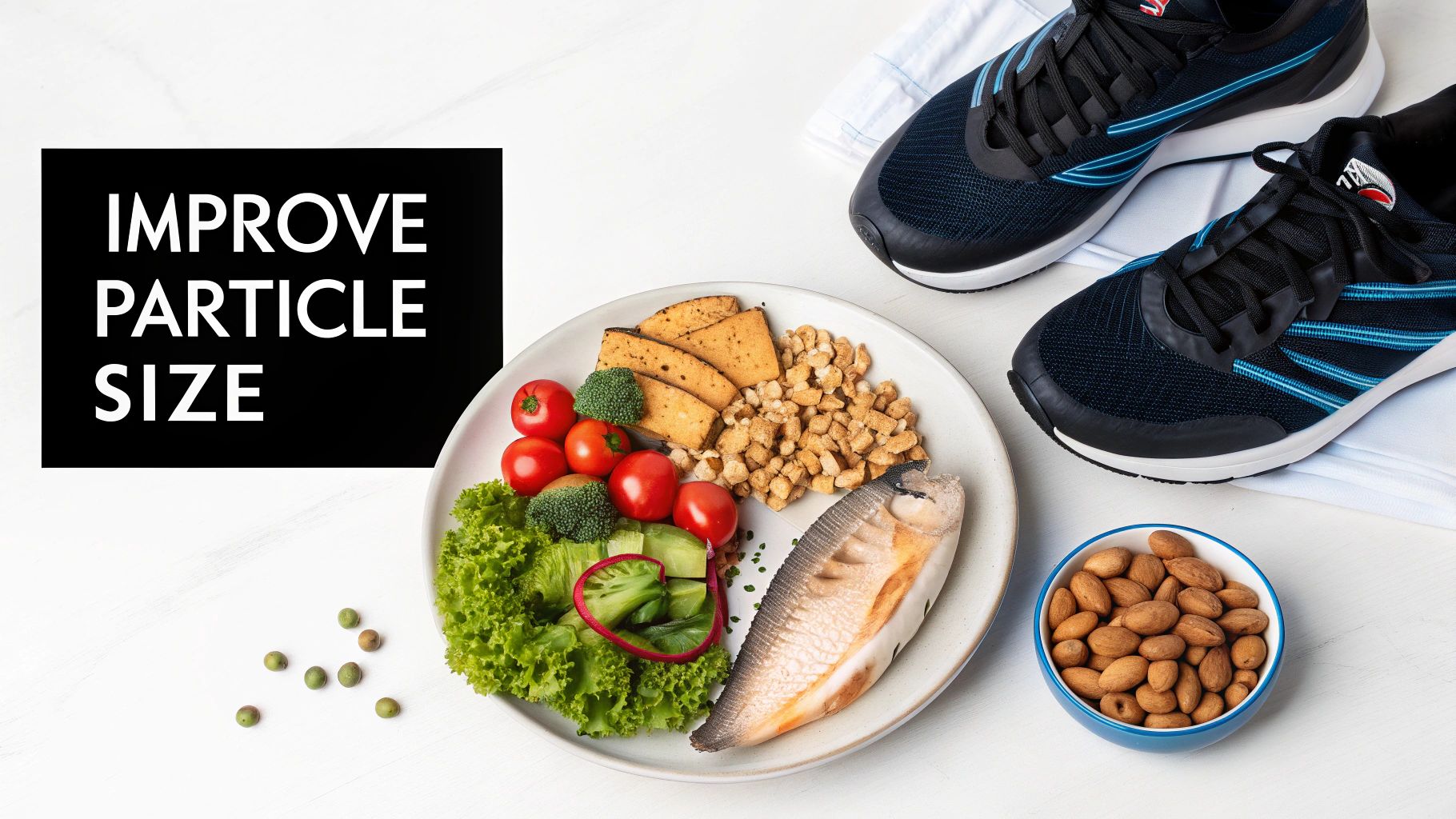
Knowing your LDL particle size is one thing; doing something about it is what truly matters. The good news is that shifting your LDL profile from a hazardous fleet of small, dense particles to a much safer one dominated by large, fluffy ones is well within your control. It all comes down to smart, evidence-based lifestyle changes that get to the root of poor metabolic health.
Your most powerful tool is nutrition. Many people instinctively blame dietary fat for cholesterol problems, but the real villain behind small, dense LDL is a diet loaded with sugar and refined carbohydrates. When you eat things like white bread, pastries, and sugary drinks, your liver goes into overdrive, converting that excess energy into triglycerides. This process directly fuels the production of those dangerous little LDL particles.
Simply by cutting back on these processed carbs, you can kickstart a dramatic improvement in your lipid profile.
Strategic Nutritional Shifts
The game plan is simple: swap out refined carbs and sugars for nutrient-rich foods that promote metabolic flexibility and take the triglyceride-making pressure off your liver. This isn't about some extreme, unsustainable diet—it's about consciously upgrading the quality of what you eat.
Try to build your meals around these key components:
Increase Soluble Fiber: Foods like oats, barley, apples, and beans are packed with soluble fiber. Think of it like a sponge that binds to cholesterol in your gut and helps escort it out of your body.
Embrace Healthy Fats: Monounsaturated fats—the kind you find in olive oil, avocados, and nuts—can help improve your overall lipid numbers without harming your particle size ldl.
Prioritize Quality Protein: Getting enough lean protein keeps you feeling full, which is a huge help in avoiding the mindless snacking on refined carbs that contributes to small particle production.
Making these shifts helps lower your triglycerides and, just as importantly, reduces insulin resistance. This is a critical piece of the puzzle, as poor insulin sensitivity is a major driver of small LDL production. To get a better handle on this, check out your guide to the fasting insulin test), which dives into how your insulin levels affect your overall metabolic picture.
The Impact of Exercise and Lifestyle
Diet is huge, but it's not the whole story. Regular physical activity is a non-negotiable cornerstone of metabolic health. Both cardio and strength training are fantastic for improving how your body responds to insulin and manages triglycerides, which in turn helps nudge your LDL particles toward a larger, healthier size.
Even moderate, consistent movement makes a real difference. It's a shame that so many people don't get enough activity, and you can read more about the importance of regular exercise for heart health to see just how profound its benefits are.
Finally, you can’t forget the foundational pillars of health: sleep, stress management, and maintaining a healthy weight. Chronic sleep deprivation and high stress can fuel inflammation and worsen insulin resistance, actively undermining all your hard work with diet and exercise.
By weaving these nutritional and lifestyle strategies together, you create a powerful synergy. This combined effort is what truly shifts your LDL particles toward a larger, safer size, giving you a significant advantage in reducing your long-term cardiovascular risk.
Your Questions About LDL Particles, Answered
Diving into advanced lipid tests can feel like learning a new language. Let's clear up some of the most common questions about LDL particles so you can feel confident about what these numbers really mean for your health.
If My Standard LDL Cholesterol Is Normal, Do I Need This Test?
Yes, absolutely. This is probably the single most important takeaway. It's entirely possible to have a "normal"—or even low—LDL cholesterol number on a standard test, yet still have a dangerously high number of small, dense LDL particles. This is a huge blind spot in conventional medicine.
This situation, often called discordance, is a hidden risk factor for cardiovascular disease. The only way to know for sure if you're in this boat is with an advanced test that measures your LDL particle number (LDL-P) or ApoB. It gives you the real story of what's happening in your arteries.
Can I Really Change My LDL Particle Size With Diet?
Without a doubt. Diet is your most powerful lever for improving the quality of your LDL particles. The evidence is overwhelming: the most effective way to shift your particles from the small, dense, and dangerous type (Pattern B) to the large, fluffy, and safer type (Pattern A) is to cut back on sugar and refined carbohydrates.
By simply focusing on whole, real foods, you can take direct control over this critical piece of your heart health puzzle.
How Often Should I Get My LDL Particle Size Tested?
I always recommend starting with a baseline advanced lipid panel. This first test is your starting line—it shows you where you stand and reveals whether your particle size ldl profile needs work.
If your initial results aren't ideal, it makes sense to re-test about 3-6 months after making significant diet and lifestyle changes. This isn't just for curiosity; it's about seeing the tangible results of your hard work and confirming your strategy is paying off.
Once your numbers are in a healthy range and you've established a stable routine, checking in once a year is usually enough to make sure you're staying on the right track. Of course, you should always work with your doctor to figure out a testing schedule that makes sense for you.
At Outlive, we’re focused on giving you a complete picture, moving far beyond outdated lab reports. Our platform syncs advanced data, like LDL particle testing, with the real-time signals from your wearables to show you the full story of your metabolic health. Join the waitlist today and start trading guesswork for data-driven precision in your health journey.
Live better for longer.
Research-backed tools, tactics, and techniques to maximize your health, delivered to your inbox every Monday.
Because real transformation starts with trust
and trust starts with clarity.
Founding Member Discount
Includes Devices + Labs
Cancel Anytime Before Activation