Blood Panels

Last Updated
Jan 2, 2026
A Guide to Understanding Your Blood Testing Service
From my own experience, I've learned to think of a modern blood testing service as a detailed look under the hood of my body. It’s a powerful tool that goes way beyond the basic panels you might get at a standard check-up, offering a clear picture of internal health and flagging opportunities to fine-tune your well-being. By analyzing key biomarkers tied to metabolism, hormones, and inflammation, you can establish a baseline for improving not just long-term health, but how you feel and perform every single day.
My Journey from Reactive to Proactive Healthcare
For most of my life, I accepted that feeling ‘okay’ was the best I could expect. I wrote off the constant low-level fatigue and brain fog as unavoidable byproducts of a busy life. My annual physicals always came back clean, with every marker sitting comfortably in the ‘normal’ range, but I knew something was off. I just didn't feel like I was operating at my full potential.
That nagging disconnect between what the lab reports said and how I actually felt is what finally pushed me to dig deeper.
I decided it was time to stop being reactive—waiting for a real problem to show up before doing something about it. I wanted to be proactive. That meant using a comprehensive blood testing service to get a true, high-resolution snapshot of my biology. My goal wasn't to hunt for a disease, but to finally understand the subtle messages my body was sending before they turned into something more serious.
This shift isn't just a personal one; it's part of a massive global trend. The blood testing market is already valued at around USD 105.65 billion and is on track to more than double by 2034, driven by more people demanding preventative, personalized care. You can read more about the growth of the blood testing industry and see for yourself.
My own experience taught me a crucial lesson:
This is what modern self-care is all about. It’s the key to moving beyond just ‘not being sick’ and finally starting to thrive.
What a Comprehensive Blood Test Actually Measures
A quality blood testing service does more than just give you a list of numbers; it translates your body's complex biological language into insights you can actually use. It’s the difference between a simple check-up and a detailed, interconnected dashboard for your health.
For example, a lipid panel acts as a report card for your cardiovascular system, showing you exactly where your cholesterol and triglycerides stand. Your glucose markers reveal how your body’s energy management system is performing, highlighting how efficiently you process sugar. Hormone panels, on the other hand, give you a peek into the internal command center that controls everything from your mood to your energy levels.
Understanding these numbers is the critical first step toward optimizing your health. You can take a deeper dive in our guide to the comprehensive metabolic panel explained.
The healthcare world is moving away from just reacting to sickness and toward proactively building wellness. It's a significant shift.
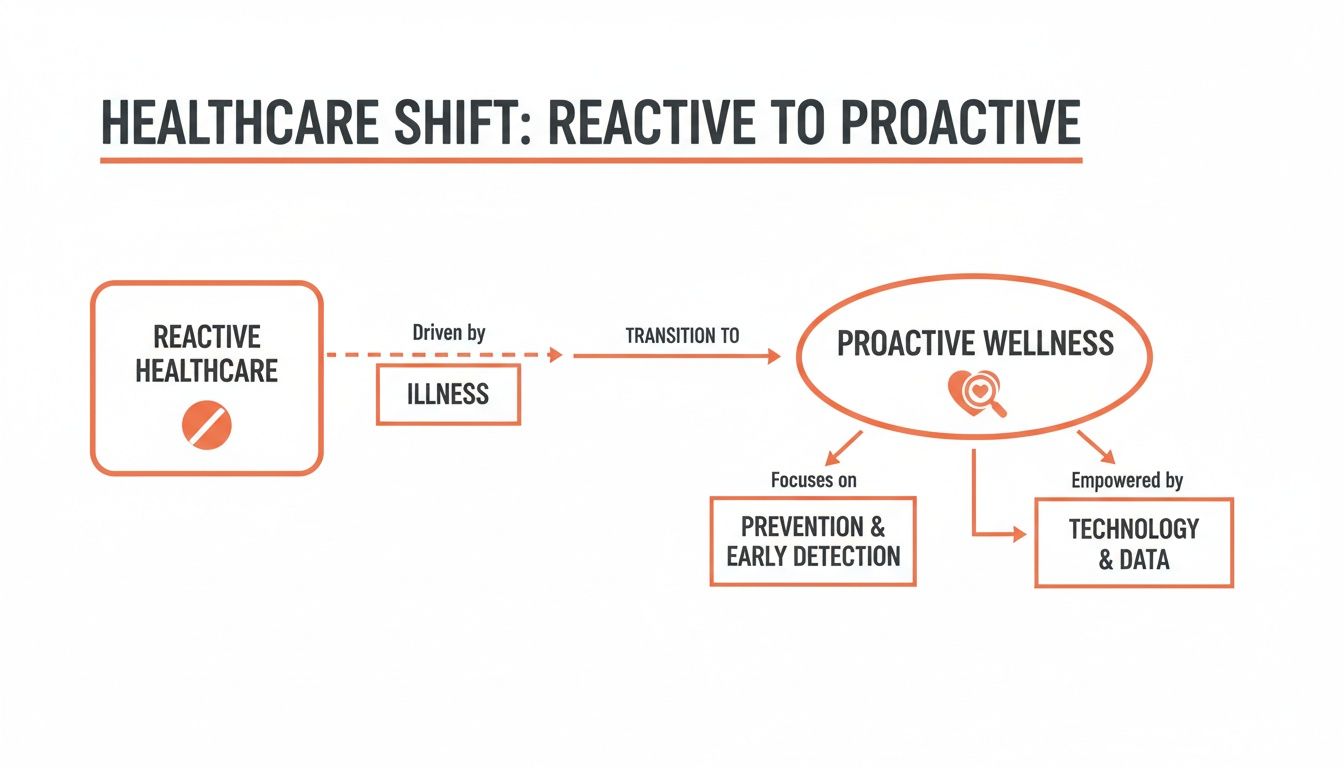
This change is all about using personal health data to prevent problems before they start, rather than just treating symptoms after they appear. Tracking key biomarkers gives you that complete picture.
When you truly understand what's being measured, you can make meaningful changes that boost both your daily performance and your long-term health.
Key Biomarker Panels and What They Reveal
To get a clearer picture of what these tests can tell you, let's break down some of the most common and insightful panels available. Each one provides a different window into your body's operations, from energy metabolism to cardiovascular risk.
Biomarker Panel | What It Measures | Why It Matters for Your Health |
|---|---|---|
Lipid Panel | Total Cholesterol, HDL, LDL, Triglycerides | Assesses your risk for heart disease and stroke by evaluating the fats in your blood. |
Glucose & Insulin | Fasting Glucose, HbA1c, Insulin | Reveals how well your body manages blood sugar, which is key for metabolic health and diabetes prevention. |
Hormone Panel | Testosterone, Estrogen, Cortisol, Thyroid Hormones (TSH, T3, T4) | Provides insight into energy levels, mood, metabolism, stress response, and reproductive health. |
Inflammation Markers | High-Sensitivity C-Reactive Protein (hs-CRP) | Measures systemic inflammation, a hidden driver behind many chronic diseases like heart disease and arthritis. |
Complete Blood Count (CBC) | Red & White Blood Cells, Platelets, Hemoglobin | Checks for signs of infection, anemia, and other blood disorders, giving a general overview of your health. |
Together, these panels create a holistic view, allowing you to connect the dots between different aspects of your health and make more informed decisions.
Choosing the Right Blood Testing Service for You
With so many at-home blood testing kits and services popping up, picking the right one can feel a bit overwhelming. I've been down this road myself, and I quickly learned that not all services are created equal. To get real value and make a confident choice, I’ve found it helps to zero in on a few critical factors that separate the truly great services from the merely good ones.
Accuracy is Non-Negotiable
First and foremost is accuracy. This is the bedrock of any useful health data. The service you choose absolutely must use CLIA-certified labs. CLIA certification is the gold standard for lab quality, ensuring your results are reliable enough to base real health decisions on. Without it, you're just guessing.
A Clinician's Eye Makes All the Difference
Getting a page full of numbers is one thing, but understanding what they mean for you is another. That's why professional oversight is so important. In my opinion, results should always be reviewed by a qualified clinician who can connect the dots between the data and your personal health history. This is how raw numbers become genuinely useful guidance.
Look Beyond the Test Itself
Finally, think about data privacy and the company's overall philosophy. You're trusting them with some of your most sensitive information, so make sure they have a rock-solid privacy policy.
Beyond that, ask yourself if the service is truly set up to help you reach your goals. Are they just selling a one-off test, or are they a partner in your long-term health journey? For a deeper dive into which specific markers are most important, check out our guide on finding the right blood test for longevity.
How to Interpret and Act on Your Results
Getting your blood test report can feel a bit like trying to read a secret code. The first thing to realize is that the standard "normal" ranges you see on the page aren't necessarily the optimal ranges for your specific health goals. Real insight comes from seeing the whole story, not just isolated numbers.

For instance, your glucose, insulin, and lipid levels are all deeply connected. Looking at them together tells a far more compelling story about your metabolic health than viewing each one on its own. If you want to dive deeper into this, we have a guide that explains how to read blood work results in plain English.
This big-picture view is what turns raw data into a practical action plan.
From my own experience, tiny tweaks to my diet, exercise routine, or supplement stack, all guided by my results, created real, measurable improvements in my next set of tests.
Of course, understanding the numbers is only half the battle. Taking action is what actually moves the needle on your health. For example, if your report flags an elevated A1C, you could explore practical strategies on how to lower A1C naturally. This puts you in the driver's seat, allowing you to have much more meaningful conversations with your doctor and truly take ownership of your health journey.
Connecting Data to Your Daily Health Guidance
A standard blood testing service gives you a single snapshot. It's a useful picture, but it only captures one moment in time. The issue is that our bodies aren't static—they're dynamic systems that change every single day. I believe real progress comes from connecting those powerful lab insights to your daily life, giving you a complete, 360-degree view of what’s actually going on inside.
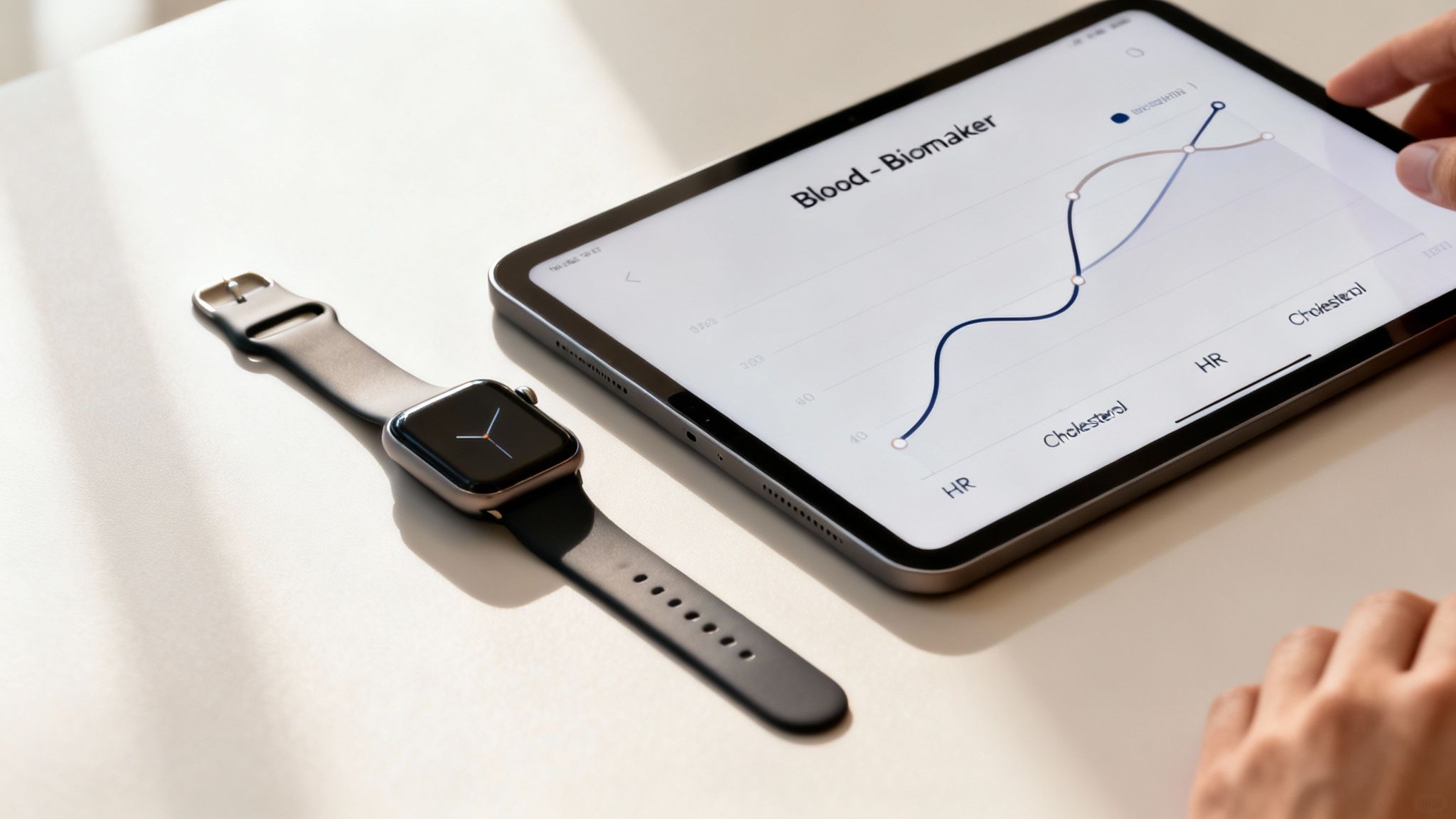
This is why we integrate data from wearables like Oura or Whoop. When we layer your real-time sleep, activity, and stress data on top of your lab results, we eliminate the guesswork. You can finally see the cause-and-effect relationship between your lifestyle and your internal biomarkers.
Traditional Blood Testing vs Our Integrated Method
To see how this works in practice, let's compare the old way with our approach. A traditional lab report is a starting point, but our continuous model is designed to be your long-term partner in health.
Feature | Traditional Service | Our Approach |
|---|---|---|
Data Scope | A single snapshot from one blood draw. | Comprehensive labs plus continuous wearable data (sleep, activity, HRV). |
Frequency | Infrequent, often yearly or when symptoms arise. | Quarterly testing with ongoing real-time monitoring. |
Guidance | Static report with generic recommendations. | Dynamic, personalized protocols managed by a clinical team. |
Application | Identifies existing issues or major deficiencies. | Proactively optimizes health and performance based on daily feedback. |
Patient Role | Passive recipient of information. | Active partner in a continuous feedback loop. |
Our model is built on the idea that more data, interpreted correctly, leads to better outcomes.
Our clinical team uses this rich, combined dataset to craft truly personalized protocols. We can manage and prescribe therapies with confidence because we see exactly how your body responds in real time. The end goal is to empower you in creating a personalized nutrition plan and lifestyle that genuinely works for your unique biology.
This partnership ensures every tweak—whether it's adding a supplement or changing your workout routine—is informed by your own evolving data, helping you optimize not just for today, but for your long-term healthspan.
Common Questions About Blood Testing Services
When you're thinking about using a blood testing service, you're bound to have questions. I know I did when I started, and these are the same questions I hear from people all the time. Let's clear up some of the most common ones so you can move forward with confidence.
The whole point is to make this process feel empowering, not confusing.
How Often Should I Get My Blood Tested?
An annual test is a decent start, but if you're serious about proactive health, you'll want to test more often. I’ve found that testing every six months hits a sweet spot. It provides enough time to implement lifestyle changes and actually see if they're moving the needle on your biomarkers.
This frequency helps you spot subtle shifts before they turn into real problems.
Of course, sometimes more frequent testing is necessary. If you're on a specific protocol like hormone replacement therapy (HRT), your clinician might require more frequent, targeted tests to dial things in just right. The real magic is in consistency—that's what turns a single snapshot into a meaningful trend line of your health.
Are At-Home Blood Testing Kits Accurate?
In my experience, the accuracy of at-home kits can be a mixed bag. Some are decent, but they are incredibly prone to user error. A botched finger prick or a contaminated sample can easily throw off your results, and you might never know it.
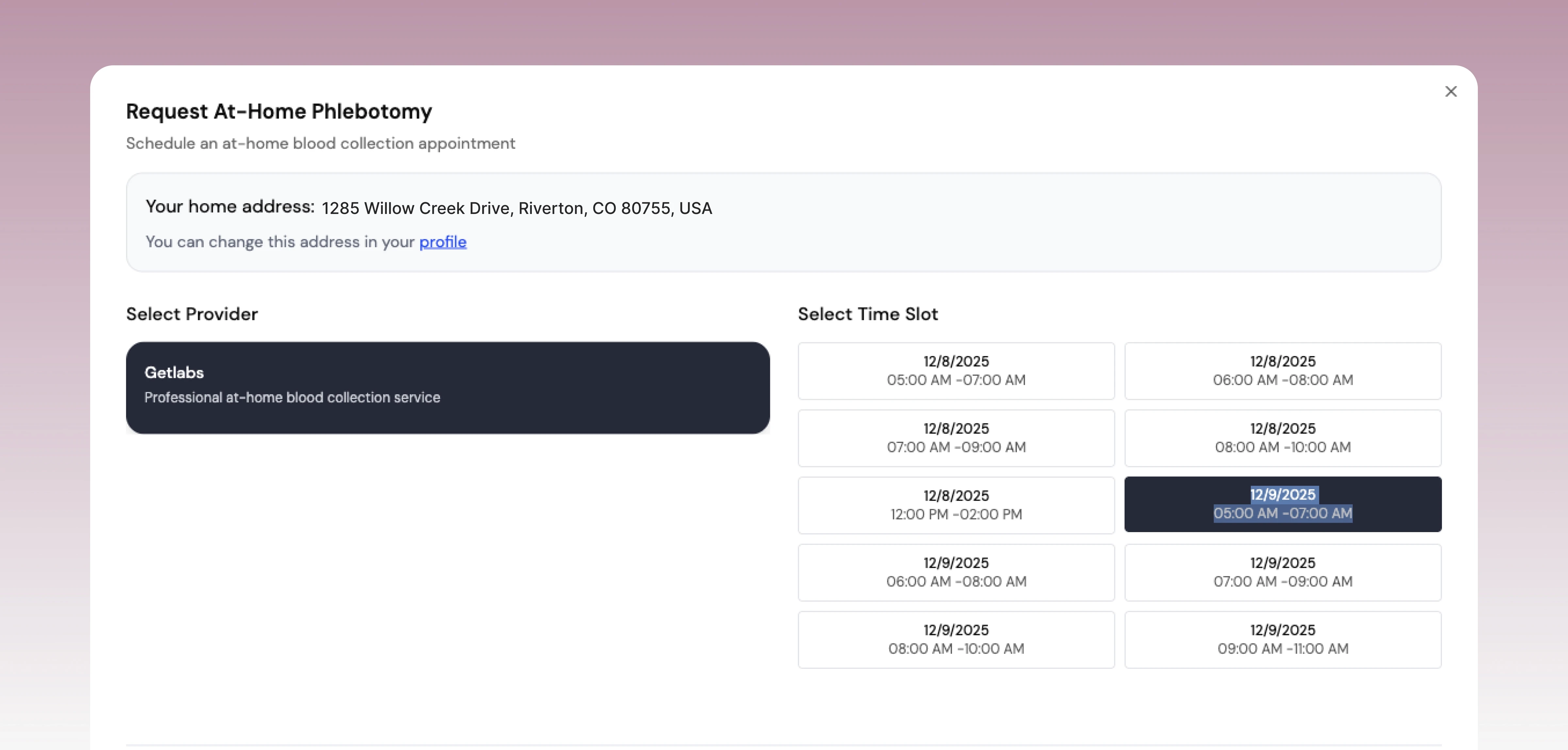
That's why the gold standard is still a proper blood draw performed by a trained phlebotomist.
A professional draw guarantees the sample is clean and stable, which is crucial for getting reliable results across a wide range of complex biomarkers. It's the only method we trust to ensure clinical-grade accuracy for our members.
What If My Results Are Normal But I Still Feel Unwell?
This is probably the most common frustration I hear, and I've been there myself. The problem is that standard laboratory "normal" ranges are incredibly broad—they're based on averages from a massive, and often unhealthy, general population.
Feeling unwell when your results are "normal" usually means your biomarkers aren't optimal for you. We don't just compare you to the average; we analyze your results against ranges fine-tuned for peak performance and longevity. More importantly, we track your personal trends over time.
At Outlive Biology, we don't stop at the numbers. We connect your lab results with your symptoms and wearable data to find the root cause, building a plan to get you from "normal" to optimal. To see how our data-driven approach can help you finally feel your best, learn more at https://outlive.bio.
Live better for longer.
Research-backed tools, tactics, and techniques to maximize your health, delivered to your inbox every Monday.
Because real transformation starts with trust
and trust starts with clarity.
Founding Member Discount
Includes Devices + Labs
Cancel Anytime Before Activation