Sleep optimization

Last Updated
Jan 2, 2026
Sleep Apnea Facts and Statistics You Need to Know
It often starts with a nagging feeling you just can’t shake—that grogginess in the morning, a persistent brain fog, or the sense that a full night’s sleep didn’t actually help you recover. As someone who has dedicated themselves to understanding the nuances of health, I've seen how easy it is to dismiss these things as the cost of a busy life. But behind these common complaints, the real sleep apnea facts and statistics paint a picture of a massive, mostly hidden, public health problem.
The Hidden Scope of Sleep Apnea
For me, grasping the true scale of sleep apnea was a real wake-up call. This isn't just about loud snoring; it’s a serious threat to metabolic health, cognitive performance, and ultimately, our longevity. The numbers, grounded in extensive health research, are frankly staggering.
The global reach of this condition is far bigger than most people assume. Think about it: nearly one billion people worldwide are dealing with sleep apnea, yet a shocking 80-90% of them have no idea.
Drilling down into the data, credible health studies estimate that 936 million adults between the ages of 30 and 69 have obstructive sleep apnea (OSA), which is the most common type. Among them, 425 million are living with moderate-to-severe cases that are actively damaging their health.
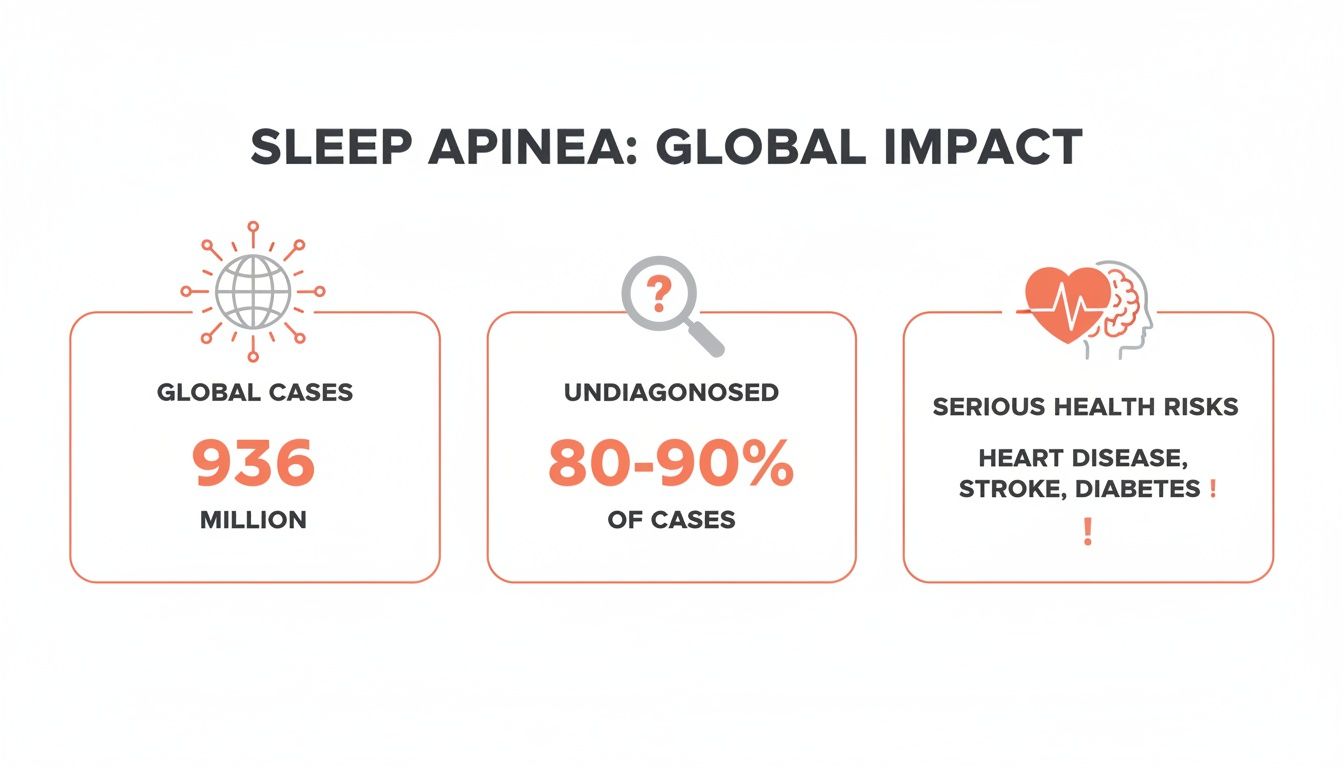
To put it in perspective, for every single person who gets a diagnosis, there are likely four or more out there who are completely unaware they have the condition.
Sleep Apnea By The Numbers
This table breaks down the essential figures, highlighting both the widespread nature of sleep apnea and the critical gap in diagnosis.
Metric | Statistic |
|---|---|
Global Prevalence | Nearly 1 billion people worldwide |
Undiagnosed Cases | An estimated 80-90% of individuals |
Adults (30-69) with OSA | Approximately 936 million |
Adults with Moderate-to-Severe OSA | Approximately 425 million |
These statistics aren't just numbers on a page; they represent millions of people whose health is at risk without them even knowing it.
Beyond tackling a specific condition like sleep apnea, building a foundation of good sleep habits is crucial for long-term health. You can explore some general sleep health tips to support your overall well-being. Recognizing just how common this issue is—and how often it goes unnoticed—is the first, most important step toward taking control of your health.
Why Do So Many Cases Go Undiagnosed?
With numbers this high, it's hard to believe that millions of people are walking around with sleep apnea and have no idea. This massive diagnostic gap is one of the most startling facts about the condition. It's a bit like driving a car with the "check engine" light on, but you've learned to ignore it.
The problem often starts with how we talk—or don't talk—about our symptoms. Many people just don't bring up snoring or daytime fatigue with their doctor. They might brush it off as a normal part of getting older, stress from a busy job, or just being a "bad sleeper." And even if they do mention it, the traditional path to diagnosis—an in-lab sleep study—can be a real barrier.
The Hurdles to Getting a Diagnosis
The old-school approach to diagnosing sleep apnea has created some significant roadblocks for people who need help. The main reasons so many cases slip through the cracks include:
Normalizing Symptoms: It's incredibly common for people to think feeling exhausted all the time is just part of life. They don't see it as a medical symptom worth reporting.
Lack of Awareness: Many people, and frankly even some doctors, don't immediately connect the dots between issues like stubborn high blood pressure or persistent brain fog and a potential sleep disorder.
Testing is a Hassle: In-lab sleep studies, called polysomnography, can be expensive, inconvenient, and often have long waitlists. The thought of spending a night hooked up to wires in an unfamiliar lab is enough to put many people off.
This diagnostic gap is a massive, hidden public health issue. It's estimated that a staggering 80-90% of the 936 million people with OSA worldwide remain undiagnosed. In the United States, that translates to about 24 million people who are completely unaware they have it. A big part of the problem has been relying on subjective questionnaires instead of hard, objective data. You can dig deeper into how these global sleep apnea rates are calculated by looking at studies from leading respiratory health organizations.
The good news is that we're seeing a shift towards more accessible, data-driven methods that are finally starting to shrink this gap. While building better sleep habits is always a smart move—and we have a guide on how to improve sleep quality naturally that covers those fundamentals—it's not enough for a serious underlying condition. Modern wearables and at-home monitoring are empowering people to see what's really happening overnight, uncovering these silent health risks before they turn into major problems.
How Sleep Apnea Derails Your Metabolic Health
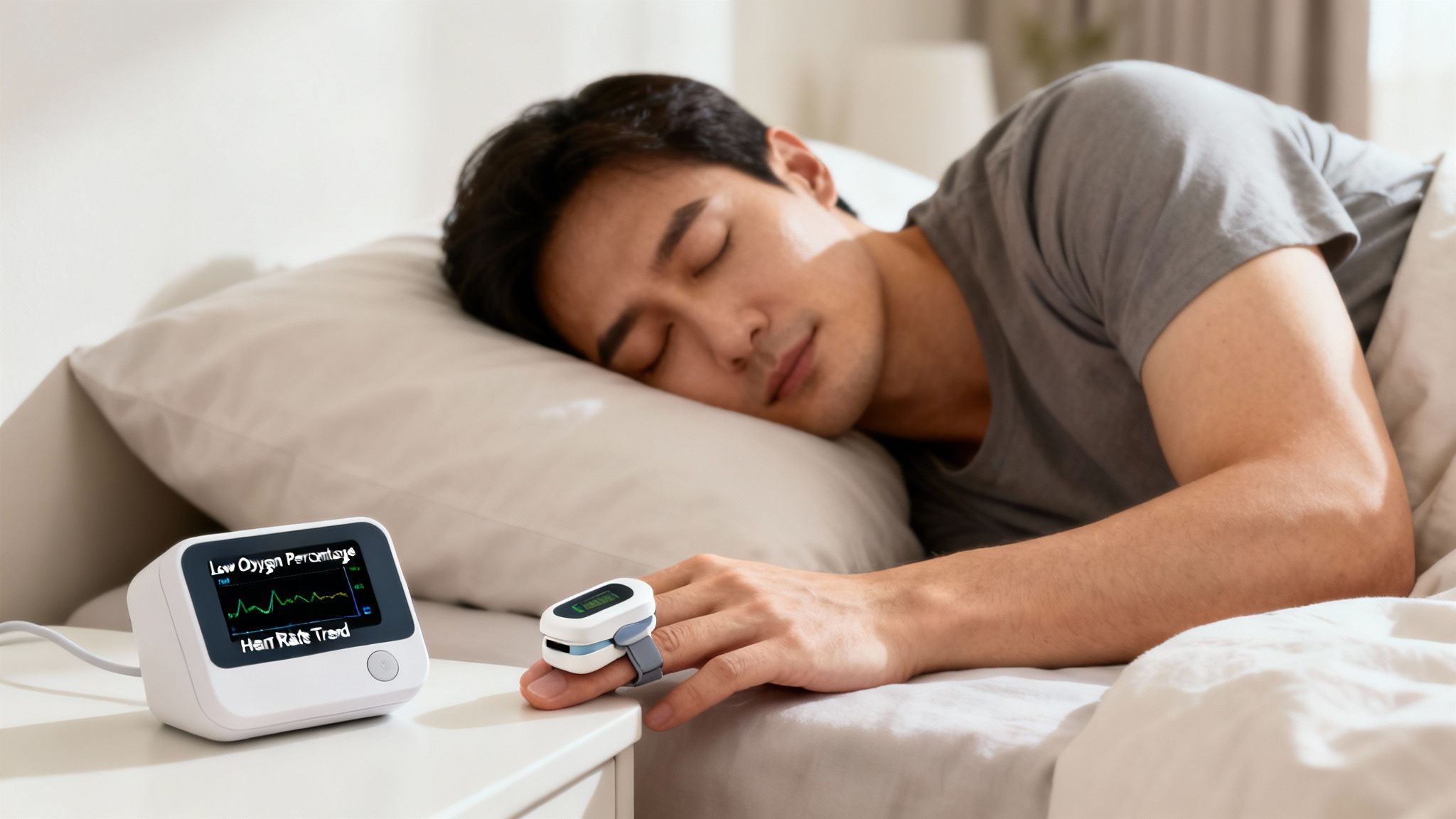
When your breathing stops during sleep, it’s not just a momentary pause. It's a jolt to your entire system, kicking off a powerful internal stress alarm.
As your blood oxygen levels dip, your brain panics. It floods your body with stress hormones like cortisol to force you to wake up and breathe. This yanks you out of restorative sleep and throws your body into a "fight or flight" mode, a state it was never meant to be in for hours on end, night after night.
The Clear Path to Insulin Resistance
Imagine that emergency signal firing dozens, or even hundreds, of times every single night. This chronic, low-grade stress directly sabotages your body's ability to handle blood sugar. All those cortisol spikes keep your glucose levels stubbornly high when they should be at their lowest.
It's no surprise that people with moderate to severe sleep apnea are far more likely to develop insulin resistance. This nightly metabolic battle can make it almost impossible to manage your weight or maintain steady energy, no matter how clean your diet or consistent your exercise.
This is where keeping an eye on your glucose trends becomes invaluable. Understanding the benefits of continuous glucose monitoring can reveal exactly how your sleep quality—or lack thereof—is affecting your metabolic health in real time. This silent, nightly assault on your system shows why getting your sleep right is absolutely non-negotiable for long-term health and longevity.
Using Personal Data to Spot Warning Signs
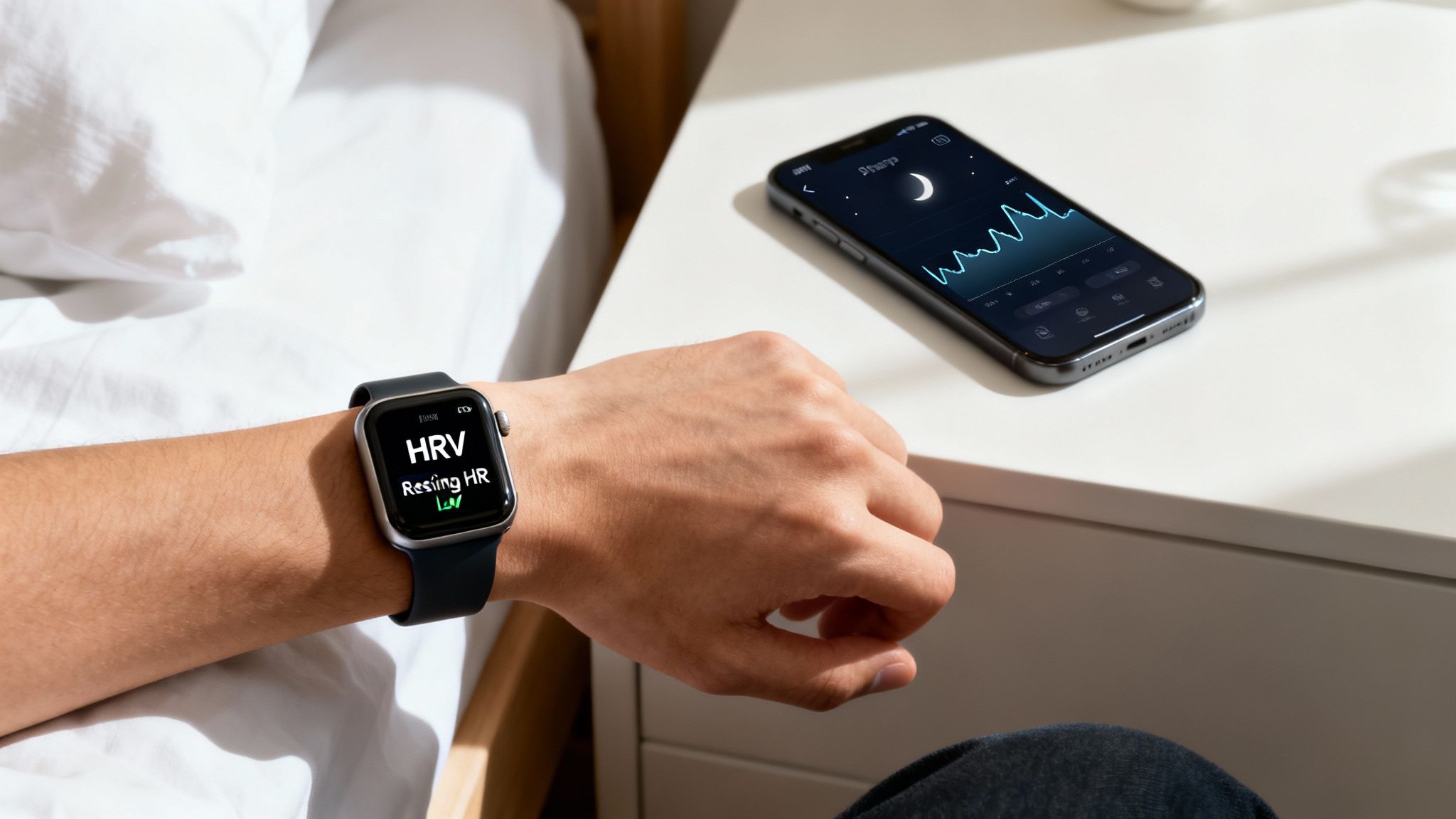
Through my own health journey, I’ve learned a critical lesson: you don't have to wait for obvious, full-blown symptoms to take your health seriously. The data from everyday wearable devices can serve as your personal "check engine" light, giving you early clues long before a problem gets out of hand.
Now, it's important to be clear—these tools can't diagnose a medical condition. But what they can do is build awareness. Think of your health data as a trail of digital breadcrumbs, revealing subtle patterns that might otherwise go completely unnoticed.
Interpreting Your Nightly Biometrics
When your wearable device consistently shows poor readings night after night, that’s a clear signal to start digging deeper. Certain patterns are particularly telling when it comes to potential nighttime breathing issues.
Here are a few key metrics to keep an eye on:
Elevated Resting Heart Rate (RHR): If your heart rate stays high all night, it’s a sign your body is under constant stress instead of truly recovering.
Low Heart Rate Variability (HRV): A chronically low HRV often means your nervous system is stuck in "fight or flight" mode—a classic response to the body's struggle with repeated drops in oxygen.
Frequent Nighttime Awakenings: Does your device log multiple wake-ups that you don't even remember? That could be your brain jolting you awake just enough to take a breath.
These data points give you objective evidence that something is messing with your sleep. This information becomes even more powerful when you look at it alongside your metabolic health markers. For instance, knowing how to interpret a fasting insulin test can add a crucial layer of context, linking poor sleep directly to its metabolic impact.
Armed with this kind of data, you can walk into your doctor's office and have a much more informed, productive conversation about what's really happening when you sleep.
The Real-World Costs of Untreated Sleep Apnea
It's easy to think of sleep apnea as just a health problem, but its consequences ripple out into the real world, carrying staggering financial and professional costs.
From a purely economic standpoint, the numbers are massive. The United States loses up to $411 billion every single year to insufficient sleep, and sleep apnea is a huge driver of that figure. That cost comes from two main places: lost productivity when people are too tired to work effectively and the ballooning healthcare expenses needed to manage all the related health problems.
But the price tag isn't just national; it's deeply personal. The constant brain fog and poor decision-making that come from fragmented sleep can absolutely derail your career.
The Personal Performance Drain
This isn't just a matter of feeling a bit groggy in the morning. We're talking about a real, measurable decline in your cognitive horsepower. When your brain is starved of the deep, restorative sleep it needs to function, you're essentially running on fumes.
Given the serious health and financial fallout we've covered, it's critical to explore effective sleep apnea treatment options.
Common Questions About Sleep Apnea
Let's tackle some of the most common questions that come up about sleep apnea, its statistics, and what it all means for you.
Can You Have Sleep Apnea if You're Not Overweight?
Yes, absolutely. While excess weight is a major risk factor, it’s not the only one by a long shot. This is probably one of the most common and dangerous myths out there.
Your anatomy plays a huge role. Things like a naturally narrow airway, large tonsils, or even the structure of your jaw can be the primary cause. Assuming sleep apnea is only a problem for overweight people is a huge reason why so many cases go undiagnosed. This is exactly why looking at your objective health data is so important—it gives you the full story.
My Wearable Says My Sleep is Bad. Is It Sleep Apnea?
Not necessarily, but it's a huge red flag that you shouldn't ignore. Think of your wearable as an incredible early-warning system, not a medical diagnostic tool.
It’s fantastic at picking up on patterns that are often linked to sleep apnea—like frequent awakenings you don't even remember, an elevated resting heart rate overnight, or consistently low Heart Rate Variability (HRV). Consider this data the evidence you need to have a serious, informed conversation with your doctor about getting a formal sleep study.
How Does Treating Sleep Apnea Actually Improve My Health and Longevity?
Treating sleep apnea gets right to the heart of the physiological stress that batters your body every single night. When you restore consistent breathing and keep your oxygen levels stable, you're hitting the brakes on chronic inflammation and those damaging spikes of cortisol.
This has a direct, positive effect on your body's insulin sensitivity, which helps stabilize your blood sugar and eases the constant burden on your cardiovascular system. Over the long haul, this dramatically lowers your risk of developing related chronic diseases like type 2 diabetes and heart disease, making it a foundational strategy for boosting both your daily performance and your long-term vitality.
At Outlive Biology, we turn your personal health data into a clear plan of action. Instead of guessing, our platform uses continuous monitoring from your wearables, labs, and vitals to provide clinician-guided insights for sleep, metabolic health, and longevity. Take control of your health with a plan built for you. Learn more about our data-driven approach.
Live better for longer.
Research-backed tools, tactics, and techniques to maximize your health, delivered to your inbox every Monday.
Because real transformation starts with trust
and trust starts with clarity.
Founding Member Discount
Includes Devices + Labs
Cancel Anytime Before Activation