Longevity

Last Updated
Jan 2, 2026
What Is a Biological Age Calculator and How Does It Work?
From my own health journey, I've learned that a biological age calculator is less like a birthday counter and more like a real-time health dashboard. It provides a snapshot of how my body is actually doing on the inside, based on lifestyle and health markers, not just the number of candles on my last cake.
Professionally, I see it as a tool to measure how well you're living, not just how long. It's a way to see if your daily habits are helping you age gracefully or, perhaps, speeding things up a bit.
Why Your Chronological Age Is Just a Number
Have you ever met a 60-year-old who runs circles around most 30-year-olds? Or a 40-year-old who feels completely run down? That’s the difference between chronological age and biological age in a nutshell. Simply counting birthdays is a superficial way to look at health.
I often use a classic car analogy. The year the car was made is its chronological age. But its real value and performance depend on how it's been driven, its maintenance history, and the wear and tear on its engine. That’s its biological age. It reflects the true state of your cells, organs, and systems, shaped by everything from your diet and sleep to your stress levels.
Based on health information, a lower biological age means your body is functioning like a younger version of itself, which is fantastic news. A higher one, on the other hand, might be a warning sign that your body is aging faster than it should be.
This is where a biological age calculator comes in. It analyzes key health markers to give you a much more meaningful picture of your internal aging process. Understanding this number is the critical first step toward not just a longer life, but a healthier one. Once I knew my baseline, I could start making targeted changes. In fact, it’s entirely possible to learn how to reverse aging by listening to what your biology is telling you. This shifts the whole conversation from aging being something that just happens to us, to a process we can actively shape.
How Do These Calculators Actually Measure Your Biological Age?
So, how exactly does a calculator peek under the hood to figure out your body's "real" age? It's not magic or guesswork. It's all about interpreting specific biological signals—or biomarkers—that tell the true story of how your body is aging.
The entire concept is about shifting our focus from the number of candles on a birthday cake to the actual health of our cells.
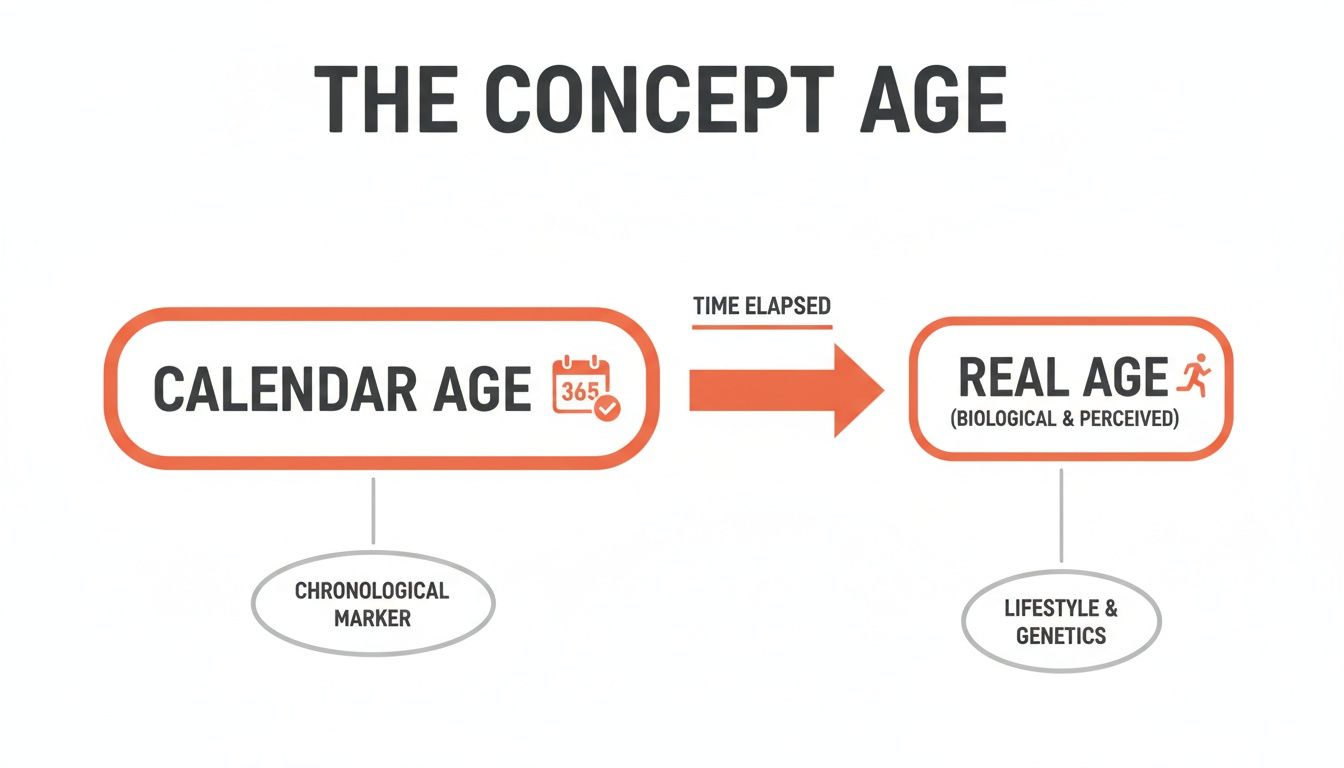
As you can see, your chronological age is just a starting point. Your biological age reflects what's really happening inside.
The Science Behind the Score
There isn't just one way to calculate biological age; different methods look at different clues. Here are the three primary approaches you'll encounter.
Types Of Biological Age Calculators
Each type of biological age calculator offers a unique window into your health, using different inputs to measure distinct aspects of the aging process. The table below breaks down the three main methods.
Calculator Type | Primary Inputs | What It Measures | Best For |
|---|---|---|---|
Epigenetic Clocks | DNA sample (saliva or blood) | Changes in DNA methylation patterns—the chemical tags on your genes. | Getting a precise, cellular-level snapshot of aging. |
Phenotypic / Clinical Scores | Standard blood test markers | The combined impact of lifestyle and health on organ systems. | Assessing overall systemic health and disease risk from routine labs. |
Wearable / Lab Hybrid Models | Lab results + wearable data | Real-time physiological stress and recovery patterns. | Continuous, dynamic tracking of how daily habits affect your aging trajectory. |
Let's dive a little deeper into what makes each of these approaches tick.
Epigenetic Clocks: Reading Your Cellular History
Epigenetic Clocks are often considered the gold standard for precision. Think of your DNA as a massive instruction manual. Epigenetics refers to the chemical tags—called DNA methylation—that get added to the pages over time, telling your cells which instructions to read and which to ignore.
These patterns change in predictable ways as we get older. By analyzing them, epigenetic clocks can create a remarkably accurate timestamp of your cellular age.
Phenotypic Age: The "Health Report Card" Method
A Phenotypic Age score acts more like a comprehensive health report card. It doesn't look at your genes directly. Instead, it analyzes a panel of standard blood test results—the kind you’d get from a routine physical.
Sophisticated AI models can now analyze these markers, looking at everything from kidney function and inflammation levels (hs-CRP) to blood sugar control (HbA1c). Health research has validated that this approach is highly predictive of health outcomes; a higher phenotypic age is strongly linked to the risk of developing chronic diseases.
Hybrid Models: A Live Dashboard for Your Body
The newest approach is a hybrid model that combines the best of both worlds. It takes hard data from your lab tests and merges it with real-time vitals from wearables like an Oura Ring or Apple Watch—think heart rate variability, sleep quality, and daily activity.
This creates a dynamic, continuous view of your aging process. You can see how a poor night's sleep or a stressful week at work directly impacts your body's internal state. Exploring a comprehensive blood test for longevity can give you a better idea of just how detailed this health picture can be.
The Growing Movement Toward Healthspan Optimization
For a long time, the conversation around aging was simple: How can we live longer? But something has shifted. The focus isn't just about adding more years to life anymore; it's about adding more life to our years. We're now talking about healthspan—that period where we feel healthy, vibrant, and fully capable.
This isn't just some niche wellness trend. It's a fundamental change in how we think about our health, both personally and in clinical settings. People are tired of waiting for problems to appear and then reacting. Instead, we want to get ahead of the curve, using concrete data to make smarter choices that boost our vitality now and protect it for the long run. This is exactly where tools like biological age calculators come into the picture.
The Rise of Data-Driven Wellness
This shift in mindset is driving huge growth. The longevity market, valued at 21.29 billion** in 2024, is on track to hit an astonishing **63.03 billion by 2035. People are investing real money to turn the abstract idea of "aging" into something they can actually measure and manage. Read the full research about the longevity market.
A huge piece of the healthspan puzzle lies in nurturing our internal ecosystems. For instance, understanding what are prebiotics and probiotics for gut health is becoming recognized as central to our overall vitality. It's a perfect example of how interconnected everything really is.
Turning Your Biological Age into an Action Plan
Getting your biological age result is just the first step. For me, seeing that number wasn’t some final grade, but a starting line—a dynamic baseline I knew I could actually influence. The real question quickly became: what now?
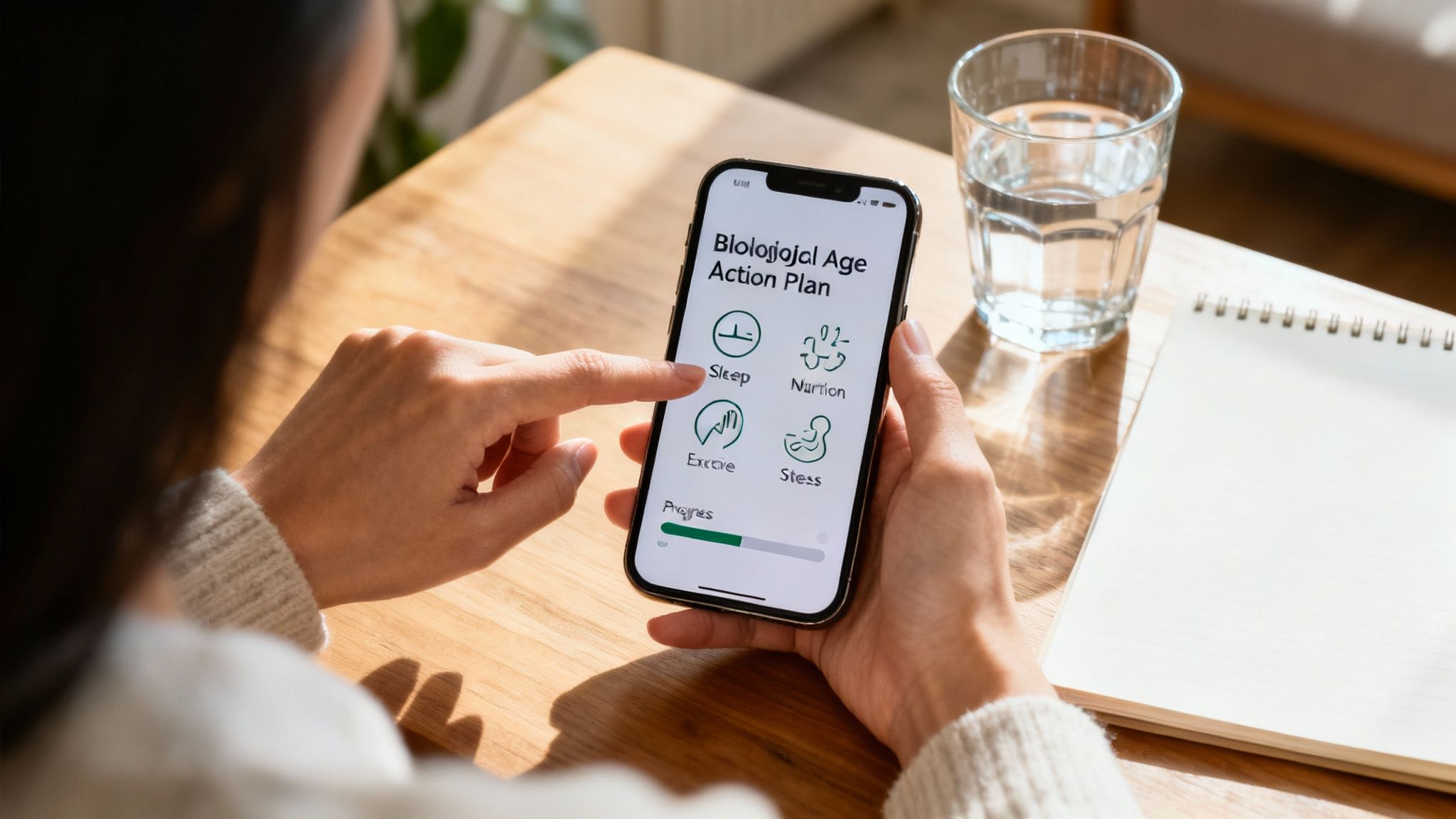
The trick is to turn that powerful piece of data into a personal roadmap for better cellular health. It's really about making small, consistent changes that add up in a big way over time.
Key Lifestyle Factors to Focus On
Believe it or not, your biological age is a direct reflection of your daily habits. Here are the core areas where you can make the biggest impact, starting today.
Sleep: Don't underestimate this one. Aim for 7-9 hours of quality, uninterrupted sleep. This is when your body does its most critical repair and regeneration work. It's non-negotiable.
Nutrition: Focus on a diet packed with whole foods, antioxidants, and anti-inflammatory ingredients. Think leafy greens, colorful berries, and plenty of healthy fats. What you eat directly fuels your cells.
Exercise: A smart mix of cardio and resistance training is vital for keeping your muscle mass and metabolic health in check. Since the goal is long-term health, staying active without getting sidelined is crucial. Learning some good strategies for preventing injuries and staying strong and healthy is a game-changer.
Stress Management: Nothing ages you faster than chronic stress. Bringing mindfulness, meditation, or even just a few minutes of deep breathing into your day can make a massive difference.
Why Continuous Health Monitoring Is Key
Getting a single biological age test is a lot like taking one photograph of a marathon runner. Sure, it captures a specific moment in time, but it tells you almost nothing about the race itself—the endurance, the pacing, the struggles, and the triumphs. Your health is the same way; it’s not a static number but a dynamic story that shifts with every meal you eat, every workout you complete, and every night of sleep you get.
This is where continuous monitoring really changes the game for anyone serious about their healthspan.
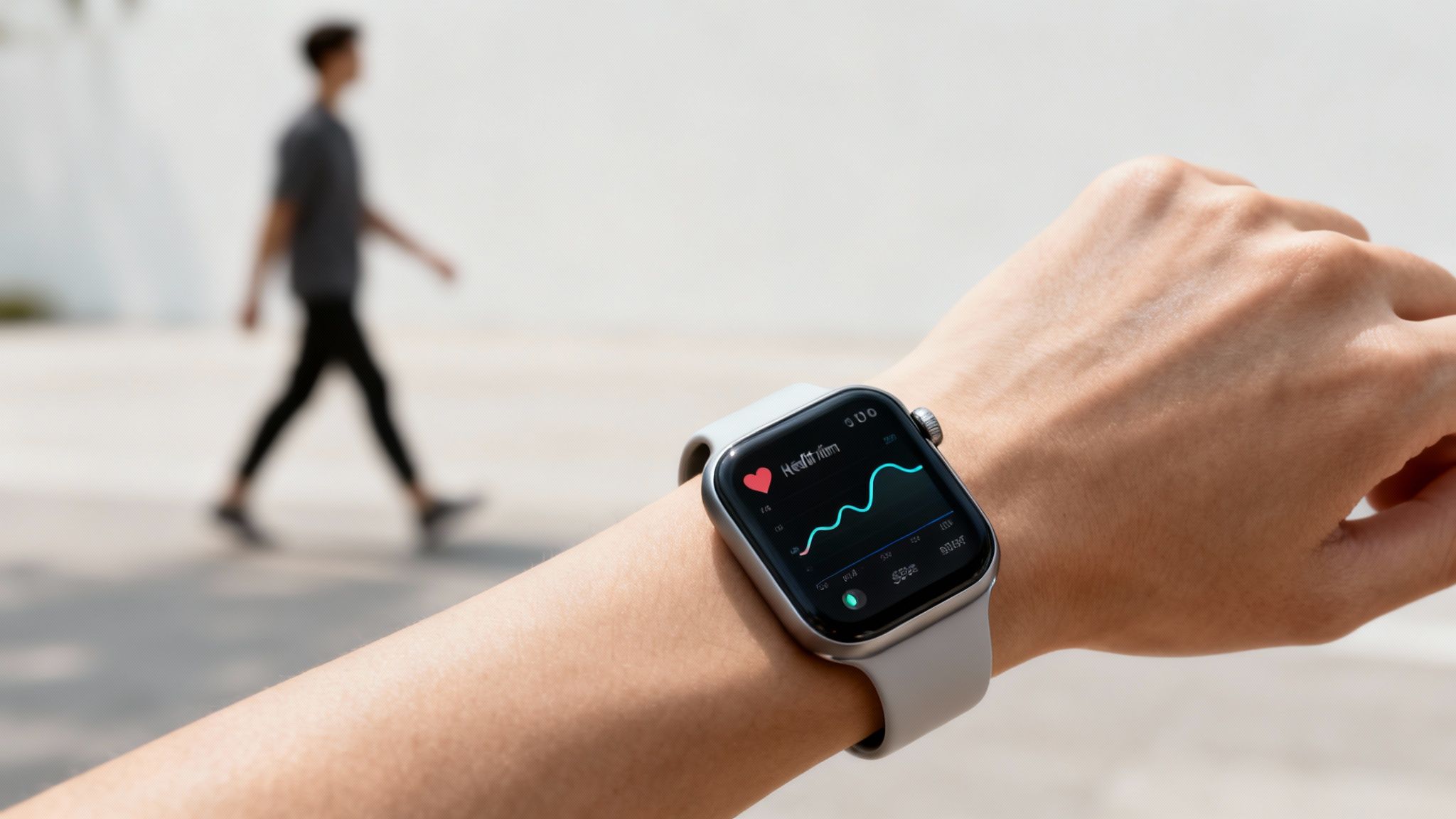
Think of it as swapping that one snapshot for a full-length video of the entire race. When you constantly pull in data from both your lab tests and your wearables, you start to see a complete, 360-degree view of your health in real-time. You can finally connect the dots and see how a stressful week at work tanks your heart rate variability or how a new dietary change actually moves the needle on your inflammation markers.
This dynamic approach is the engine behind the booming longevity market, which is on track to be worth over $26 billion in 2024. As this field matures, the real value isn’t just in the data itself, but in how we blend AI, lab results, and real-time monitoring to create insights you can actually use. We’re moving from guesswork to a clear, data-driven strategy for health. You can read more about how tech is helping people live longer on Fortune.com.
This real-time feedback loop is incredibly empowering. It allows for quick, personalized adjustments because you can see the direct impact of your efforts almost immediately. Instead of just reacting to health problems after they appear, you’re actively steering your own health journey. A great place to start is by picking the best wearable for longevity to begin painting this comprehensive picture.
Frequently Asked Questions
It's completely normal to have questions when first diving into the world of biological age. From my own experience navigating this space, getting straight answers is the first step toward making real progress. Let's walk through a few of the most common questions I hear.
How Accurate Are These Calculators?
The accuracy of a biological age calculator really comes down to what's under the hood. A simple online quiz might give you a fun, ballpark figure, but it’s not something to base health decisions on.
On the other hand, clinically-validated models that dig into your actual lab work and biometric data are a different story. The more high-quality data points you feed the system—from DNA methylation to a full panel of blood biomarkers—the more reliable and genuinely useful the final number will be.
Can I Really Lower My Biological Age?
Yes, absolutely. Think of your biological age less like a fixed number and more like a dynamic score that reflects your current health and habits. It's not set in stone.
Health research has shown time and again that consistent, positive lifestyle changes can measurably lower your biological age. Things like improving your diet, getting regular exercise, managing stress, and prioritizing sleep really do move the needle. Your score is a direct reflection of how your body is responding to the choices you make every day.
How Often Should I Test My Biological Age?
Getting that first result is a fantastic starting point—it gives you a baseline. But the real magic happens when you track it over time.
A single test is just a snapshot. Re-testing every six months or so lets you connect the dots and see a trend line emerge. This is how you find out what’s actually working, track your progress, and make smarter adjustments to your health plan along the way.
Ready to move beyond guesswork and start tracking your health with clinical precision? Outlive Biology integrates your lab results and wearable data into one seamless dashboard, providing real-time insights and clinician-backed guidance to help you lower your biological age. Discover a smarter way to manage your health at https://outlive.bio.
Live better for longer.
Research-backed tools, tactics, and techniques to maximize your health, delivered to your inbox every Monday.
Because real transformation starts with trust
and trust starts with clarity.
Founding Member Discount
Includes Devices + Labs
Cancel Anytime Before Activation