
Longevity

Last Updated
Jan 2, 2026
A Proactive Guide to the Full Body MRI for Longevity
From a personal perspective, I consider a full-body MRI a fundamental piece of my health strategy. It’s a non-invasive scan that uses powerful magnets and radio waves—not radiation—to create incredibly detailed pictures of my internal organs and soft tissues. For me, it's about moving beyond just reacting to symptoms and getting a real, foundational snapshot of what's going on inside my body. This is a level of insight that my wearables and even my regular blood tests just can't provide on their own.
Why I Made a Full-Body MRI My Proactive Health Blueprint
For a long time, my approach to health was fairly standard. I attended annual check-ups, paid attention to how I felt, and dealt with problems as they arose. However, I eventually realized that waiting for symptoms to appear is an outdated, reactive way to manage one's health. In an age where we can track our sleep, heart rate, and metabolic markers in real-time, waiting for a warning light seems primitive.
I wanted a deeper, more fundamental understanding of my body’s internal landscape. This curiosity is what led me to explore the full-body MRI—not as a diagnostic tool for when something is already wrong, but as a cornerstone for proactive health and longevity. It provides a radiation-free look at your internal structures, creating a personal health blueprint that you can build upon.
For quick reference, here’s a simple breakdown of what a full-body MRI entails.
Full Body MRI At a Glance
Key Aspect | Description |
|---|---|
Technology | Uses powerful magnets and radio waves to generate detailed images. |
Safety | Radiation-free, making it a safer option for comprehensive screening. |
Purpose | Provides a structural overview of internal organs, soft tissues, and bones. |
Focus | Primarily used for proactive screening to detect anomalies before symptoms appear. |
Duration | Typically takes around 60-90 minutes to complete. |
This table captures the essence of the scan, but its true value is realized when it's integrated into a comprehensive view of your health.
Moving Beyond Surface-Level Data
Wearables and continuous biometric monitors are essential parts of my health toolkit. They provide a constant stream of functional data about how my body is performing. Blood tests offer a critical biochemical snapshot, detailing information on hormones, inflammation, and nutrient levels.
But neither of these tools can reveal the actual structure of your organs. They can't detect a small, asymptomatic tumor on a kidney, spot an early-stage aneurysm, or reveal subtle disc degeneration in the spine. A full-body MRI fills this critical knowledge gap.
This powerful imaging has become a key part of my personal health intelligence strategy. It’s about shifting my mindset from "wait and see" to a more empowered "look and plan" approach.
The Growing Importance of Advanced Imaging
This isn't just a personal preference; the medical community is increasingly recognizing the immense value of advanced imaging for early detection. The global market for MRI systems, valued at USD 6.56 billion and projected to reach USD 9.01 billion, is a clear indicator of this trend.
Oncology imaging is the fastest-growing application within this market, largely due to the adoption of whole-body protocols for early cancer detection and ongoing monitoring. You can explore these market dynamics to understand how quickly its role in healthcare is expanding.
When you integrate a full-body MRI into a complete health plan, you add a layer of data that other tools simply can't offer. For me, it provides the peace of mind that comes from knowing I’ve looked deeper, allowing for truly personalized and forward-thinking health management.
How an MRI Creates a Map of Your Body
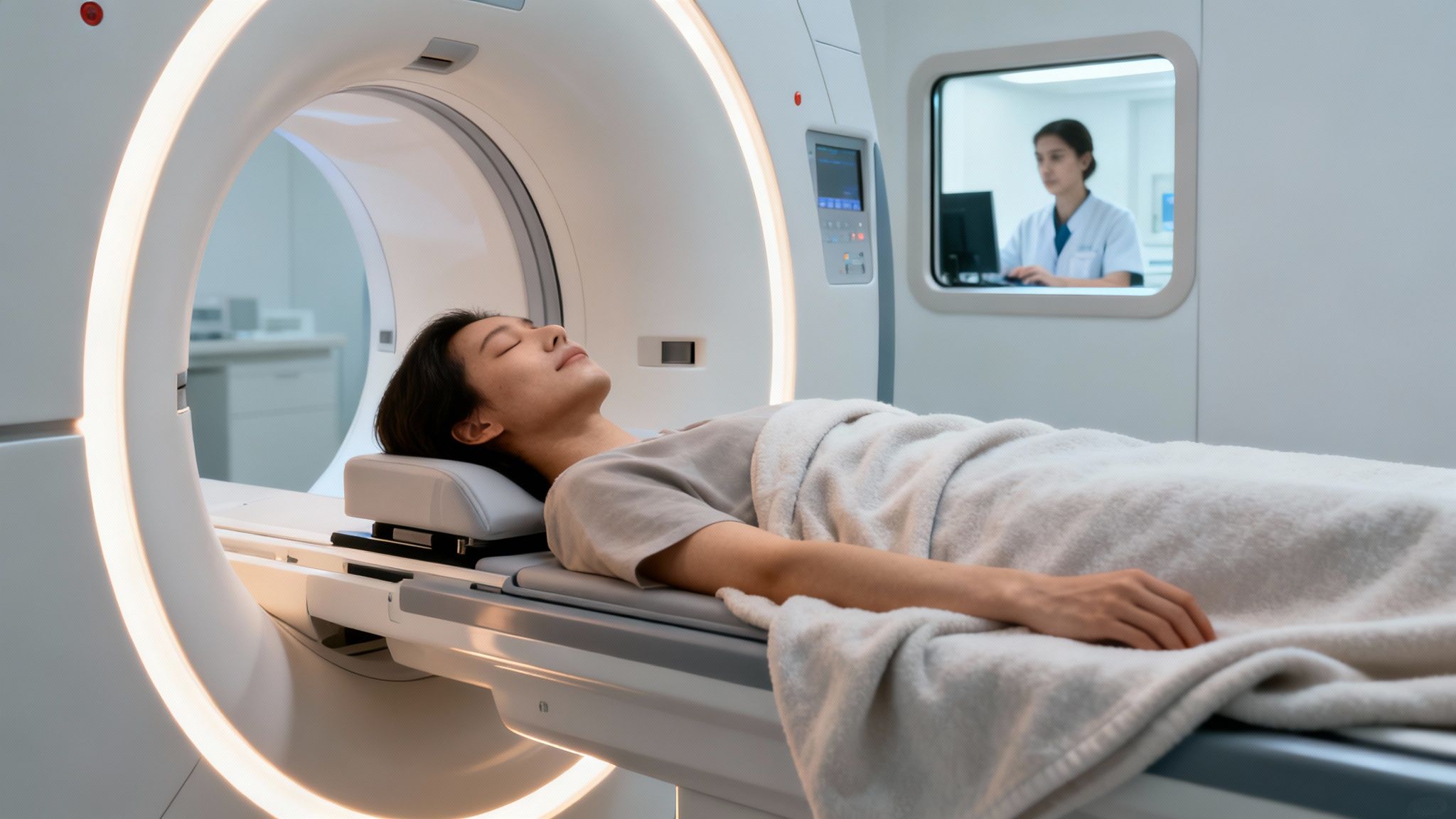
Stepping into the world of a full body MRI can seem futuristic, but the science behind it is both elegant and safe. Unlike X-rays or CT scans, an MRI uses zero ionizing radiation. Instead, it relies on a powerful magnetic field and radio waves to generate a detailed picture of your internal structures.
Our bodies are composed mostly of water, and water molecules contain protons that act like microscopic magnets. Inside the MRI machine, its powerful magnet aligns these protons. A pulse of radio waves then temporarily knocks them out of alignment.
When the pulse stops, the protons realign, releasing a faint energy signal that the scanner detects. A computer translates these millions of signals into cross-sectional images, or "slices," of your body. Stacking these slices creates a complete, three-dimensional view of your organs and soft tissues. This technology has evolved to create explorable maps of our anatomy, which you can see in action with MRI 3D Image Creation and AI-Powered Analysis.
What the Experience Is Really Like
I’ve had a few of these scans myself, and knowing what to expect removes much of the mystery. The machine is a large, tube-shaped magnet. You'll lie on a bed that slides smoothly into the center of the tube. Your most important task is to remain as still as possible to help the machine capture clear images.
Once the scan begins, you'll hear a series of loud thumps, clicks, and whirring sounds. This is the normal sound of the machine's components working. Every clinic I have visited provides headphones with music or earplugs to help you relax.
The scan itself is completely painless; you cannot feel the magnetic field or radio waves. For me, the only challenge was staying still for the 60 to 90 minutes it typically takes. I found that focusing on slow, steady breathing was the best way to remain calm and motionless.
Understanding Scan Protocols: With and Without Contrast
Not all full-body MRIs are the same. The imaging center will follow a specific protocol, and one of the primary differences is whether a contrast agent is used.
Scans Without Contrast: This is the standard for most proactive health screenings. It provides a high-resolution view of your body’s anatomy and is highly capable of detecting a wide range of structural anomalies.
Scans With Contrast: In certain situations, a contrast dye is injected into the bloodstream. This fluid, typically containing gadolinium, makes specific tissues, blood vessels, or potential tumors "light up" on the scan, giving the radiologist a clearer view.
Contrast is useful for investigating known issues like inflammation or assessing blood supply to a specific area. The decision to use it is made by the clinical team based on your health history. For my own longevity-focused scans, we have consistently used a non-contrast protocol, as it provides an excellent baseline overview without introducing an external agent.
The Real Power of Early Detection: What It Can Actually Find
The single biggest reason I made a full-body MRI a cornerstone of my health strategy is its power to find things before they become significant problems. Much of modern medicine is reactive; we wait for pain, a lump, or fatigue to signal that something is wrong. Proactive screening flips that script. It’s about checking the engine while it’s still running perfectly.
This scan provides a detailed anatomical map, surveying your internal structures for anomalies that could be the quiet beginning of a disease. It’s the difference between catching a small, manageable issue and being blindsided by a major crisis. For me, this isn't just about longevity—it's about preserving the quality of those years.
Uncovering Health Risks Hiding in Plain Sight
A full-body MRI is especially effective at imaging soft tissues. This is crucial because many vital organs lack standard, routine screening methods for the general population. We have mammograms and colonoscopies, but what about the pancreas, kidneys, or liver? Too often, we operate without this visibility until symptoms appear.
Here are a few critical conditions a full-body MRI can provide an early warning on:
Silent Cancers: It can spot small, asymptomatic tumors in organs like the pancreas and kidneys. Pancreatic cancer is notoriously difficult to detect, with a staggering 80% of cases diagnosed only after it has spread. An MRI offers a chance to see these growths when they're small and more treatable.
Aneurysms: These are weak, bulging spots in a blood vessel, often in the brain or aorta. Most aneurysms are silent until they rupture, a catastrophic event. An MRI can identify these weak spots, allowing for monitoring or intervention.
Spinal Degeneration: Many of us lead more sedentary lives, leading to issues like disc herniations or spinal stenosis. An MRI can reveal the extent of this wear and tear long before it causes chronic pain, giving you a chance to address it with physical therapy or lifestyle changes.
A Deeper Look at Your Internal Systems
Beyond identifying major problems, a full-body MRI provides extensive information about your overall systemic health. It can spot the early signs of non-alcoholic fatty liver disease (NAFLD), a condition that rarely causes symptoms but can lead to serious liver damage if unaddressed. It can also identify uterine fibroids or ovarian cysts in women and prostate enlargement in men, providing a solid baseline for future monitoring.
Think of it as taking a complete inventory of your body's major structures. You are not just looking for one specific thing; you are building a complete picture that can inform your entire health plan.
This is also where combining different data types becomes so powerful. An MRI can show a structural issue, but it can’t reveal your body's biochemical state. For instance, it can't measure heavy metal toxicity. A truly comprehensive health plan must include specific lab work, such as a heavy metal test, to understand potential environmental exposures.
A Real-World Story of Early Detection
To illustrate this point, allow me to share an anonymized story of an acquaintance. He was a healthy, active man in his late 40s who decided to get a full-body MRI as part of his proactive health plan. He felt great, had zero symptoms, and no family history of major diseases.
The scan found a small, 2-centimeter mass on his kidney. Because it was caught at Stage 1, his treatment was a minimally invasive procedure. Had he waited for symptoms—which might have taken years—the story could have been dramatically different, likely involving more aggressive treatments with a far more uncertain outcome.
This is the real, life-altering power of proactive screening. It’s not about finding something to worry about; it’s about finding something you can act on, early.
Setting Realistic Expectations for Your Scan Results
I am a strong advocate for the full-body MRI, but it’s crucial to approach it with realistic expectations. This technology is incredibly powerful, but it’s not a magic crystal ball. From my experience, one of the most important things you can do is set the right expectations for what the scan can—and cannot—reveal.
The primary reason to get a proactive scan is to catch significant, solvable problems early. But because the imaging is so sensitive, it will almost certainly find something. The skill lies in interpreting those findings correctly.
The Reality of Incidental Findings
It is incredibly common for a full-body MRI to identify incidental findings, or "incidentalomas." These are abnormalities found by chance while the radiologist scans your body.
The overwhelming majority of these findings are benign and have no impact on your health. You can think of them as the anatomical equivalent of a mole on your skin—they are part of your unique landscape but do not pose a threat.
Common examples include:
Simple Cysts: Small, fluid-filled sacs on the kidneys or liver that are extremely common and almost always harmless.
Hemangiomas: Benign clusters of blood vessels, often found on the liver or spine.
Benign Nodules: Tiny, non-cancerous growths, such as those that can appear on the thyroid or adrenal glands.
Studies show that up to 95% of patients undergoing a screening MRI will have an abnormal finding. Of those, the vast majority—over 90%—are not clinically relevant. The challenge is not the scan's ability to see things, but having the expertise to interpret what it sees.
Understanding False Positives and Potential Anxiety
This brings us to the topic of a false positive. This occurs when a finding initially appears worrisome, prompting more tests (like a follow-up MRI, a CT scan, or even a biopsy), only for it to be confirmed as benign.
While receiving an all-clear is a relief, the process can cause anxiety. I have been there myself—seeing an "indeterminate" finding on a report is enough to be concerning. This is a real part of the screening process, and it is something to be prepared for.
This is why the step that comes after the scan is arguably more important than the scan itself.
The Critical Role of Expert Interpretation
Your MRI results are a complex dataset that demands an expert eye. A skilled radiologist specializing in whole-body imaging is your first, most critical filter. They have the experience to distinguish a harmless cyst from something that warrants a closer look.
However, the radiologist's report is just one piece of the puzzle. The real value comes from discussing these findings with a knowledgeable clinician who understands your complete health picture. This is where the scan's data is integrated with your blood work, biometric data from wearables, and your personal and family medical history.
For instance, a small lesion on the liver might be dismissed in a healthy person with perfect lab results, but it could carry more weight for someone with a history of liver disease. This synthesis of information transforms raw data into a meaningful, actionable health plan. A full-body MRI is just one data stream in your overall health strategy, and its power is unlocked only when interpreted within that bigger picture.
Choosing the Right Screening Tool: MRI vs. CT vs. PET Scans
Deciding to take a proactive approach to your health is a significant step, but choosing the right imaging tool can feel overwhelming. I’ve spent considerable time researching these options, and from both a personal and professional standpoint, the full-body MRI is the clear winner for longevity screening. That said, it’s not the only tool, and understanding how it compares to CT and PET scans is crucial for making a confident decision.
I think of these tools like different types of home inspectors. An MRI is a detailed structural survey using advanced sensors to check the integrity of your walls and foundation without causing a single crack. A CT scan uses X-ray vision to see the framework—powerful, but involving radiation. A PET scan is different; it's like using a thermal camera to see where energy is being used, highlighting areas of high metabolic activity.
This diagram gives a great overview of what to expect from a highly sensitive scan like an MRI, especially when navigating the results.
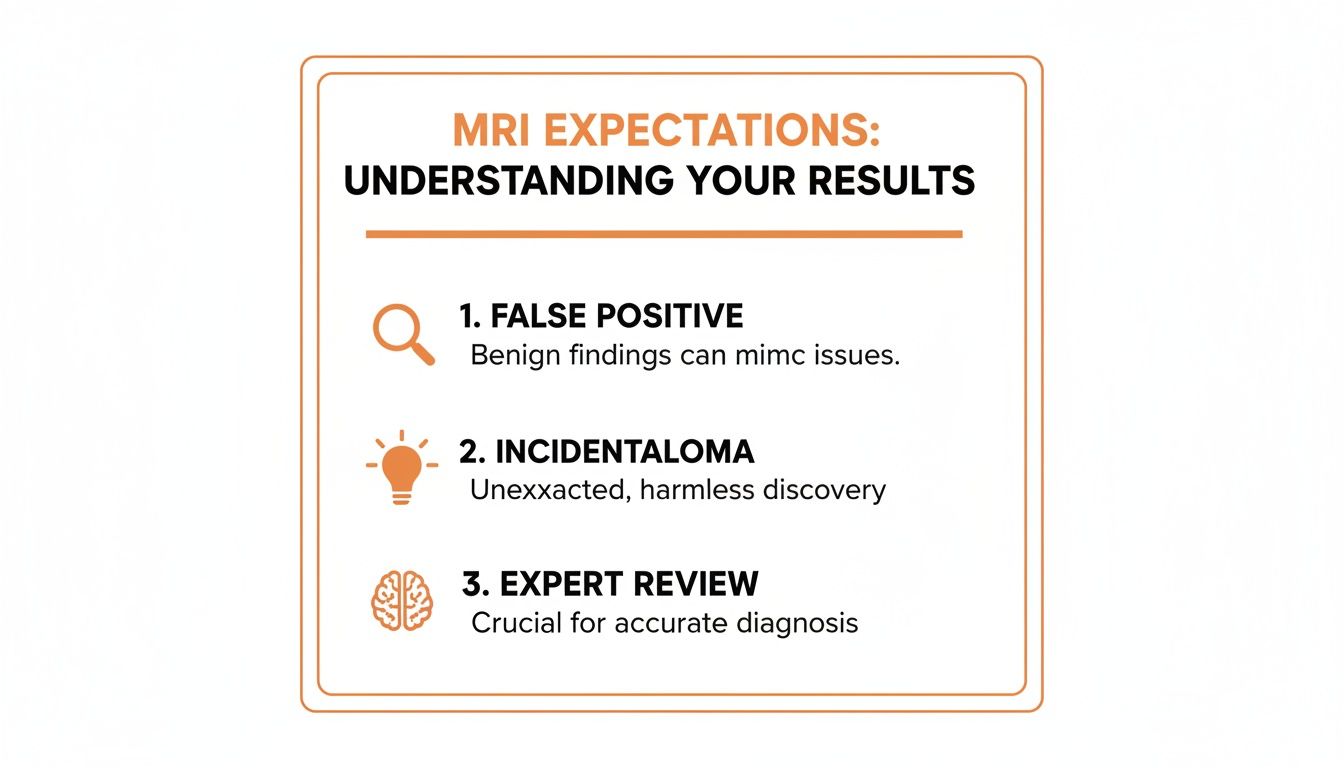
As you can see, the power of the scan is only realized when you have an expert to help interpret the findings, separating the signal from the noise.
Comparison of Whole-Body Screening Modalities
To understand the trade-offs, it helps to see these technologies side-by-side. Each has strengths, weaknesses, and ideal applications. This table breaks down the core differences.
Feature | Full Body MRI | Low-Dose Whole Body CT | PET-CT Scan |
|---|---|---|---|
Technology | Uses strong magnets and radio waves to create detailed images. | Uses X-rays (ionizing radiation) to create cross-sectional images. | Combines CT imaging with a radioactive tracer to detect metabolic activity. |
Best For | Soft tissues: brain, organs (liver, pancreas, kidneys), muscles, spine. | Bones, lungs, and calcified structures. Often used for lung cancer screening. | Functional imaging: detecting cancer, assessing treatment response, checking for metastasis. |
Radiation Exposure | None. This is a major advantage for routine screening. | Low to moderate. While lower than a standard CT, it's still a factor. | High. Involves radiation from both the CT scan and the radioactive tracer. |
Key Advantage | Unparalleled soft tissue detail without any radiation risk. | Fast and excellent for specific targets like lungs and bone fractures. | Shows how cells are functioning, not just their structure, making it highly sensitive for active cancer. |
Limitations | Less effective for bone detail; longer scan time; can't be used with some implants. | Uses ionizing radiation; less detail in soft tissues compared to MRI. | High cost, significant radiation dose, and not typically used as a primary screening tool. |
Ultimately, the choice comes down to your specific goals. For a comprehensive, radiation-free look at your body's structure as part of a longevity strategy, the full-body MRI is in a class of its own.
The Right Tool for the Right Job
The fundamental difference between these scans is how they create an image and what they’re designed to see. A full-body MRI uses powerful magnets and radio waves, making it completely radiation-free. For anyone considering repeated screenings over a lifetime, this is a game-changer.
A low-dose CT scan relies on X-rays and is fantastic for a clear picture of bones and lung tissue. A PET scan is a functional tool that tracks a radioactive tracer to pinpoint metabolic activity, making it useful for finding cancer cells, which consume more energy than healthy ones. For a deeper dive, here is a great resource on the key differences between CT scans and MRIs.
When Each Scan Makes the Most Sense
So, how do you decide? Here’s a brief breakdown:
Full-Body MRI: This is my go-to for general, proactive screening. Its ability to visualize soft tissues makes it perfect for catching the earliest signs of tumors, aneurysms, and degenerative changes, all without radiation risk.
Low-Dose CT Scan: This is typically reserved for specific use cases, like lung cancer screening in high-risk individuals (e.g., long-term smokers). Because it uses radiation, it’s not ideal for routine, whole-body screening for most people.
PET Scan: This is more of a specialist’s tool, not a first-line screener. It’s most often used in oncology to see if a known cancer has spread or to check how a tumor is responding to treatment.
A full-body MRI gives you a structural baseline that complements the functional, real-time data from your labs and wearables. While other tools have their place for specific diagnostic needs, the MRI offers the best balance of safety and comprehensive detail for a long-term longevity strategy. It's the same philosophy we apply when finding the https://outlive.bio/blog/best-wearable-for-longevity—it’s all about getting the highest quality data with the least amount of friction or risk.
Putting It All Together: Your 360-Degree Health Picture
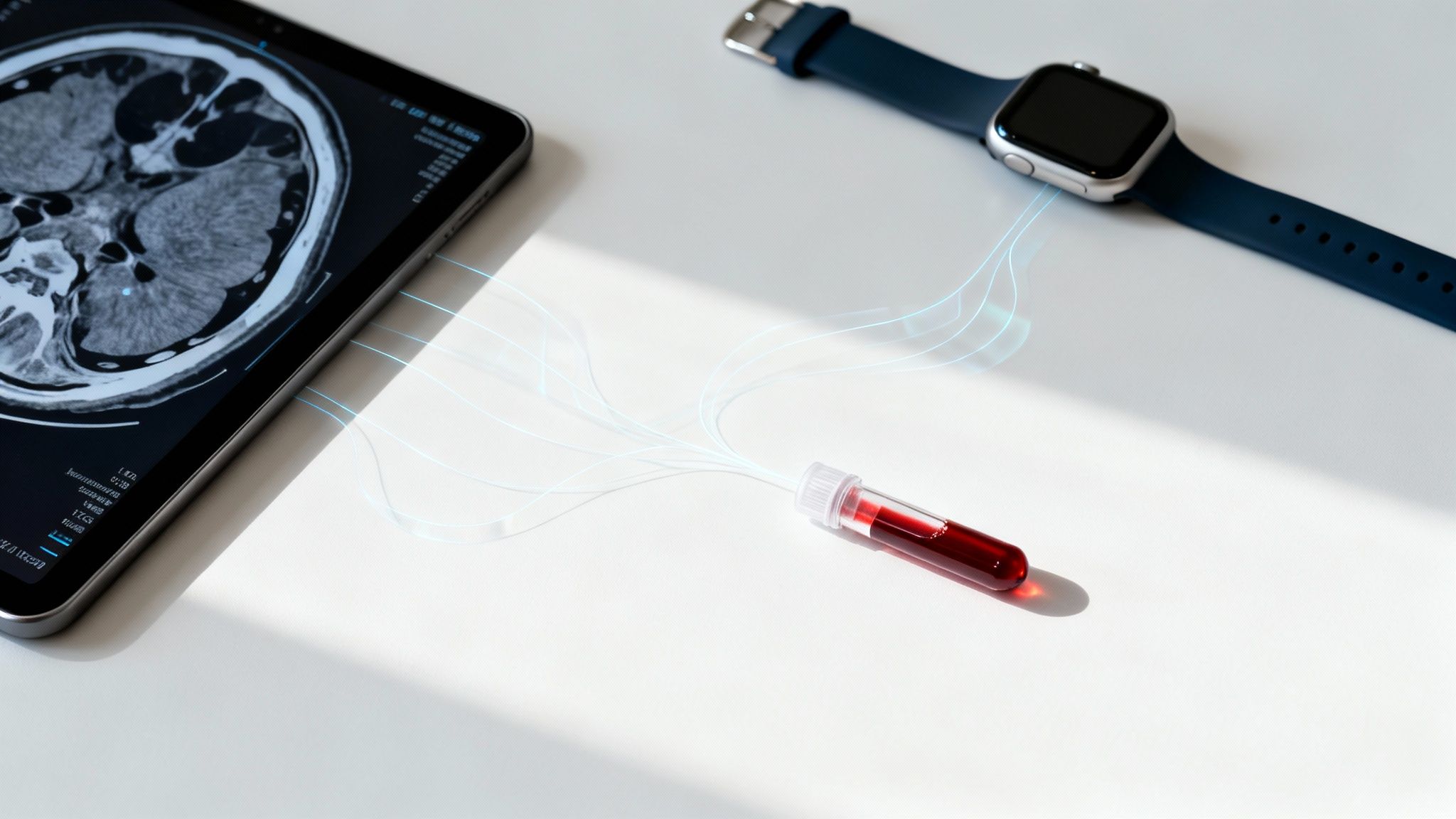
A full-body MRI isn't the finish line; it’s a crucial starting point. In my experience, the best way to think about it is as a high-resolution architectural map of your body. It provides the essential structural context for all your other health data.
The real power comes from weaving this anatomical map together with functional data from your other health tools. This is how you build a true 360-degree view, connecting the dots between your body's physical state and its daily performance.
Fusing Your Body's Blueprint with Live Data
Imagine your health as a complex story. The MRI provides the setting and characters—the physical shape of your organs and tissues. Your other health trackers provide the plot—the dynamic, moment-to-moment action of your body's functioning.
Continuous Biometrics: Your wearable gives you live feedback on sleep quality, heart rate variability (HRV), and activity levels.
Comprehensive Blood Labs: These offer a deep dive into your biochemistry, measuring everything from hormones and inflammation to lipids and metabolic markers.
MRI Scan: This gives you the physical blueprint, revealing the structural reality of your internal landscape.
When you layer these different data types, you unlock a much deeper understanding of your health. Each data stream informs the others, turning isolated numbers into a meaningful, actionable story about your well-being.
From Data Points to a Clear Action Plan
This is where everything clicks into place. A finding on your MRI scan becomes more significant when you connect it to your lab work and biometric trends.
Let's say your MRI report flags a higher-than-ideal amount of visceral fat. On its own, that’s important but somewhat abstract. But when you pair it with blood work showing elevated glucose markers and data from your wearable pointing to poor sleep, a clear picture emerges.
This integrated approach turns health management from a guessing game into a precise, data-driven strategy. Of course, knowing which markers to follow is essential, which is why a comprehensive blood test for longevity is such a critical component of this 360-degree view.
The Future of Interpretation: AI as Your Co-Pilot
Looking ahead, artificial intelligence is poised to make this entire process even more powerful. AI is already starting to help clinicians interpret these dense, multi-layered datasets, spotting subtle patterns that might otherwise be missed. This is especially promising for longitudinal health monitoring, where the goal is to catch tiny changes over time.
For example, clinical trials have shown that AI-powered imaging can increase the sensitivity for detecting lesions by 22% in some scans. By combining the vast imaging capabilities of a whole-body MRI with AI-assisted interpretation, we can start identifying health risks long before symptoms appear.
This synergy—anatomical imaging, functional data, and intelligent analysis—is the future of personalized, proactive health. A full-body MRI is a foundational piece of that ecosystem, providing the structural anchor for a complete and predictive understanding of your health.
Your Full-Body MRI Questions Answered
We've covered the technology and the "why" behind getting a full-body MRI. But I know there are still practical questions. As someone who has made this scan a regular part of my health strategy, I want to tackle the common ones I hear, speaking from my own experience and research.
How Should I Prepare for a Full-Body MRI Scan?
Preparation is straightforward and focuses on safety and image quality. The most important rule is no metal. You will need to remove all metallic items—jewelry, watches, and even clothing with zippers or metal snaps.
It’s crucial to inform the clinic about any metal inside your body, such as surgical clips, pacemakers, cochlear implants, or other hardware.
You may be asked to fast for a few hours, especially if there's a chance a contrast dye might be used, though this is less common for a general screening scan. My personal advice? Wear comfortable, metal-free clothing. I also find it helpful to do a few calming breaths before I go in. Your main job is to lie still, and being relaxed makes that much easier.
What Is the Cost of a Full-Body MRI and Is It Covered by Insurance?
This is a common question. The price can vary widely, typically landing between 1,500 and 10,000. The final cost depends on the clinic, its location, and the specific imaging protocol used.
I view it as a direct investment in my long-term health intelligence. It is also worth noting that many clinics offer payment plans or membership models that can help spread out the cost, so do not hesitate to ask about their options.
How Often Should I Get a Full-Body MRI for Longevity Screening?
There is no one-size-fits-all schedule. The right frequency depends on your personal health picture—your age, risk factors, family history, and what, if anything, appeared on your first scan.
A common approach is to get a detailed baseline scan first. From there, a follow-up every 2 to 5 years is a reasonable cadence for ongoing monitoring.
However, this is not a decision to make in a vacuum. You should discuss it with your physician or a trusted health advisor. They can help you balance the benefit of early detection against the cost and the possibility of finding incidental, non-threatening items that might cause unnecessary worry. The goal is to ensure the scan fits logically into your overall health plan.
At Outlive Biology, our philosophy is built on creating a complete, 360-degree view of your health. A full-body MRI provides the structural blueprint of your body. We then layer that with your continuous biometric data and deep lab work to build a health strategy that’s truly personalized and forward-thinking. Learn more about our data-driven approach at https://outlive.bio.
Live better for longer.
Research-backed tools, tactics, and techniques to maximize your health, delivered to your inbox every Monday.
Because real transformation starts with trust
and trust starts with clarity.
Founding Member Discount
Includes Devices + Labs
Cancel Anytime Before Activation