Smart Devices
Last Updated
Dec 13, 2025
The Evolving Search for Longevity in a Pill
As someone deeply invested in the science of healthspan, I've seen the conversation around longevity evolve dramatically. For most of human history, the quest for a longer, healthier life was limited to the basics: eat well, stay active. But now, we're at a fascinating new frontier. We're beginning to understand how certain medications, first approved for conditions like diabetes or to prevent organ rejection, might also help slow the clock on aging.
This isn't about chasing immortality. It's about maximizing our healthspan—the number of years we live in good health, with vitality, and free from the chronic diseases that so often accompany aging. From my personal and professional experience, I can tell you that the most promising longevity medications aren't a one-size-fits-all fix. Instead, they're specific tools that, when integrated into a comprehensive health strategy by an expert physician, have the potential to pump the brakes on age-related decline. This requires a deeply personalized and carefully managed approach, always grounded in solid health information.
How to Make Sense of the Science
A huge part of navigating this field is knowing how to weigh the evidence. It's easy to get swept up in headlines about a drug that doubles the lifespan of a lab mouse, but what happens in a rodent doesn't always translate to humans. It’s crucial to understand the different levels of scientific proof.
Here’s a quick breakdown:
Preclinical Data: This is where it all begins—in a lab, with cells in a petri dish or in animal models like mice and worms. These studies are essential for generating hypotheses, but many promising preclinical findings don't pan out in people.
Observational Studies: Researchers look at massive datasets from large groups of people over many years. They might find, for example, that patients taking a certain drug for diabetes also happen to have lower rates of heart disease. This shows a correlation, but it doesn't prove the drug caused the better outcome.
Randomized Controlled Trials (RCTs): This is the gold standard for medical evidence. In an RCT, one group gets the drug and a similar group gets a placebo, and researchers compare the results. This is the best way we have to prove cause and effect in humans.
This concept map gives a bird's-eye view of some of the key players in the longevity medication space and the biological pathways they influence.
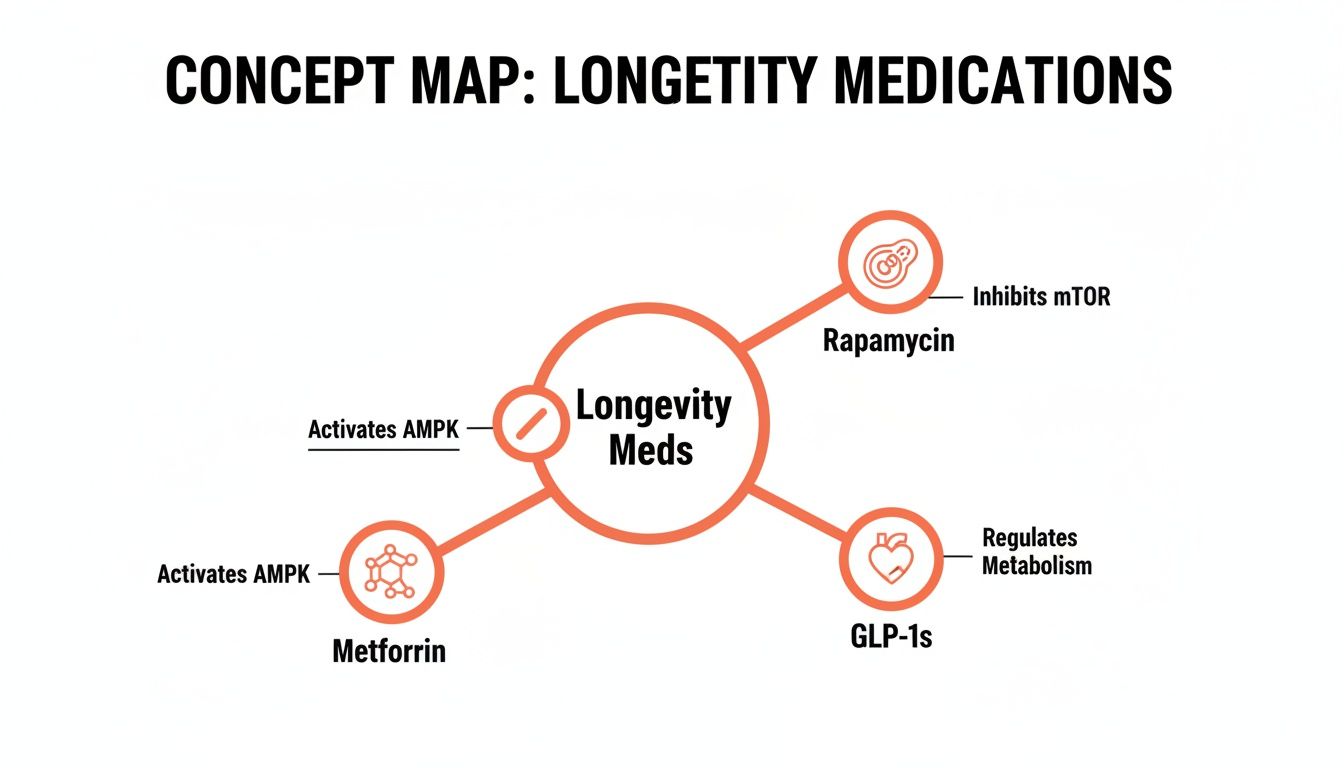
As you can see, drugs like Metformin, Rapamycin, and the GLP-1s are not interchangeable. Each one interacts with different, specific aging pathways, from metabolic regulation to cellular cleanup processes.
To give you a clearer picture of the landscape, here's a quick summary of the main contenders we'll be discussing.
Promising Longevity Medications: An Overview
Medication Class | Primary Approved Use | Potential Longevity Mechanism |
|---|---|---|
Metformin | Type 2 Diabetes | Improves insulin sensitivity, reduces inflammation, mimics caloric restriction |
Rapamycin/Rapalogs | Immunosuppression (organ transplants) | Inhibits mTOR, a key regulator of cell growth, promoting cellular repair |
GLP-1 Agonists | Type 2 Diabetes & Obesity | Enhances insulin secretion, reduces inflammation, provides cardiovascular protection |
Statins | High Cholesterol | Lowers cholesterol, reduces inflammation, improves endothelial function |
Senolytics | (Investigational) | Selectively clear senescent "zombie" cells that drive aging |
NAD+ Modulators | (Supplements) | Boost NAD+ levels, a critical coenzyme for cellular energy and DNA repair |
Hormonal Therapies | Hormone Deficiencies | Restore youthful hormone levels to support muscle, bone, and metabolic health |
This table is just a starting point. The science behind each of these is complex, with varying levels of evidence and distinct risk profiles.
Your Roadmap for an Informed Conversation
Consider this guide your briefing before you talk to your doctor. We’re going to dive deep into the most promising medication classes—Metformin, Rapamycin and its cousins (the rapalogs), GLP-1 agonists, statins, and others.
Metformin: The Original Longevity Candidate
If you’ve heard of just one medication in the longevity space, it's almost certainly metformin. In my experience, it’s the first drug people ask about, and for good reason. It has an incredible track record, having been used to safely and effectively treat type 2 diabetes for over 60 years. That long history gives us a mountain of data on its safety, which is a huge advantage over newer drugs.
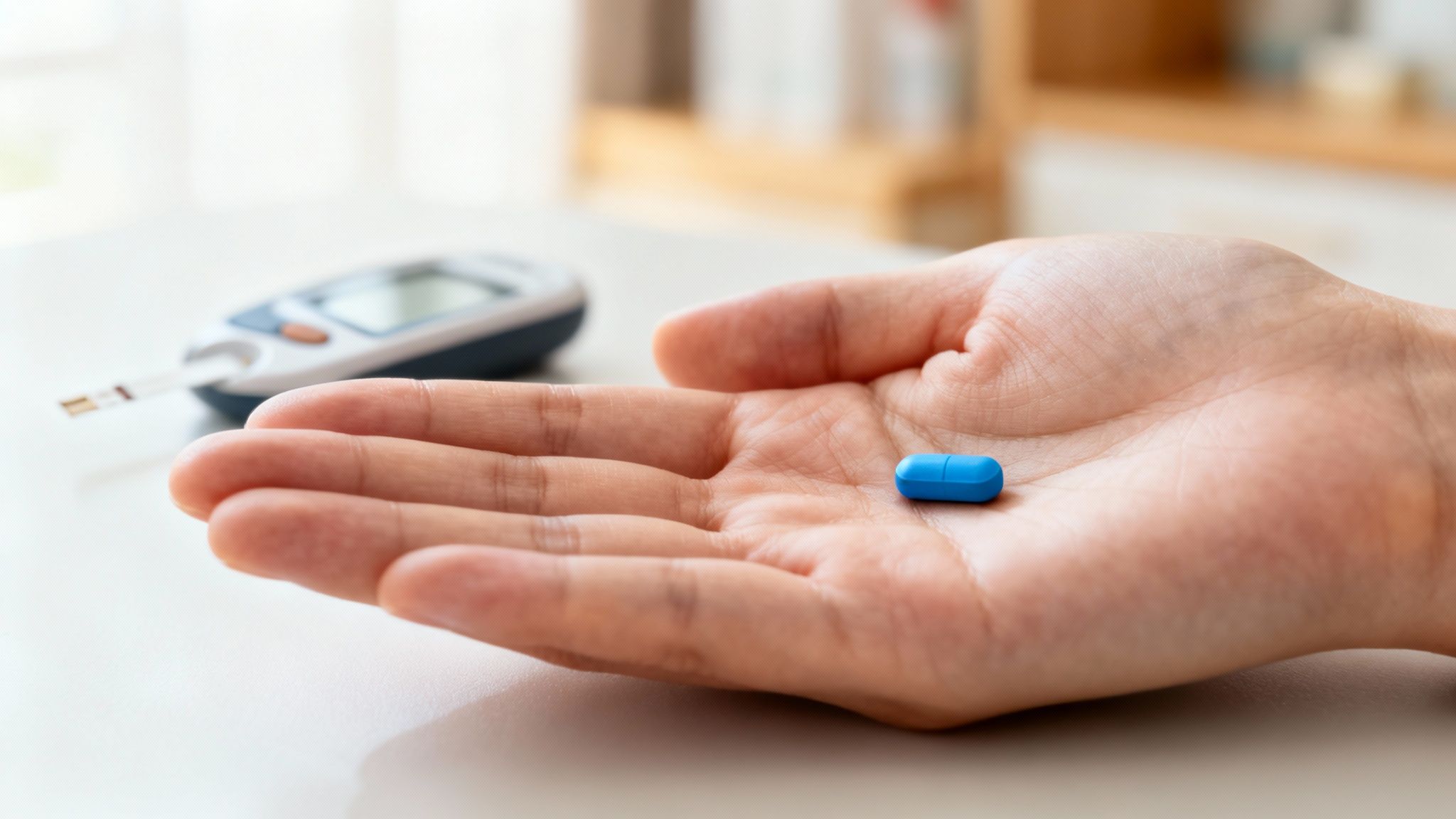
The real excitement around metformin, though, comes from how it works. Its main job is to lower blood sugar, but the way it does that is deeply tied to the aging process itself. Metformin helps the body use insulin more effectively, a critical step in maintaining metabolic health and heading off a whole cascade of age-related problems.
Flipping The Metabolic Master Switch
One of metformin’s most powerful actions is activating an enzyme called AMP-activated protein kinase (AMPK). The best way to think of AMPK is as your body's "metabolic master switch" or a cellular fuel gauge. When your energy stores are running low—like during a hard workout or when you're fasting—AMPK gets switched on, signaling your cells to stop storing energy and start using what they have more efficiently.
Flipping this switch sets off several downstream effects that are incredibly relevant for longevity:
Cools Inflammation: It helps dial down the chronic, low-grade inflammation that fuels so many age-related diseases.
Improves Cellular Housekeeping: It ramps up processes like autophagy, which is basically the cell's cleanup crew, clearing out old, damaged parts to keep things running smoothly.
Mimics Caloric Restriction: Activating AMPK creates some of the same metabolic benefits as eating less, a strategy that has consistently been shown to extend lifespan in countless animal studies.
It's this ability to tap into such fundamental metabolic pathways that has elevated metformin from a simple diabetes drug to a top contender for targeting aging itself.
Evaluating The Evidence For Metformin
The case for metformin as a pro-longevity drug is built on a solid foundation of large-scale observational studies. Researchers have sifted through data from hundreds of thousands of patients with diabetes and found some truly fascinating correlations. For instance, people with diabetes taking metformin don't just live longer than those on other diabetes drugs; some studies suggest they may even outlive their healthy, non-diabetic peers.
But—and this is a big but—it's crucial to remember that correlation isn't causation. These studies show a link, not definitive proof. This is exactly why the Targeting Aging with Metformin (TAME) trial is so important. TAME is a landmark clinical study, the first of its kind, designed to see if a drug can actually slow down the human aging process. The trial isn't just looking at one disease; it's tracking whether metformin can delay the onset of a whole collection of age-related conditions, from cancer and heart disease to cognitive decline, in people without diabetes. The results from TAME will be a game-changer in settling the debate.
Risks And Current Debates
Despite its excellent safety profile, metformin isn't a free lunch. The most common side effects are gastrointestinal—things like bloating, diarrhea, and nausea—though these often get better over time. There is a more serious, albeit rare, risk of a condition called lactic acidosis, which is why it's a no-go for anyone with significant kidney disease.
Right now, the biggest debate is whether healthy, non-diabetic individuals should be taking it. The potential benefits are tantalizing, but some experts argue the effects could be minimal or even counterproductive in someone who is already metabolically healthy. For example, some research suggests metformin might blunt the mitochondrial gains from exercise. This is a perfect illustration of why you should never take metformin for longevity without the guidance of a physician who can carefully weigh your personal health profile against the potential risks and benefits.
The Preclinical Superstar: Rapamycin's Remarkable Story
Metformin’s journey to the longevity space was a long, steady march through decades of human clinical use. Rapamycin, on the other hand, blasted onto the scene from a far more unexpected place.
Its story starts in the 1970s, not in a lab, but in the soil of one of the most isolated spots on the planet: Easter Island, or as the locals call it, Rapa Nui. Scientists digging in the dirt discovered a bacterium that produced a compound with powerful antifungal abilities. In a nod to its origin, they named it rapamycin.
Initially, it was developed and approved as an immunosuppressant drug, a critical tool for preventing organ rejection in transplant patients. But researchers soon stumbled upon a much deeper secret. Rapamycin turned out to be a potent inhibitor of a master regulatory pathway in our cells called mTOR, which literally stands for "mechanistic target of rapamycin." That discovery was a game-changer, linking a simple soil microbe to one of the most fundamental dials controlling aging in almost all complex organisms, from yeast all the way up to us.
How Rapamycin Taps the Brakes on Aging
So, what does mTOR actually do? Think of it as the general contractor for your cells. When raw materials (like nutrients and energy) are plentiful, mTOR gives the green light to build, grow, and divide. This is essential when we're young and developing, but keeping that "grow" signal switched on all the time can drive cellular exhaustion and wear-and-tear, speeding up the aging process.
Rapamycin works by gently and temporarily tapping the brakes on mTOR. This sends a signal to the cell that maybe resources aren't so abundant after all, causing it to pivot from a "growth-at-all-costs" mode to a "conserve and protect" strategy.
This strategic shift kicks a few key self-preservation systems into high gear:
Boosts Autophagy: The cell's internal recycling program gets a major upgrade, clearing out old, damaged proteins and other cellular junk that can clog up the works.
Improves Stress Resilience: Cells become tougher and more adept at handling damage from environmental insults.
Rebalances Metabolism: It helps nudge cells back toward a more youthful metabolic state, improving how they process and use energy.
Basically, rapamycin nudges our cells to slow down, clean house, and focus on maintenance—a strategy that has proven shockingly effective at extending life in the lab.
The Undisputed Champion of Animal Studies
When it comes to the preclinical evidence for extending lifespan, rapamycin is simply in a class of its own. Nothing else comes close. Its reputation as a top-tier longevity compound was forged in countless animal studies.
And this isn't a one-off finding. Time and again, ITP research has shown that rapamycin delays a whole host of age-related diseases in mice, from cancer to neurodegeneration. Some studies even suggest it can fend off memory loss in mouse models of Alzheimer's. If you want to dive deeper, a 2025 review in Aging-US covers the overwhelming preclinical data and the challenges of bringing it to humans. This unmatched track record in animals is precisely why the longevity field remains so fixated on its potential.
The Human Question Mark
For all its stardom in the lab, the human evidence for rapamycin is a much more cautious tale. The simple truth is we don't have the large-scale, long-term clinical trials to prove it slows aging or extends human lifespan. That's the giant question mark hanging over this drug.
What we do have are smaller, promising studies. Some have shown it can improve the immune response to vaccines in older adults and even help reduce the frequency of respiratory infections. But it’s still very early days.
Meanwhile, the off-label use of rapamycin for longevity is picking up steam, but this is a path loaded with real risk. It is, after all, a potent immunosuppressant with a well-documented list of side effects, including metabolic problems like high blood sugar and cholesterol, mouth sores, and a reduced ability to fight off infections.
Because of these dangers, rapamycin should only be considered under the close supervision of an experienced physician who can monitor for these issues. An exciting area of research is focused on developing rapalogs—next-generation drugs designed to provide the benefits of mTOR inhibition with fewer side effects. For now, though, rapamycin remains a fascinating molecule whose final chapter has yet to be written.
GLP-1 Agonists: The New Powerhouse in Metabolic Health
Every now and then, a class of drugs comes along that completely changes the game. It not only nails its original job but also reveals stunning, system-wide benefits that make the entire medical community sit up and take notice. GLP-1 receptor agonists, like semaglutide, are the latest and, frankly, most exciting example in the longevity space. As a clinician focused on healthspan, I can tell you their impact is impossible to ignore.
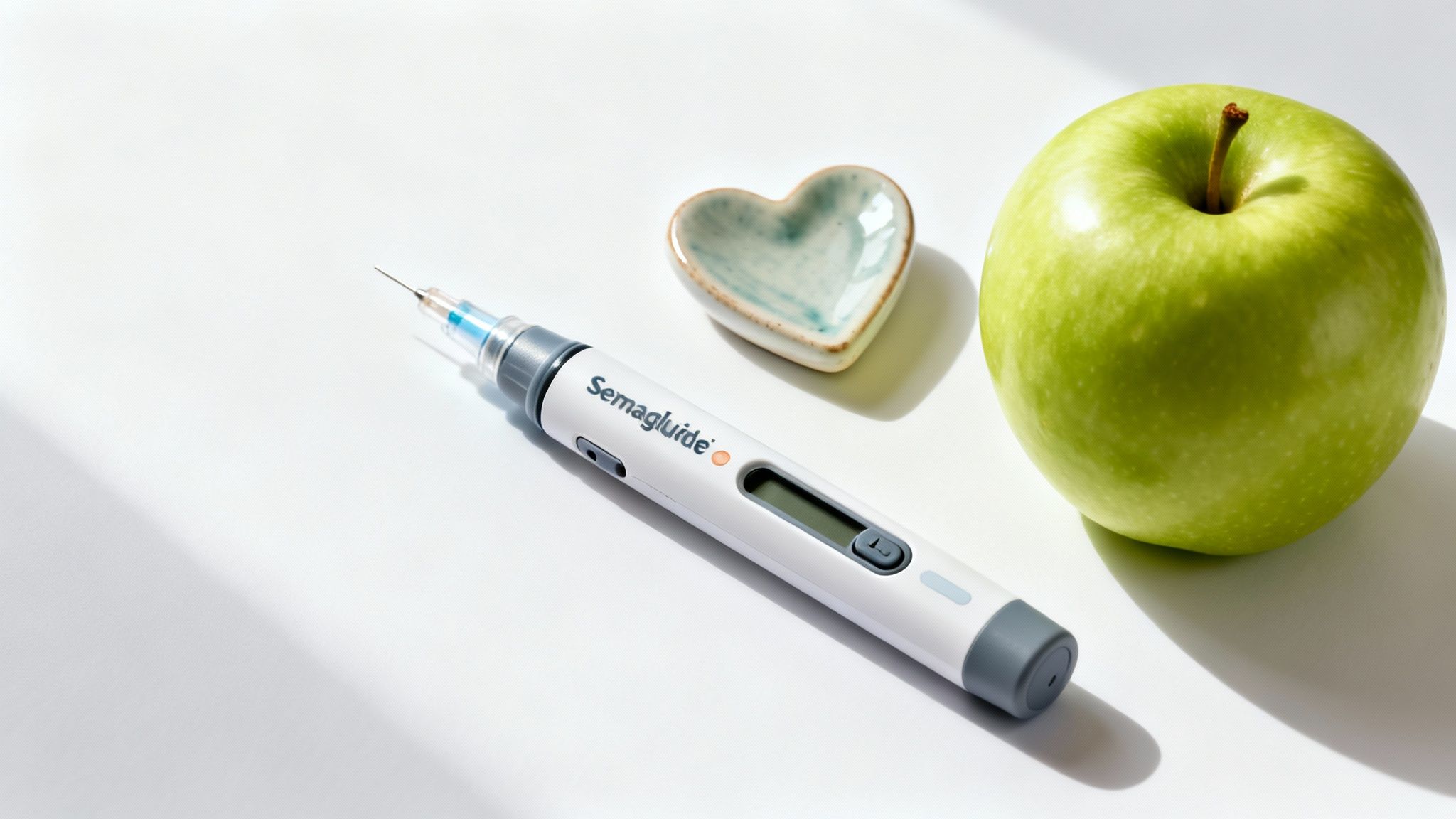
These medications were first developed to treat type 2 diabetes. But they've since proven to be incredibly effective for obesity and, most critically for our discussion, cardiovascular health. This is where they take a massive leap ahead of many other longevity hopefuls—their benefits are backed by huge, real-world human trials, not just promising results from lab animals.
Beyond Blood Sugar: A Multi-System Upgrade
The brilliance of GLP-1 agonists is how they work. They mimic a natural hormone called GLP-1 (glucagon-like peptide-1) that our gut releases after we eat. This hormone is a major player in our metabolic symphony, but the drugs' effects extend far beyond simply managing blood sugar.
Think of your body's metabolic system as a complex orchestra. A GLP-1 agonist acts like a new conductor who steps onto the podium and gets multiple, disconnected sections to play in perfect harmony.
Metabolic Tune-Up: They improve insulin sensitivity, which means your cells get much better at using glucose for energy instead of letting it build up in the blood.
Inflammation Control: They’ve been shown to dial down systemic inflammation, a smoldering fire that drives nearly every disease of aging.
Heart and Vessel Protection: They directly benefit the cardiovascular system by lowering blood pressure and improving lipid profiles.
Brain and Kidney Health: Exciting new research even suggests they have protective effects on our brain and kidneys.
This multi-pronged attack is what makes them so special. They aren't just patching a single leak; they're upgrading the entire metabolic plumbing system. A look into the latest semaglutide statistics shows just how powerful these effects are across huge groups of people.
The Power of Human Evidence
Here's the crucial difference between GLP-1s and preclinical darlings like rapamycin. While rapamycin’s effects in mice are truly remarkable, GLP-1s have already proven their worth in massive clinical trials involving millions of people. The results are nothing short of striking.
This isn't a theoretical benefit based on a petri dish. It's a proven reduction in the very diseases that are the top killers as we age. For this reason, many experts are starting to call them the first true longevity drugs.
First approved by the FDA for diabetes nearly 20 years ago, GLP-1s like semaglutide and tirzepatide have blown past their initial indication to treat obesity, heart disease, and more. This is a big deal. We've seen other promising candidates fall flat in large trials, but these drugs deliver real-world reductions in cardiovascular events and mortality. That strength of evidence makes them arguably the strongest contender for the "best med for longevity" available today.
Real-World Considerations and What's Next
Of course, these medications aren't a silver bullet. They come with challenges. The most common side effects are gastrointestinal—nausea, constipation, and stomach upset—which can be a real issue for some people. They also carry a hefty price tag, creating a significant barrier to access for many who could benefit.
The biggest question for the longevity field now is whether the profound benefits seen in high-risk individuals will carry over to healthier, non-obese people. The research is ongoing. For now, their use is rightly focused on those who have the most to gain from their powerful metabolic and cardiovascular effects.
Ultimately, the story of GLP-1 agonists is a powerful lesson. It shows how targeting a core driver of aging—metabolic dysfunction—can create a cascade of widespread, life-extending benefits. Their journey from a niche diabetes treatment to a healthspan powerhouse really signals a new era in proactive, evidence-based medicine.
Hormone Therapy: An Overlooked Pillar of Female Longevity
When we talk about the best medications for a long, healthy life, the conversation usually gravitates toward metabolic drugs or futuristic compounds. But in my experience, one of the most powerful and evidence-backed tools for women is often pushed to the side because of old controversies: Hormone Therapy, specifically using estradiol.
For women, menopause isn't just a phase; it's a massive biological shift that puts the aging process into overdrive. The steep drop in estrogen sets off a chain reaction, cranking up the risk for the very diseases that chip away at both healthspan and lifespan.
This is precisely where estradiol therapy comes in. When it's timed correctly and tailored to the individual, it becomes less about managing hot flashes and more about fundamentally pushing back against the accelerated aging that menopause kicks off.
The Real-World Impact of Estradiol on Healthspan
The evidence backing estradiol’s role in female longevity isn't based on animal studies or small, speculative trials. It's built on decades of real-world human data showing a powerful protective shield against the major diseases of aging. This is what makes it a standout compared to many other compounds in the longevity space.
The benefits are clear and directly address the biggest threats to a woman's long-term health:
Protecting the Heart: Estradiol helps keep blood vessels flexible, manages cholesterol, and cools inflammation. These are all critical factors in preventing heart disease, which remains the number one killer of women.
Preserving Bone Density: It’s the gold standard for preventing osteoporosis. This dramatically cuts the risk of those debilitating fractures that can send a person's health and independence into a downward spiral.
Supporting Brain and Metabolic Health: A growing body of research shows that healthy estrogen levels support cognitive function and help prevent the buildup of visceral fat—that dangerous internal fat that drives metabolic problems. To dig deeper, you can explore the nuances of estradiol levels in women and their broad impact on health.
Rethinking the Evidence and Moving Past Misinformation
Much of the fear around HRT comes from outdated studies that have since been largely corrected by modern science. We now understand that the key to its safety and effectiveness is all about timing. Starting therapy within the "window of opportunity"—the first few years of menopause—is critical for getting the most benefit while minimizing potential risks.
It's truly astonishing that a therapy like estradiol, which can cost as little as $30 a month, offers such profound, proven benefits yet is used by less than 5% of the women who could benefit from it. In the U.S., where heart disease kills one in five women, data shows that estradiol use is linked to a 40% lower risk of cardiovascular disease and 30-40% fewer fractures. As longevity science moves forward, it's becoming obvious that this simple hormone replacement can hold its own against many high-tech, billion-dollar pursuits in its ability to add healthy years to the lives of half the population. You can discover more insights about this powerful, low-cost longevity drug on DrFrankLipman.com.
For women, hormone therapy isn't just a side option for symptom relief. It represents one of the most effective, evidence-based strategies we have for extending healthspan. It's a conversation every woman deserves to have with her doctor—one that moves past outdated fears and into a modern, personalized approach to aging well.
Putting It All Together: Partnering With Your Doctor
We’ve journeyed through some of the most compelling compounds in the longevity space, from metformin to rapamycin. But knowing the science is just the starting line. The real work begins when you translate that knowledge into a safe, personalized strategy, and that’s a path you absolutely must walk with a qualified doctor.
Think of it this way: longevity medicine isn’t a DIY weekend project. These are potent medications that require professional guidance to get right.
How To Have a Smart Conversation With Your Doctor
To make that conversation count, you need to show up as an informed partner, not just a patient. Your doctor needs to see the whole picture—your goals, yes, but more importantly, your data.
Before you even book the appointment, start pulling together your personal health portfolio. This is what allows the conversation to shift from generic advice to a plan that’s built specifically for you.
Here’s what you should have in hand:
Your Biomarkers: Up-to-date blood work is non-negotiable. Knowing your baseline for key markers like inflammation, lipids, and glucose metabolism gives you a clear "you are here" map. For a deeper dive, check out our guide on the most important blood tests for longevity.
Family History: What health issues have your parents or siblings faced? This isn't just trivia; it can point to potential genetic vulnerabilities that you can get ahead of.
Lifestyle Factors: Get ready to have an honest talk about your diet, exercise routine, sleep habits, and stress levels. These are the pillars of any healthspan plan.
Bringing this information to the table sets the stage for shared decision-making. It becomes a collaborative process where you and your doctor can weigh the pros and cons of any potential medication against your unique biology and risk factors.
Lifestyle First, Always
Let's be crystal clear: no pill or injection can ever outperform the fundamentals. Lifestyle is, and always will be, the bedrock of healthspan.
Consistent exercise, a diet rich in whole foods, deep and restorative sleep, and a solid stress management practice will do more for your long-term health than any prescription. Medications are best seen as targeted tools to supplement these foundational efforts, not replace them.
While this guide has focused on specific medications, a holistic view of health is key. Hormonal balance, for example, plays a huge role in vitality as we age. For those curious, resources on topics like how to boost testosterone levels can provide useful context for a broader health strategy.
Ultimately, the goal is empowerment. Use what you’ve learned here as a springboard for a richer, more productive conversation with your healthcare team. By taking an active role, you can help build a plan for a long, vibrant life that’s truly your own.
Frequently Asked Questions
Diving into the world of longevity medicine naturally brings up a lot of questions. It's smart to want clear answers before you even think about starting any of these powerful therapies. Let's tackle some of the most common ones to help you figure out what comes next.
Can I Get These Longevity Meds Without a Prescription?
No, you absolutely can't. Every single medication we've discussed here—from metformin and rapamycin to GLP-1 agonists and hormone therapies—is a powerful, prescription-only drug. They require a careful medical evaluation and close monitoring by a qualified doctor to be used safely.
Trying to get these from sketchy online pharmacies or other back-alley sources isn't just illegal, it's incredibly risky. These aren't like vitamins or supplements; they're potent compounds that can have serious side effects and drug interactions. The only person who can decide if they're right for you is a physician who knows your full health history.
Is There a Single "Best" Med for Longevity for Everyone?
That’s the million-dollar question, and the answer is a hard no. There is no one-size-fits-all "longevity pill" that works for everybody. The right strategy has to be built around your unique health data.
What works for you comes down to a few key things:
Your current health and any pre-existing conditions.
Your specific risk factors, like a family history of heart disease or cancer.
Your age and sex, which are huge factors in your metabolic and hormonal health.
Your biomarkers from lab work that give a clear picture of what’s going on inside your body.
For instance, someone showing early signs of insulin resistance might be a good candidate for metformin or a GLP-1. A healthy postmenopausal woman, on the other hand, might get the biggest healthspan boost from carefully managed hormone therapy.
Do I Still Need to Focus on Lifestyle if I Take One of These Meds?
Yes, 100%. This might be the most important point of all. Your lifestyle—what you eat, how you move your body, how well you sleep, and how you handle stress—is the absolute foundation of a long, healthy life. These medications are not a free pass to ignore the basics.
Put it this way: no pill in the world can outrun a bad diet, a sedentary life, or chronic sleep deprivation. For any of these medications to work effectively and safely, they must be added to a solid foundation of healthy habits. These drugs are best seen as tools that can amplify the benefits you're already getting from a healthy lifestyle, fine-tuning your biology for the long haul.
At Outlive Biology, we believe the future of health is proactive and built on data. We take your personal biometrics from wearables and detailed lab work and turn them into a clear, actionable plan. Our clinicians partner with you to optimize your healthspan, guiding you on everything from lifestyle changes to medically supervised prescription therapies when they make sense for you.
Discover how Outlive Biology can help you build your personalized longevity strategy.
Live better for longer.
Research-backed tools, tactics, and techniques to maximize your health, delivered to your inbox every Monday.
Because real transformation starts with trust
and trust starts with clarity.
Founding Member Discount
Includes Devices + Labs
Cancel Anytime Before Activation